
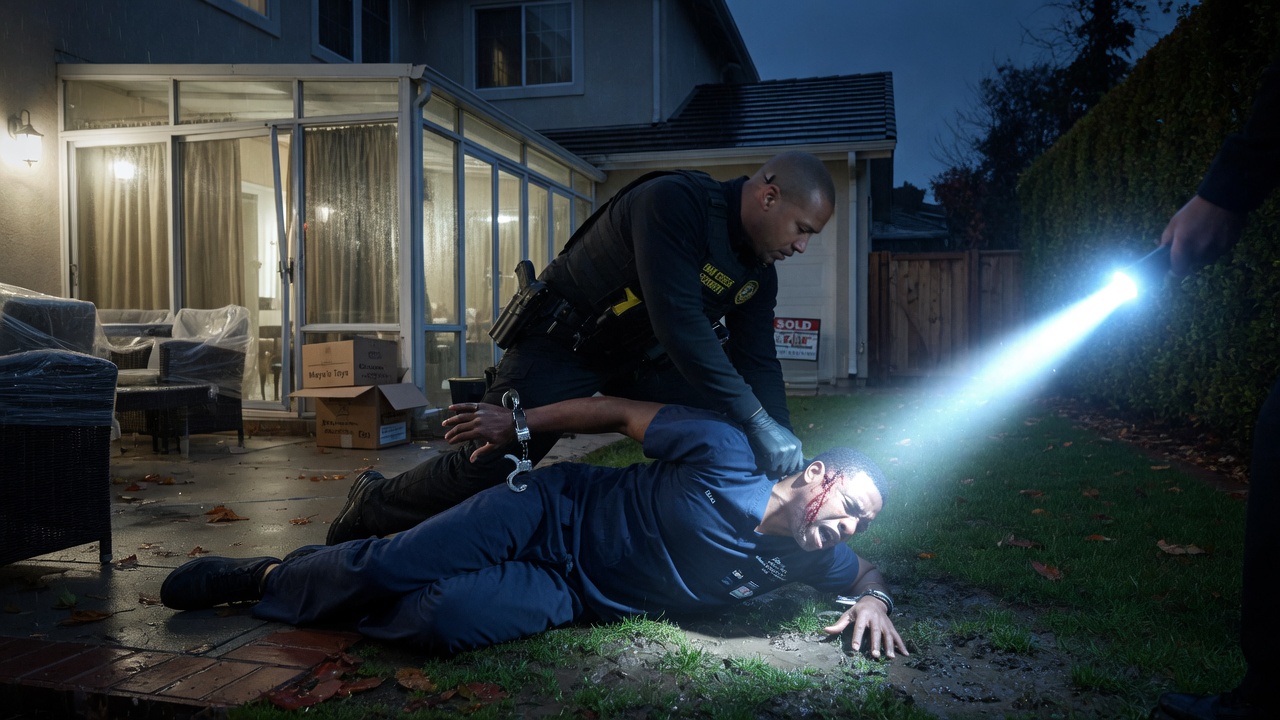
I Spent 18 Hours Saving Children’s Lives In The OR. But When I Tried To Enter My Own Home At 2 AM, What Happened In My Backyard Turned My American Dream Into A Suffocating Nightmare.

I’ve been a pediatric surgeon for twelve years, pulling children back from the edge of death, but absolutely nothing prepared me for the sheer, suffocating terror I felt on my own grass at 2:00 AM.
You think you know how the world works.
You think that if you play by the rules, work yourself to the bone, and achieve a certain level of success, you’ve earned a protective shield. You believe that the letters “M.D.” after your name, or the heavy mortgage on a house in a quiet, wealthy neighborhood, somehow make you immune to the nightmares you see on the evening news.
I was wrong. Dead wrong.
My name is Elias. I am a doctor. I am a husband to an incredible woman named Sarah. I am a father to a beautiful, bright-eyed four-year-old girl named Maya.
And three weeks ago, I almost lost my life without ever leaving my own property.
It started like any other Tuesday. Or rather, it started on Monday morning and bled into Tuesday. I was on hour eighteen of a grueling shift at the children’s hospital downtown.
We had a complex case. A three-year-old boy with a congenital heart defect.
For hours, I stood under the blinding, sterile surgical lights. My back ached, my feet were entirely numb, and my eyes burned from the sheer intensity of staring through surgical loupes. But when I finally stepped out into the waiting room and told the boy’s tearful parents that their son was going to make a full recovery, all that exhaustion vanished.
That’s the high you chase in my line of work. The feeling of giving a family their future back.
I scrubbed out, changed back into my dark blue hospital scrubs, and grabbed my jacket. The hospital corridors were dead quiet at 1:15 AM. Just the low hum of the fluorescent lights and the squeak of nurses’ shoes on the linoleum.
I was completely drained. The kind of exhaustion that settles deep into your marrow. All I wanted was my bed. I wanted to crawl in next to Sarah, smell the lavender shampoo in her hair, and sleep until noon.
I walked out to the parking garage, the chilly night air hitting my face and finally waking me up a little.
I drove home on autopilot. The highways were practically abandoned.
Thirty minutes later, I took the exit for Oak Creek Estates.
Oak Creek is one of those neighborhoods you see in real estate magazines. Manicured lawns that look like golf courses. Massive oak trees lining the streets. Houses set far back from the road, with long driveways and heavy, solid oak doors.
It was our dream home. Sarah and I had saved for years. We sacrificed vacations, drove beat-up cars, and lived in a tiny apartment just so we could afford the down payment in a school district that would give Maya the best possible start in life.
We were the newest residents. We were also one of the only Black families in the entire subdivision.
I hadn’t thought much about it. Sure, there had been a few lingering stares when we were moving our boxes in. The neighbor across the street, a retired guy who seemed to spend all day watering his already-perfect driveway, had watched us with narrowed eyes for three days straight without ever coming over to introduce himself.
But I brushed it off. We belonged here. We earned this.
I turned onto my street. It was dead silent. The kind of oppressive quiet you only find in deep suburbia at two in the morning. No streetlights, just the soft glow of porch lamps and the silver moonlight reflecting off the roofs.
I pulled into my driveway. I decided to leave the car outside rather than opening the noisy garage door. Maya had been fighting a bad cold all week, and Sarah had texted me earlier that it took two hours to finally get her to sleep.
I turned off the engine. The silence wrapped around me instantly.
I stepped out of the car, the wet autumn leaves crunching softly beneath my sneakers. I walked up the paved walkway to the massive front door, reaching into my left scrub pocket for my keys.
Nothing.
I frowned, switching my heavy duffel bag to my other shoulder, and dug into my right pocket.
Also empty.
My heart sank. A cold wave of frustration washed over me. I patted my jacket pockets. I checked my scrub pants again.
I had left my keys in my locker at the hospital. I must have been so exhausted and so focused on just getting to the car that I grabbed my bag and walked right out without them.
I stood on my own front porch, rubbing my eyes.
I could ring the doorbell. But the chime was incredibly loud—one of those antique, echoing bells that came with the house. It would definitely wake the dog, which would bark, which would wake Maya, which would mean Sarah would be up for another three hours trying to soothe a crying, feverish toddler.
I couldn’t do that to my wife. She was already stressed enough with unpacking the house.
I took a deep breath. Think, Elias.
Then, I remembered the back patio.
The house had a beautiful, glass-enclosed sunroom attached to the master bedroom. When the home inspector came through a month ago, he noted that the locking mechanism on the sliding glass window was faulty. It jammed easily, and if you wiggled the frame just right and pushed upward, the latch would slip.
We had an appointment scheduled with a contractor to fix it next week.
It was a security risk, sure, but tonight, it was my saving grace.
I stepped off the front porch. The grass was thick and damp with overnight dew. It instantly soaked through the mesh of my running shoes, chilling my toes.
I walked around the side of the house. The shadows here were deep. Tall privacy hedges separated our lot from the neighbors. It was pitch black.
I opened the wooden side gate. It let out a sharp, agonizing squeak. I winced, freezing in my tracks, waiting to see if a light would flick on upstairs.
Nothing. The house remained dark and silent.
I slipped through the gate and entered the backyard.
Our backyard was huge, sloping down toward a small line of trees. The sunroom was to my left. I navigated carefully, using the faint moonlight to avoid tripping over the moving boxes and patio furniture we hadn’t properly arranged yet.
I reached the sliding glass window. It was cold under my hands.
I pressed my face against the glass, trying to see inside. Pitch black. The heavy curtains were drawn.
I placed both palms flat against the aluminum frame. I pushed up and wiggled it to the left, just like the inspector had shown me.
Click.
It moved slightly. Thank God.
I pushed a little harder, grunting softly as the metal scraped against metal. The window was stubborn. I had to use my shoulder, leaning my body weight into the glass, trying to force the jammed latch upward.
“Come on,” I whispered to myself. “Just a few more inches.”
I was so focused on the stubborn lock. I was so focused on the thought of my warm bed.
I never heard the footsteps on the wet grass behind me.
I never heard the rustle of the heavy tactical gear.
The first warning I got was a blinding, explosive burst of white light that struck the side of my face like a physical blow.
A high-powered LED flashlight cut through the darkness, illuminating the entire patio in harsh, unforgiving detail.
“HEY! STOP RIGHT THERE! SHOW ME YOUR HANDS!”
The voice was a booming, aggressive bark. It ripped through the quiet suburban night like a gunshot.
My heart leaped into my throat. The adrenaline hit my bloodstream so fast I felt dizzy.
I flinched, turning my head away from the blinding beam, instinctively raising my left hand to shield my eyes. My right hand was still gripping the window frame.
“I said SHOW ME YOUR HANDS! DO IT NOW!”
“Whoa, whoa, wait—” I started to say, my voice raspy and confused. I couldn’t see anything beyond the wall of white light. All I could make out was the dark, hulking silhouette of a man standing about fifteen feet away.
“GET AWAY FROM THE HOUSE! GET ON THE GROUND!”
“Listen to me, I live here!” I shouted back, panic finally piercing through my exhaustion. “This is my house! I lost my keys!”
I slowly let go of the window, turning to face him fully, holding both hands up in the air at shoulder height. My palms were open. I was wearing hospital scrubs. I was clearly unarmed.
“I’m Dr. Vance,” I said, trying to keep my voice calm, trying to use the same steady, authoritative tone I use in the emergency room when a trauma patient is panicking. “My ID is right here in my chest pocket. My wife and daughter are inside sleeping.”
The man didn’t lower the light. He didn’t ask a follow-up question.
He didn’t care.
“I SAID GET ON THE F***ING GROUND!”
Before I could even process the threat, the silhouette moved. He charged.
He closed the fifteen-foot gap in a split second. I didn’t even have time to brace myself.
A heavy, solid mass slammed into my chest like a freight train. The impact knocked the wind entirely out of my lungs in a sickening whoosh.
My feet flew out from under me.
I was airborne for a fraction of a second before my shoulder and the side of my head slammed violently into the hard, cold brick of the patio edge, and then down into the muddy grass.
Pain exploded behind my eyes. A high-pitched ringing started in my ears.
I gasped for air, but my diaphragm was paralyzed. I was suffocating.
Before I could even twitch, a crushing weight dropped directly onto the center of my back.
A knee. A heavy, hard, unforgiving knee, driving my spine down into the dirt.
“Stop resisting! STOP RESISTING!” the voice roared directly into my ear, hot and spit-flecked.
“I’m… not…” I choked out, tasting blood and dirt in my mouth.
My right arm was grabbed, yanked backward with such violent, tearing force that I felt my rotator cuff pop. Searing agony shot down my neck.
Cold, heavy steel snapped around my right wrist.
This wasn’t a misunderstanding. This wasn’t a neighborhood watch guy asking questions.
I was being hunted on my own property. And the man pressing the breath out of my lungs was a private neighborhood patrol officer, and he had already decided exactly what I was.
CHAPTER 2
The first thing I registered wasn’t the pain. It was the smell.
Damp earth. Crushed grass. The metallic scent of my own blood pooling just inside my cheek where my teeth had clamped down hard on the inside of my mouth.
I lay there, the right side of my face pressed flush against the freezing mud of a lawn I had meticulously watered and fertilized just three days ago. My glasses had been knocked off my face during the tackle, and without them, the dark backyard was a terrifying, blurry smear of shadows and that blinding, horrific white flashlight beam rolling in the grass beside us.
I couldn’t breathe.
It wasn’t just that the wind had been knocked out of me. It was a mechanical failure.
As a doctor, I’ve seen patients in respiratory distress. I know exactly what it looks like when a human body realizes it is being starved of oxygen. I know the sheer, animalistic panic that takes over the brain when the lungs demand air and find nothing but a closed airway or a crushed chest cavity.
Now, it was happening to me.
There was a massive, concentrated pressure driving directly into the center of my spine, right between my shoulder blades. The officer’s knee. He had his full body weight pressed down on me. I am a lean guy—six foot one, maybe a hundred and seventy pounds on a good day. This officer felt like a two-hundred-and-fifty-pound wall of solid muscle and tactical gear, and every single ounce of that weight was focused on a four-inch radius on my back.
My ribs physically could not expand.
My diaphragm was completely paralyzed beneath the crushing force. My lungs were flat, empty balloons trapped inside a cage that was slowly collapsing inward.
I opened my mouth, gasping like a fish pulled out of the water, but no air came in. Just a dry, high-pitched wheeze that sounded pathetic even to my own ears.
Panic, cold and sharp as a scalpel, finally sliced through my shock.
I started to thrash. I didn’t want to. I knew, rationally, that moving was the worst possible thing I could do. The golden rule of interacting with law enforcement is to stay still, keep your hands visible, and comply. As a Black man in America, my father had drilled that into my head since I was ten years old.
“Keep your hands on the wheel, Elias. No sudden movements, Elias. Say ‘Yes, sir,’ Elias.”
But rationality completely evaporates when you are suffocating. My lizard brain took over. I needed air. If I didn’t get air in the next thirty seconds, I was going to pass out. And if I passed out under this kind of compressive weight, my heart could go into an arrhythmia. I could die right here, in the dirt, twenty feet away from where my four-year-old daughter was sleeping.
I weakly tried to buck my hips, trying to roll my shoulder just a fraction of an inch to relieve the pressure on my chest.
“I SAID STOP RESISTING!” the officer roared.
The voice was directly above me, deafening and furious. He didn’t sound in control. He sounded pumped full of adrenaline. He sounded scared. And a scared man with a badge and a gun is the most dangerous creature on the face of the planet.
Before I could even croak out a word, he grabbed my left arm. He didn’t just pull it behind my back; he wrenched it upward toward my neck with a violent, tearing force.
A white-hot streak of agony shot through my left shoulder. I felt the tendons in my rotator cuff stretch to their absolute tearing point.
I am a pediatric surgeon.
My hands are my entire life. They are my livelihood. They are the instruments I use to reconstruct microscopic blood vessels in the tiny, beating hearts of infants. My hands are insured for millions of dollars because without them, I am nothing. I can’t provide for Sarah. I can’t fix broken children.
And in that muddy grass, I felt my shoulder joint popping, right on the edge of permanent, career-ending destruction.
“Please,” I choked out, the word barely a whisper, bubbles of saliva and dirt forming on my lips. “My arm… my hands…”
“Shut your mouth!” the officer barked.
I heard the heavy, metallic *clink* of handcuffs.
Cold steel bit into my left wrist. He clamped it down hard. Then, he grabbed my right arm—the one that had been pinned under my chest. He yanked it out from under me so aggressively that my face scraped across the rough brick edge of the patio planter, tearing the skin right off my cheekbone.
He forced my right wrist to meet the left.
*Click. Click. Click.*
He ratcheted the handcuffs as tightly as they would physically go.
The metal teeth dug violently into my skin, biting directly into the sensitive flesh over my radial and ulnar bones. A sharp, electric shock of nerve pain shot all the way up my forearms.
He had put them on way too tight. It was a textbook compression injury waiting to happen. The blood flow to my hands was instantly restricted. I could feel my fingers starting to tingle, then throb, growing cold and numb almost immediately. If those cuffs stayed on like that for even twenty minutes, I could suffer permanent nerve damage.
I couldn’t operate with numb fingers. My career was flashing before my eyes, dying in the mud.
“You’re making a mistake,” I whispered, turning my face sideways to try and suck in a sliver of oxygen from the damp grass. My vision was starting to tunnel. Black spots danced at the edges of my sight.
The officer finally shifted his weight just a fraction. It was enough. A tiny, miraculous pocket of air rushed into my lungs.
I coughed violently, a wet, rattling sound, spitting dirt from my tongue.
“Listen to me,” I gasped, my voice trembling but desperate. I forced myself to sound articulate. I forced myself to sound like Dr. Elias Vance, not a faceless criminal. “My name is Dr. Elias Vance. I live here. This is my house.”
“Yeah, right. Save it for the precinct,” the officer sneered. He kept his knee planted firmly between my shoulder blades, though the crushing pressure was slightly less lethal now.
I felt him reaching to his shoulder. A second later, the sharp crackle of a police radio shattered the quiet night.
“Dispatch, this is Unit 4. I have one male suspect in custody at 442 Oak Creek Drive. Apprehended in the rear of the property attempting forced entry through a back window.”
I listened in absolute horror.
*Suspect. Forced entry.* He was writing the narrative right then and there. He was cementing my identity as a burglar.
“Unit 4, copy. Do you need backup?” a female dispatcher’s voice crackled through the speaker.
“Negative, Dispatch. Suspect is restrained. Send a black-and-white for transport.”
“No!” I shouted, the panic giving me a sudden burst of adrenaline. I tried to lift my head, but a heavy, gloved hand instantly shoved my face back down into the mud.
“Stay down!” he yelled.
“Check my pocket!” I begged, my words tumbling out over each other. “My left breast pocket! I am wearing hospital scrubs! I work at County General! My hospital ID badge is clipped to my pocket! Please, just look at it!”
For a second, the officer paused. I could feel his hesitation.
But then, the deeply ingrained bias—the stubborn refusal to admit he might have just violently assaulted a homeowner—took over.
“I’m not reaching into your pockets,” he said coldly. “You can tell your story down at the station.”
“My wife is inside!” I pleaded, tears of pure, unadulterated frustration pricking my eyes. The injustice of it was suffocating. The absolute helplessness. “My four-year-old daughter is in there. She’s sick. If they see me like this… please, man. Just look at the ID. Just ring the doorbell!”
“I told you to shut up!” he snapped, leaning his weight back down onto my spine, punishing me for speaking.
The air rushed out of my lungs again. The black spots returned. My hands, locked behind my back, were completely numb now. I couldn’t feel my fingertips. I couldn’t feel the dirt under my nails.
I lay there, staring at the dark grass, a tear sliding down my bruised cheek to mix with the mud and blood.
I thought about the grueling 18-hour shift I had just finished. I thought about the three-year-old boy whose heart I had literally held in my hands just hours ago, repairing tiny, fragile valves with the very fingers that were now losing circulation in cold steel cuffs. I had saved a life today. I was a respected member of society. I paid taxes. I paid the exorbitant mortgage on this beautiful house.
But none of it mattered.
In the dark, out here in the backyards of affluent America, my medical degree didn’t shield me. My bank account didn’t shield me. To this officer, I was just a large Black man in the shadows, trying to open a window. I was a threat to be neutralized, a problem to be violently solved.
The realization broke me. It shattered something deep inside my soul that I didn’t even know was fragile. I had spent my entire life trying to do everything right, trying to be the perfect citizen, the perfect doctor, the perfect father.
And it took exactly thirty seconds for one man with a flashlight to strip it all away and reduce me to a face in the dirt.
I closed my eyes. I was exhausted. The fight was draining out of me, replaced by a hollow, sickening despair.
Maybe I would just go to the station. Maybe I would just let them process me, call Sarah from a jail phone, and let the lawyers sort it out tomorrow. At least I was alive. At least I wasn’t bleeding out on my own patio.
I went limp. I surrendered to the weight on my back.
And that was exactly when the porch light clicked on.
It was a brilliant, warm yellow glow that flooded the patio, instantly dispelling the harsh, terrifying shadows the officer’s flashlight had created.
I heard the familiar, heavy *thunk* of the deadbolt sliding open on the glass sunroom door.
My heart completely stopped.
*No. No, no, no. Sarah, don’t come out here.*
I tried to scream a warning, but the knee on my back pressed down again, keeping me silenced.
The glass door slid open with a soft *whoosh*.
“Elias?” a soft, sleepy voice called out.
It was Sarah. She was wearing my old, oversized college sweatshirt, her hair tied up in a messy bun. She stood in the doorway, squinting against the darkness, totally unaware of the violent nightmare unfolding just fifteen feet away on the grass.
“Elias, is that you? I heard a noise…”
“Sarah! Go back inside!” I screamed, finally finding the strength to tear my face out of the mud.
Sarah gasped. Her eyes adjusted to the light.
She saw me. She saw her husband, covered in mud and blood, pinned to the ground by a massive man in tactical gear.
“Oh my God!” she shrieked, sheer terror ripping through her voice. “What are you doing to him?! Get off him!”
She took a step out onto the patio.
“Ma’am, stay back! Police!” the officer yelled, his hand instantly flying away from my back and down to his waist.
But Sarah didn’t come out alone.
Pushing past her legs, bursting through the open sliding door, was Duke.
Duke was our family dog. A hundred-pound rescue Boxer-Mastiff mix. He was a giant, goofy sweetheart who let Maya dress him in tutus and ride him like a pony. He was the gentlest creature I had ever known.
But Duke was fiercely protective of his pack.
And right now, Duke saw a stranger hurting his dad.
A deep, primal, terrifying growl erupted from Duke’s chest—a sound I had never, ever heard him make before. The fur along his spine stood straight up. He bolted out onto the patio, his heavy paws slamming against the brick, charging directly toward the officer on my back.
“Duke, NO!” I screamed, my vocal cords tearing. “NO!”
Everything happened in a chaotic, terrifying blur of a fraction of a second.
The officer panicked. He saw a massive, hundred-pound dog charging him in the dark.
He didn’t grab his taser. He didn’t grab his pepper spray.
I heard the distinct, horrifying *snap* of a leather retention holster unsnapping.
I saw the matte black glint of a service pistol being drawn in the yellow porch light.
The officer raised the gun, pointing it squarely at my charging dog.
“I WILL SHOOT!” the officer roared, his finger moving to the trigger.
“NO! DON’T SHOOT HIM!” Sarah screamed, running out into the wet grass barefoot, throwing herself between the gun and the dog.
And then, stepping out onto the patio, rubbing her little sleepy eyes, holding her worn-out stuffed rabbit, was Maya.
My four-year-old daughter.
Standing right in the crossfire.
CHAPTER 3
Time stopped.
I don’t mean that as a cliché. I mean the universe physically ground to a halt. My brain, flooded with a lethal cocktail of adrenaline and sheer, paralyzing terror, began to process the next three seconds frame by agonizing frame.
I am a pediatric surgeon. My entire life’s work revolves around the preservation of tiny, fragile human bodies. I know the exact, microscopic thickness of a four-year-old’s arterial walls. I know how little blood they have to lose. I know the devastating, irreversible physics of what a hollow-point bullet does when it enters soft tissue, how it tumbles and shreds and destroys everything in its path.
And right now, a heavy, matte-black 9mm pistol was pointed in the direct trajectory of my little girl.
Maya stood perfectly still on the edge of the patio brick. The yellow porch light caught the soft curls of her hair. She was rubbing her right eye with a tiny fist, her other arm clutching ‘Bunny,’ the worn-out stuffed animal she couldn’t sleep without. She was wearing her favorite pink pajamas with the little white clouds on them.
She looked so small. So impossibly, heartbreakingly vulnerable.
She didn’t understand the gun. She didn’t understand the tactical gear. She just saw her daddy on the ground, and she saw Duke barking, and she saw a stranger shouting.
“Daddy?” she whimpered, her voice a tiny, confused thread in the freezing night air.
“MAYA, GET DOWN!” I screamed.
It wasn’t a human sound. It was the guttural, primal roar of a cornered animal watching its offspring step into a bear trap. The sound ripped my throat raw.
But Maya just froze, her eyes going wide with sudden fear at the sound of my voice. She didn’t drop. She just stood there, entirely exposed.
Duke was still charging. He was ten feet away from the officer, his massive paws tearing up the damp grass. He was a hundred pounds of pure, protective muscle, his jaws snapping, his deep bark shaking the air.
The officer’s arm was locked out straight. The gun was leveled. His finger was inside the trigger guard. I could see the muscles in his forearm flexing. He was going to fire. I knew he was going to fire. In his panicked mind, he was defending himself from a vicious animal attack. He didn’t see the woman diving. He didn’t see the child standing behind the dog. All he saw was teeth and darkness.
If he pulled the trigger, the bullet would tear through Duke. But 9mm rounds don’t always stop when they hit their target. They over-penetrate. They ricochet off pavement. They travel.
Directly toward the sliding glass door. Directly toward Maya.
“NO!” Sarah shrieked.
My wife, barefoot and wearing only my oversized college sweatshirt, didn’t hesitate. She didn’t freeze. She threw herself entirely across the line of fire.
She hit the wet grass sliding, her knees scraping brutally against the rough brick edge of the patio. She tackled Duke around his thick neck, using her entire body weight to drag the massive dog down to the ground just as the officer braced for the recoil.
“Duke, DOWN! STAY!” Sarah screamed directly into the dog’s ear, wrapping her arms around his snout, pinning him to the earth with a desperate, superhuman strength I didn’t know she possessed.
Duke hit the ground hard, letting out a confused yelp. He struggled for a fraction of a second, his instincts telling him to protect us, but Sarah’s command broke through the red haze of his canine brain. He dropped his belly to the mud, whining loudly, his eyes darting between me and the officer.
The officer flinched, stepping backward. The muzzle of his gun wavered, dipping slightly toward the ground, then snapping back up, pointing squarely at Sarah’s chest as she knelt in the mud over our dog.
“Get back!” the officer yelled, his voice cracking violently. He was hyperventilating. His chest was heaving up and down. He was entirely losing control of the situation. “Get the dog inside! Do it now!”
“Are you out of your mind?!” Sarah screamed back, looking up the barrel of a loaded weapon. She didn’t cower. She was a mother who had just watched a stranger threaten her child, and she was radiating pure, unadulterated fury. “Put that gun down! There is a child right there!”
She threw one arm backward, blindly pointing toward Maya, who had started to wail—high, piercing shrieks of pure terror.
The officer’s eyes darted past Sarah. He finally saw Maya.
I saw the exact moment reality crashed down on him. I saw the aggressive, tactical armor crack, replaced by the sudden, horrifying realization of what he had almost done. He looked at the crying four-year-old in the pink pajamas. He looked at the barefoot woman shielding a whining dog. He looked down at me, a man bleeding in the mud wearing hospital scrubs.
The narrative in his head—the burglar, the threat, the justified use of force—shattered into a million pieces.
Slowly, agonizingly slowly, the barrel of the gun lowered.
But he didn’t put it away. He kept it by his side, his finger still hovering near the trigger guard. He was defensive. He was backed into a corner of his own making, and his pride—or his fear of liability—was fighting a war against common sense.
“Control your animal, ma’am,” he said, trying to regain his authoritative bark, but it sounded hollow and shaky.
“He is under control,” Sarah snarled, her voice venomous. She didn’t break eye contact with him. “Now take your knee off my husband’s neck.”
The officer looked down at me. His knee was still pressing into my spine, though the crushing weight had lessened when he drew his weapon.
“Ma’am, step back inside the residence with the child and the dog,” he ordered, clinging desperately to protocol. “This suspect was apprehended trying to force entry into this house.”
“He lives here!” Sarah screamed, her voice echoing off the houses of our sleeping, silent neighbors. None of them had turned their lights on. None of them had come out to help. We were completely alone in the dark. “His name is Dr. Elias Vance! This is our home! We just bought it!”
“He couldn’t produce identification—” the officer started to argue.
“Because my hands are handcuffed behind my back!” I roared from the mud, spitting dirt from my lips. The rage was finally overtaking the fear. The immediate threat of a gunshot was gone, leaving behind a burning, explosive anger. “Check my chest pocket! Right now! Check the damn pocket!”
The officer hesitated. He looked at Sarah, who was glaring at him with a murderous intensity. He looked at Maya, who was sobbing hysterically, calling for her daddy.
Slowly, reluctantly, he holstered his weapon. The metallic click of the safety engaging and the leather snapping shut was the loudest, most beautiful sound I have ever heard in my life.
He kept his knee on my back, reached down with his left hand, and grabbed the fabric of my scrub top. He practically tore the V-neck open, reaching into the breast pocket.
His gloved fingers found the hard plastic rectangle.
He pulled it out.
He shined his heavy-duty tactical flashlight directly onto the plastic card.
The bright white beam illuminated my face on the badge. It illuminated the bold blue letters: **COUNTY GENERAL HOSPITAL**. And right below it: **ELIAS VANCE, M.D. – PEDIATRIC SURGERY**.
The silence that followed was suffocating.
It wasn’t a peaceful silence. It was heavy, toxic, and loaded with the gravity of a near-fatal mistake. The chirping of the crickets seemed to mock the tension in the air.
I felt the rigidity leave the officer’s body. The aggressive posture completely collapsed. He stared at the badge for a long, agonizing five seconds.
He was reading it. Re-reading it. Hoping, somehow, that his eyes were playing tricks on him. Hoping that he hadn’t just violently assaulted a respected surgeon on his own property, terrorized his wife, and nearly shot his dog in front of his four-year-old daughter.
But the badge didn’t lie.
He slowly let go of the badge, letting it drop back onto my chest.
He lifted his knee off my back.
The sudden release of pressure was overwhelming. I gasped, a huge, ragged breath of cold night air rushing into my starved lungs. It felt like fire burning down my windpipe, but I didn’t care. I breathed again. And again.
“Get them off,” Sarah demanded, her voice dropping to a low, dangerous growl. She had released Duke, pointing to the open sliding door. “Duke, inside. Go.”
The dog gave the officer one last, warning growl before turning and trotting back into the sunroom, his tail tucked between his legs. Sarah stood up. Her knees were coated in mud and bleeding from the scrape against the bricks. She walked right up to the officer, completely disregarding the fact that he was armed and armored.
“Take the handcuffs off him right now,” she said.
The officer didn’t look at her. He looked down at his boots. He reached to his belt, fumbling awkwardly for his handcuff key.
“Sir, I…” he started, his voice completely stripped of its previous bravado. “It was a suspicious circumstance. You were out here in the dark, trying to pry open a window…”
“I lost my keys,” I wheezed, rolling onto my side. The movement sent a sickening, fiery spike of pain through my left shoulder. I groaned, closing my eyes tight.
The officer knelt down behind me. I felt the cold metal key slide into the lock on my wrists.
*Click.* The left cuff popped open. The pressure released instantly, followed a millisecond later by a horrific, agonizing wave of blood rushing back into my numb hand. It felt like a thousand burning needles being driven into my fingertips.
*Click.*
The right cuff opened.
I pulled my arms forward, bringing them to my chest. I couldn’t move my left shoulder properly. I had to use my right hand to cradle my left elbow. My wrists were raw, angry, and deeply grooved with dark red indentations where the metal teeth had bitten into my skin. The flesh was already starting to bruise, turning a sickly purple.
I sat up slowly in the mud. The world spun for a moment. My cheek throbbed violently where the skin had been scraped away against the brick. I could feel warm blood trickling down my jawline, mixing with the cold sweat on my neck.
Sarah was beside me in an instant. She dropped to her knees in the wet grass, ignoring the cold, and wrapped her arms around my neck. She buried her face in my shoulder, and I felt her whole body trembling violently. The adrenaline was leaving her system, and the sheer horror of what had just happened was crashing down on her.
“I’m okay,” I whispered into her hair, though my voice was shaking so badly I barely believed it myself. “I’m okay, Sarah. I’m right here.”
“Daddy!”
Maya came running out onto the patio, her little bare feet slapping against the cold brick. She threw herself at us, entirely ignoring the blood and the mud on my clothes. She buried her tiny face into my chest, sobbing uncontrollably.
I wrapped my right arm tightly around her little body, pulling her close, burying my face in her soft curls. She smelled like baby lotion and warm blankets. I held her so tightly I was terrified I might hurt her, but I physically could not let go.
I kissed the top of her head over and over again, tears finally spilling over my eyelashes, cutting hot, stinging tracks through the dirt on my face.
We sat there in the mud, a tangled pile of a broken family, clinging to each other in the dark.
I looked up.
The officer was standing there, watching us. The beam of his heavy flashlight was pointed down at the grass now, casting long, eerie shadows across the lawn.
He didn’t apologize.
He didn’t ask if I needed an ambulance. He didn’t ask if my shoulder was broken. He didn’t ask if my daughter was traumatized.
He just stood there, looking incredibly uncomfortable, shifting his weight from foot to foot. He reached up and unclipped his radio from his shoulder.
“Dispatch, Unit 4,” he muttered into the microphone, his voice low and muffled. “Cancel that black-and-white. Situation is code four. Misunderstanding at the residence. Suspect is… the homeowner.”
“Copy, Unit 4,” the dispatcher’s voice crackled back, completely devoid of emotion.
The officer clipped the radio back into place. He looked at me one last time. There was no remorse in his eyes. Only a defensive, stubborn justification.
“You should get that window fixed,” he said flatly. “It looks bad from the street.”
And with that, he turned around.
He didn’t walk out through the side gate. He just turned and walked away into the darkness, his heavy boots crunching on the wet grass, fading back into the shadows where he had come from.
I watched him go. I watched the man who had nearly taken my life, who had nearly shot my dog, who had terrified my wife and child, just walk away without a single consequence.
He was going to go back to his patrol car. He was going to finish his shift. He was going to go home, take off his boots, and sleep soundly in his own bed.
And I was left sitting in the mud of my own backyard, bleeding, broken, and forever changed.
The physical pain in my shoulder was excruciating, and the fear of what it meant for my surgical career was a heavy, terrifying weight in my gut. But that wasn’t what broke me in that moment.
What broke me was looking up at the massive, beautiful house we had sacrificed everything to buy. The house that was supposed to be our sanctuary. The house that was supposed to represent the pinnacle of the American Dream.
I looked at the manicured lawn, the expensive patio furniture, the gleaming glass of the sunroom.
It wasn’t a sanctuary anymore. It was a crime scene. It was a hunting ground.
I realized, with a suffocating, sickening clarity, that it didn’t matter how many degrees I hung on my wall. It didn’t matter how many lives I saved in the operating room. It didn’t matter how perfectly I manicured this lawn.
To the world outside these walls, I would always be seen as a threat first, and a human being second.
I held my crying daughter tighter against my chest, feeling the cold seep deep into my bones, knowing that the nightmare was over, but the real haunting was only just beginning.
CHAPTER 4
Getting up from that muddy grass was the hardest physical thing I have ever done in my life.
It wasn’t just the searing, blinding pain in my left shoulder, which hung completely limp and useless at my side. It wasn’t the raw, burning rings of shredded skin around my wrists, or the throbbing gash on my cheekbone.
It was the sheer, crushing weight of the humiliation.
I leaned heavily on Sarah. My wife, who is five-foot-four and weighs a hundred and twenty pounds, practically carried me, a grown man, across our own patio. Every step sent a sickening jolt of agony up my spine. My legs felt like lead. My chest still burned with every shallow breath.
We stumbled into the sunroom. The sudden warmth of the house hit my freezing, wet skin, making me shiver violently.
Sarah locked the sliding glass door behind us. She didn’t just lock it; she threw the deadbolt, jammed a wooden dowel into the track, and pulled the heavy thermal curtains completely shut. Her hands were shaking so badly she dropped the dowel twice before getting it into place.
Maya was clinging to my right leg, burying her face in my muddy scrub pants, whimpering softly. Duke was pacing back and forth by the inner door, letting out low, distressed whines. The entire energy of our home—our safe, beautiful, expensive home—had been utterly destroyed.
“Sit,” Sarah commanded, her voice tight and trembling. She guided me to one of the kitchen barstools.
I collapsed onto it. I looked down at myself under the bright, unforgiving kitchen pendant lights.
I was a disaster. My dark blue hospital scrubs were caked in thick, black mud and torn at the shoulder. Blood from my face had dripped down onto my collar, staining the fabric a rusty brown. My hands… my precious, insured, highly trained hands… were a horrifying shade of purple. The skin around my wrists was torn open, exposing raw, red flesh where the metal cuffs had bitten down to the bone.
“We have to go back to the hospital,” Sarah said. She was already moving, rushing to the sink to wet a clean dish towel. “Elias, look at your shoulder. It’s completely dislocated. And your face…”
“I can’t,” I whispered. My voice was a raspy, broken croak. “Sarah, I can’t walk back into County General like this.”
It was sheer pride talking, and it was stupid, but I couldn’t help it. I had just left that hospital two hours ago. I had walked out as Dr. Vance, the respected pediatric surgeon who had just successfully repaired a three-year-old’s heart. The nurses had smiled at me. The security guards had waved.
If I walked into the ER now, covered in mud, bleeding, looking like I had just lost a bar fight with a gang, the whispers would start. The stares. The immediate, unconscious judgments. Even among my own colleagues, there would be that fleeting second of doubt. *What did he do? Why were the cops called?*
“You don’t have a choice,” Sarah said firmly, wiping the blood and dirt from my cheek with the warm, damp towel. The sting made my eyes water, but I forced myself to sit perfectly still. “You can’t feel your fingers, Elias. Tell me you can feel your fingers.”
I looked down at my hands resting on my lap. I tried to make a fist.
My right hand closed slowly, weakly, the joints screaming in protest.
But my left hand… nothing.
The fingers twitched slightly, but they felt entirely disconnected from my brain. It felt like I was wearing a thick, heavy winter glove. The nerve compression from the handcuffs, combined with the violent wrenching of my shoulder, had completely severed the communication between my arm and my hand.
Pure, unadulterated terror sliced through the remaining fog in my brain.
My hands. My career. My life.
“Okay,” I breathed, panic finally overriding my pride. “Okay. Let’s go.”
Sarah threw a heavy winter coat over my shivering shoulders. She scooped Maya up into her arms, wrapped the little girl in a thick fleece blanket, and grabbed her car keys.
We didn’t take my car. We took Sarah’s SUV. She backed out of the driveway so fast the tires squealed against the asphalt.
As we drove away from Oak Creek Estates, I looked out the window at the dark, silent houses of my neighbors. Not a single porch light was on. Not a single person had stepped outside to see what the screaming was about. We lived in a community of three hundred homes, and we were entirely, utterly alone.
The drive back downtown was a blur of excruciating pain and terrifying silence.
When Sarah pulled up to the emergency room entrance of County General, she didn’t park. She left the car running in the ambulance bay, ran inside, and grabbed a wheelchair.
I have walked through those sliding glass ER doors a thousand times. Usually, I am rushing down to consult on a pediatric trauma. I am the one people look to for answers. I am the authority in the room.
This time, I was wheeled in.
The triage nurse, a woman named Carla who I had known for six years, looked up from her computer. Her eyes went wide. The color completely drained from her face.
“Dr. Vance?” she gasped, standing up so fast her chair rolled backward and hit the wall. “Oh my God. Elias, what happened? Were you in a car accident?”
“Assault,” Sarah said loudly, her voice echoing in the quiet waiting room. She wasn’t hiding anything. She wanted everyone to hear. “He was assaulted by a private police officer. On our own property.”
The ER went completely still. The silence was deafening.
Within ninety seconds, I was in Trauma Bay 1. Within five minutes, the head of the emergency department, Dr. Miller, was standing over me, looking absolutely horrified.
They cut my ruined scrub top off my body. They didn’t even try to pull it over my head.
The medical assessment was brutal.
My left shoulder wasn’t just dislocated. The violent, upward wrenching motion the officer had used to force my arm behind my back had caused a severe tear in my rotator cuff and damaged the labrum.
My cheekbone was fractured—a hairline crack from my face being slammed into the brick patio.
But the worst part was my wrists.
Dr. Miller brought in a neurologist to examine the deep, bruised grooves left by the handcuffs. The metal had been ratcheted down so tightly, and for so long, that it had caused severe compression of the radial and ulnar nerves. That was why my fingers felt like dead meat.
“Elias,” Dr. Miller said softly, looking at my MRI scans on the light board. He wouldn’t meet my eyes. That is never a good sign in medicine. “The shoulder is going to require surgical intervention. You’ve got a full-thickness tear of the supraspinatus tendon. We have to reattach it.”
“And my hands, David,” I interrupted, my voice shaking. “Tell me about the nerves.”
Dr. Miller sighed heavily. “Neuropraxia. Severe crushing injury to the nerve sheaths. The myelin is damaged. We won’t know the extent of the permanent deficit until the swelling goes down.”
“Give me a timeline,” I demanded, the doctor in me fighting the terrified patient.
“Months,” he said quietly. “Best case scenario, three to six months of intensive physical therapy before you get full motor control and tactile sensation back. Worst case… Elias, you might have permanent numbness in the fingertips.”
Permanent numbness.
You cannot hold a #15 scalpel with numb fingertips. You cannot suture a microscopic blood vessel in a premature infant’s chest if you can’t feel the tension of the thread.
In that cold, sterile trauma bay, surrounded by my colleagues, the reality finally hit me.
That officer hadn’t just humiliated me. He had potentially destroyed my entire existence. He had taken everything I had worked for over the past twenty years—the college all-nighters, the grueling medical residency, the student loan debt, the sacrifices my family had made—and he had crushed it into the mud in thirty seconds.
I squeezed my eyes shut, and for the first time since I was a child, I openly, uncontrollably sobbed.
I cried for the pain. I cried for my daughter, who had stood in the crosshairs of a loaded gun. But mostly, I cried for the death of the illusion I had lived under my entire life.
The next few weeks were a living nightmare.
I underwent surgery to repair my shoulder three days later. Waking up in the recovery room, feeling the heavy, restrictive brace locking my arm to my side, was a brutal reminder of my new reality. I was placed on immediate, indefinite medical leave from the hospital.
Our house—the dream home we had sacrificed so much for—became a prison.
I couldn’t drive. I couldn’t dress myself. Sarah had to help me shower, help me put on my shirts, help me cut my food. The physical dependency was humiliating, but it was nothing compared to the psychological rot that had settled into our home.
Maya stopped sleeping through the night.
My bright, bubbly four-year-old, who used to fearlessly explore every corner of the house, became terrified of the dark. She refused to sleep in her own bed. Every night, she would crawl into our room, clutching her stuffed rabbit, crying that the “bad man with the flashlight” was outside her window.
If we drove past a police car or a security vehicle, she would start hyperventilating in her car seat, screaming and covering her eyes.
Duke changed, too. Our gentle giant became incredibly skittish. If the doorbell rang, he didn’t bark happily like he used to. He would growl, the fur on his back standing up, and he would position himself squarely in front of Maya. He had lost his trust in the world, just like the rest of us.
And then, there was the neighborhood.
Two weeks after the incident, we hired a civil rights attorney. The first thing she did was subpoena the dispatch logs, the officer’s report, and request any surveillance footage from the surrounding houses.
That was when we found out the truth about why the officer had been in my backyard in the first place.
It wasn’t a random patrol.
He had been called.
The dispatch logs showed a call placed at 2:03 AM by a resident across the street. The caller stated they saw a “suspicious, large Black male in a hoodie” lurking around the side gate of the Vance residence.
It was the retired guy. The neighbor who spent all day watering his driveway. The man who had watched us move in for three days straight.
He knew we lived there. He knew I was the homeowner. But when he saw me walking to my own backyard in the dark, wearing medical scrubs—not a hoodie, *scrubs*—his inherent bias overrode his logic. He didn’t see his neighbor locked out. He saw a criminal.
He called the private neighborhood patrol. He told them there was a burglary in progress.
He essentially swatted me.
When the patrol officer arrived—pumped full of adrenaline, expecting a dangerous home invasion based on the neighbor’s exaggerated description—he didn’t bother to assess the situation. He just saw a Black man near a window, and he reacted with maximum, lethal force.
We confronted the Homeowners Association.
My attorney organized a meeting with the HOA board and the legal representatives for “Vanguard Security Solutions,” the private patrol company the neighborhood contracted.
We met in a sterile, glass-walled conference room at a law firm downtown. My arm was still heavily braced. The bruising on my face had faded to an ugly yellow, but the scar on my cheekbone was permanent.
The security company didn’t apologize.
Their lawyer, a slick man in a thousand-dollar suit, looked across the table at me with dead, corporate eyes.
“While we regret the… physical outcome of the interaction,” the lawyer said, his voice entirely devoid of empathy, “Officer Jenkins was responding to a confirmed report of a burglary in progress. Your client was found at the rear of the property, in the dark, actively forcing a window open. He matched the description provided by the caller. Officer Jenkins followed standard apprehension protocol for a potential felony suspect.”
“He was wearing hospital scrubs with an ID badge on his chest!” my lawyer fired back, slamming a blown-up photograph of my bloodied badge onto the table. “He stated he was the homeowner. Your officer didn’t ask a single question before tackling him, crushing his spine, and drawing a lethal weapon on a woman and child!”
“It was a high-stress environment,” the corporate lawyer replied smoothly. “Suspects often lie to avoid arrest. The officer had seconds to make a tactical decision to secure the scene.”
I sat there, listening to them debate my life like it was a line item on an insurance ledger.
They weren’t going to fire him. They were going to retrain him. They offered a completely insulting financial settlement in exchange for a non-disclosure agreement. They wanted me to take a check, shut my mouth, and pretend my family hadn’t been traumatized.
I looked at the HOA president, a woman named Barbara who had brought us a fruit basket the day we moved in. She couldn’t meet my eyes. She stared down at her legal pad, perfectly willing to let this private security company sweep my assault under the rug because admitting fault would drive up their neighborhood insurance premiums.
“Keep your money,” I said.
My voice cut through the room, cold and sharp. The lawyers stopped arguing and looked at me.
“I don’t want your check,” I said, standing up slowly, leaning my good hand on the table. “I want that officer’s badge. I want his certification revoked. And I am going to sue this neighborhood association for every single dime you have for creating a hostile, racially targeted environment, and failing to regulate the armed mercenaries you hired to patrol my street.”
We walked out of that meeting. We didn’t settle. We filed a massive civil rights lawsuit against the security firm, the officer, the HOA, and the neighbor who made the false call.
The legal battle became a media circus. The story hit the local news, then the national news. Suddenly, there were news vans parked at the end of our street. My face was on television. “Respected Surgeon Assaulted at Own Home.”
The exposure forced the security company’s hand. Two months later, they quietly terminated the officer. The neighbor who called the police put his house up for sale and moved out in the middle of the night to avoid the reporters.
We “won” the legal fight.
But it didn’t feel like a victory.
The settlement money couldn’t fix my daughter’s nightmares. It couldn’t erase the memory of Sarah throwing herself in front of a loaded gun. And it couldn’t magically heal the nerves in my hands.
The physical therapy was the most grueling, agonizing process of my entire life.
Five days a week, for six months, I sat in a clinic, squeezing foam balls, moving tiny pegs into holes, and undergoing painful electrical stimulation therapy on my wrists. There were days I would sit in my car afterward and just scream in frustration because I couldn’t button my own shirt collar without my fingers fumbling helplessly.
I lost twenty pounds. I aged ten years.
I watched the seasons change through the windows of our house, a house I now actively despised. We put it on the market three months after the assault. I couldn’t bear to look at the backyard patio anymore. We sold it at a loss, packed our things, and moved to a diverse, vibrant neighborhood closer to the city, where we didn’t have to prove we belonged.
It took eight months.
Eight long, dark, terrifying months before Dr. Miller looked at my nerve conduction studies and finally smiled.
“You’re cleared, Elias,” he said. “The myelin sheaths have repaired. The motor function is at ninety-five percent. You can go back.”
I will never forget my first day back in the operating room.
It was a Tuesday. I scrubbed in. I washed my hands, my wrists bare, the faint, white, parallel scars from the handcuffs visible under the harsh fluorescent lights.
The surgical nurse, a woman who had worked with me for years, handed me my gloves. She didn’t say anything, but she gave my arm a gentle, reassuring squeeze.
I walked into the OR. The patient was a six-month-old girl with a bowel obstruction.
I stood over the operating table. The bright surgical lights beat down on me. I held out my right hand.
“Scalpel,” I said.
The nurse slapped the instrument into my palm.
I closed my fingers around the metal handle. I felt the cool weight of it. I felt the exact texture of the grip. My fingertips registered the pressure perfectly. There was no numbness. There was no hesitation.
I made the first incision. My hand was as steady as a rock.
I cried under my surgical mask that day. Tears of pure, profound relief. I had my life back. I had my purpose back.
We survived the nightmare of Oak Creek Estates. We are healing. Maya is back to sleeping in her own bed, though Duke still sleeps directly across the threshold of her door, ever the silent guardian. Sarah and I are stronger than we have ever been.
But I am not the same man who walked to his backyard to open a window that night.
The innocence is gone. The illusion of safety is permanently shattered.
I know now that the American Dream comes with a brutal, hidden asterisk. I know that no amount of education, wealth, or status can serve as an impenetrable shield against the deeply rooted prejudices that still infect our society.
I look at the scars on my wrists every single morning when I put my watch on. They are a daily reminder.
A reminder that my hands can perform miracles, but they can also be bound in an instant by fear and hatred. A reminder that my life is fragile, and that my family is my true sanctuary, not the walls of an expensive house.
I survived the darkness in my backyard. I kept my life, and I kept my hands.
And every time I hold my daughter, and every time I save a child in that operating room, I know exactly what it cost to stay here, and I know exactly what I am fighting for.

About the Author
dream02
A writer passionate about human stories and real-life experiences that inspire and move readers.
 Black
45 min read
Black
45 min read
“THEY PULLED ME OVER 3 MILES FROM MY HOUSE. I KEPT MY HANDS ON THE WHEEL AND MY VOICE CALM, BUT THEY WANTED A REACTION. I WAS JUST ANOTHER TARGET UNTIL I MADE THE ONE CALL THAT CHANGED EVERYTHING. THE TRUTH IS DEEPER THAN THE BADGE.”
Late night. Empty road. Blue and red lights in the rearview. We’ve all seen the videos, but you never think…
 Black
81 min read
Black
81 min read
A Devoted Father Spent $400,000 to Move His Family to a Safe Suburb, Only to Be Handcuffed on His Own Driveway While His 8-Year-Old Son Watched in Absolute Horror
CHAPTER 1 The steel of the handcuffs was freezing against my wrists, but it was the heat of my eight-year-old…
 Black
43 min read
Black
43 min read
“They Laughed While Kicking My Knees Out in the Mud, Calling Me ‘Boy.’ They Thought I Was Just Another Statistic to Process Before Their Shift Ended. They Had No Idea That the Woman Racing Toward Us in a Government SUV Was the One Person Who Could End Their Careers with a Single Phone Call.”
Chapter 1: The Weight of the Blue Lights The rain wasn’t just falling; it was punishing the asphalt of Route…
Leave a Reply