
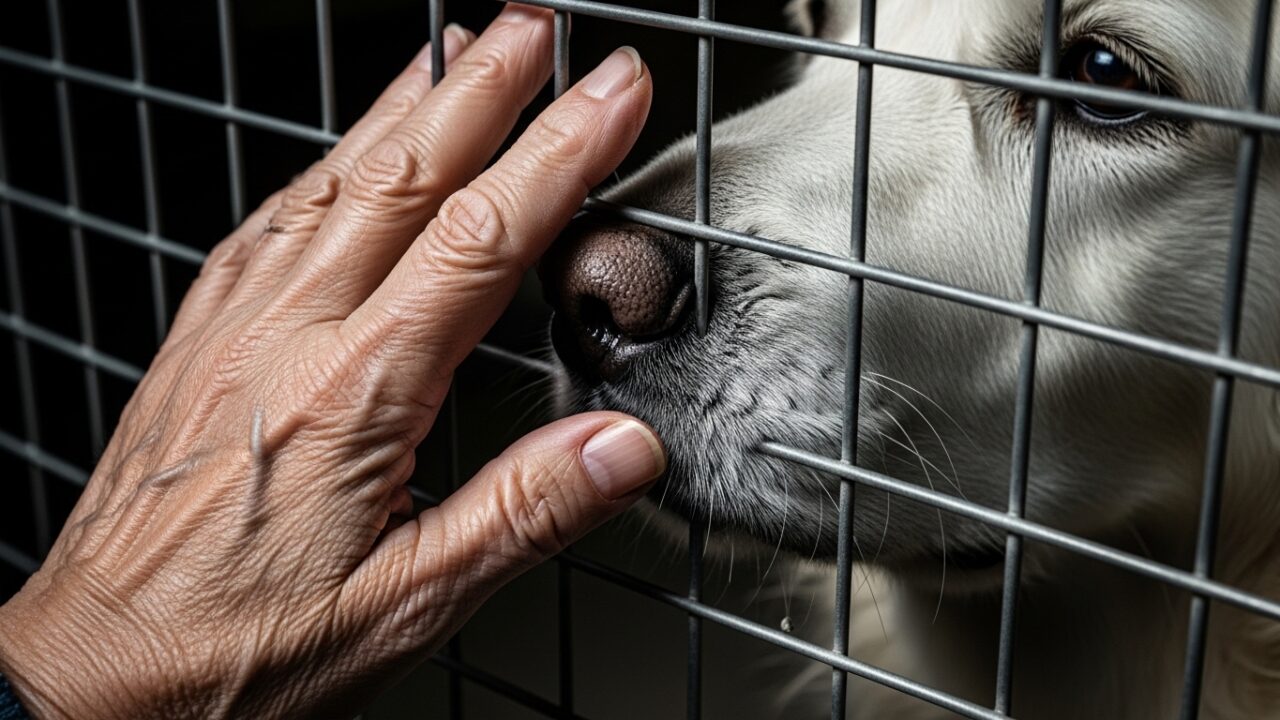
“My Husband’s Chair Sat Empty For 3 Years… But What I Brought Home From The Shelter That Tuesday Saved My Life.”

I was 74, living alone in a house that had grown far too quiet, waiting for the days to simply pass like autumn leaves falling on a cold porch.
But nothing prepared me for the terrifying winter night my life was handed back to me by an 11-year-old dog the shelter warned me not to adopt.
After Arthur passed, the silence in our home became a physical weight, something I had to carry from the bedroom to the kitchen every single morning.
I’d find myself making a full pot of coffee out of habit, only to stare at his empty blue mug sitting lonely in the cupboard.
My children are wonderful, truly, but they have their own lives in the city, and their frantic “How are you, Mom?” phone calls only highlighted how empty my four walls had become.
The dust began to settle on the piano I used to play, and some days, the only voice I heard was the evening news anchor on the television.
One rainy Tuesday, I decided I couldn’t look at Arthur’s old fleece jackets anymore; they still smelled like peppermint and woodsmoke.
I packed them into boxes and drove down to the local animal shelter to donate them for bedding, thinking I was just doing a small bit of good.
As I walked past the kennels, the barking was deafening—young, energetic pups jumping against the chain-link fences, desperate for a pair of running shoes to follow.
But then, I saw him.
In the very last cage, far away from the noise, sat a Golden Retriever whose muzzle was so white he looked like he’d been dusted by a light snowfall.
He didn’t jump. He didn’t bark. He just rested his chin on his paws and looked at me with eyes that seemed to understand exactly what it felt like to be left behind.
The volunteer whispered to me, “That’s Barnaby. He’s eleven. He’s got bad hips and a tired heart… honestly, Eleanor, most people are looking for puppies.”
She told me he was scheduled to be put down by the end of the week because no one wanted a dog who might only have a few months left.
I looked at Barnaby, and I saw myself—waiting in the quiet, tucked away in a corner where the world had forgotten to look.
I didn’t need a puppy to run miles with; I needed a soul to listen to the silence with me.
I signed the papers with trembling hands, ignoring the “Are you sure?” looks from the staff, and led that limping, beautiful boy to my car.
I thought I was giving him a place to spend his final days in peace, a final act of charity before my own light faded.
I had no idea that in just three months, this “unadoptable” dog would be the only reason I’m still here to tell this story.
The first few nights with Barnaby were a symphony of creaks and heavy sighs. My floorboards groaned under his weight, and his joints popped every time he tried to find a comfortable spot on the rug.
I had bought him a thick, orthopedic bed, the kind that cost more than my own mattress, but he refused to use it at first. He would just stand in the middle of the living room, his head hanging low, looking at the front door as if waiting for the people who had abandoned him to come back.
It broke my heart because I knew that feeling all too well. I spent my evenings in Arthur’s recliner, watching the door myself, half-expecting my husband to walk through it with the mail and a kiss for my forehead.
For the first week, we were like two polite strangers living in a boarding house. I would set down his bowl of expensive “Senior Support” kibble, and he would wait until I left the room to eat it.
Then, on a Tuesday—exactly seven days after I brought him home—the shift happened. I was sitting at the kitchen table, struggling to open a jar of peaches, my arthritis acting up in the damp weather.
I let out a frustrated huff and leaned my head back, closing my eyes for a second. Suddenly, I felt something warm and wet press against my hand.
It was Barnaby. He wasn’t looking for food or a walk; he was just standing there, resting his heavy head on my knee, looking up at me with those amber, soulful eyes.
It was as if he was saying, “I know it hurts, Eleanor. It hurts for me, too.” I buried my fingers in his soft, velvet ears and cried for the first time in months—not the quiet, polite crying I did at church, but deep, cleansing sobs.
From that moment on, we weren’t just two old beings sharing a roof; we were a pack. I started waking up with a purpose again, because Barnaby needed his medicine at 7:00 AM sharp for his hips.
He needed his slow, shuffling walks down to the end of the driveway. Those walks, which used to feel like a chore I did for my own health, became the highlight of my day.
Neighbors who hadn’t spoken to me in years started stopping their cars to ask about the “handsome old gentleman” at the end of my leash. I found myself smiling—truly smiling—at the way he’d sniff every single blade of grass as if it were the most interesting thing in the world.
He taught me how to be present. Barnaby didn’t worry about how many years he had left, or why his previous family didn’t want him anymore; he only cared about the sun on his fur and the fact that I was nearby.
I started cooking again, too. It felt silly to roast a chicken just for myself, but knowing Barnaby would get a few tiny slivers of the skin made it worth the effort.
The house didn’t feel so big and drafty anymore. The silence was replaced by the rhythmic thump-thump-thump of his tail against the floorboards whenever I entered a room.
Even my doctor noticed a change during my check-up. “Your blood pressure is down, Eleanor,” he said, peering over his glasses. “And you seem… brighter.”
I told him about Barnaby, and how we were both “low-maintenance seniors” just looking for a bit of company. But I was careful not to mention the dizzy spells I’d been having lately.
I told myself it was just the heat, or perhaps I’d forgotten to eat enough protein. I was so focused on making Barnaby’s golden years perfect that I started ignoring the warning signs my own body was sending me.
I thought I was the caretaker, the one holding everything together. I thought I was the hero of this story for “saving” an old dog from the shelter.
But the universe has a funny way of showing you who is really in charge. As the first frost of winter began to crawl across my windows, I had no idea that my life was hanging by a very thin thread.
And that thread was held in the mouth of a dog who was supposedly “too old” to be of any use to anyone.
The winter wind was howling against the siding that night, a bitter, bone-chilling cold that seemed to seep through the very cracks of the house.
I was in the kitchen, just about to pour myself a glass of water before bed, when the world suddenly tilted on its axis.
A cold sweat broke out across my forehead, and my hands began to shake so violently that the glass shattered against the floor.
I’m a diabetic, and I’ve always been careful, but that night, my blood sugar didn’t just drop—it plummeted into a dark, terrifying abyss.
I tried to reach for the orange juice in the fridge, but my legs felt like they were made of lead and straw.
I collapsed onto the linoleum, my hip screaming in pain, but the fog in my brain was so thick I couldn’t even remember how to cry out for help.
The phone was sitting on the charger in the living room, a million miles away, its little green light mocking me from the distance.
“Barnaby,” I whispered, my voice sounding like dry leaves rustling. “Barnaby, help me.”
He had been dozing by the heater, but the sound of the glass breaking brought him to his feet faster than I thought those old hips would allow.
He came skidding into the kitchen, his paws sliding on the tiles, and he let out a whimper that vibrated through my very chest.
He licked my face, his warm breath the only thing keeping me grounded as the edges of my vision started to turn pitch black.
I tried to grab his collar, to pull myself up, but I was too weak, drifting into a heavy, suffocating sleep I knew I wouldn’t wake up from.
Barnaby knew it, too. This dog, who usually moved with the grace of a slow-motion film, suddenly transformed into something fierce and desperate.
He didn’t just sit there. He ran to the front door and began to bark—not his usual “hello” bark, but a raw, frantic scream that echoed through the empty street.
When no one came, he grew frantic. I watched through half-closed eyes as he threw his heavy body against the front door over and over.
He began to scratch at the wood with such fury that I could hear his claws splintering the finish, a sound of pure, unadulterated love and panic.
Then, he did something I still can’t explain. He ran to the large bay window in the living room and jumped up, knocking over the heavy brass lamp Arthur had bought me.
The lamp crashed through the side table, and the bright light began to flicker through the window like a distress signal into the snowy night.
He went back to the door, howling with a lung-bursting strength that finally caught the attention of the Millers next door.
Through the haze, I heard a muffled voice outside: “Something’s wrong at Eleanor’s! Look at that dog! He’s going crazy!”
The last thing I remember before the darkness took me completely was the sound of my front door being kicked open and the frantic blue lights of an ambulance reflecting off the snow.
And through it all, I felt a heavy, warm weight resting against my side, and the steady, terrified heartbeat of an old dog who refused to let me go alone.
I woke up to the sterile smell of a hospital room and the steady, rhythmic beep of a heart monitor. My daughter, Sarah, was holding my hand, her eyes red and swollen from crying.
The doctors told me my blood sugar had hit a level that was rarely survivable alone. They called me a “miracle,” but I knew better—miracles don’t usually have four legs and a cold nose.
The Millers told Sarah that they had never heard a sound like the one Barnaby made that night. It wasn’t just barking; it was a soul-shattering cry for help that wouldn’t let them sleep.
When I finally came home three days later, my heart was racing as Sarah helped me through the front door. I was terrified that the stress of that night might have been too much for his old heart.
But there he was, waiting in the hallway. He didn’t jump—his hips wouldn’t allow that—but his entire body wiggled with a joy so pure it brought me to my knees.
I noticed the scratches on the front door and the broken lamp in the living room. Evidence of a battle fought by a dog everyone else had given up on.
I sat on the floor and pulled him into my lap, burying my face in his golden fur. I realized then that the shelter volunteer was wrong—he didn’t have a “tired heart.” He had the strongest heart I had ever known.
I spent 74 years thinking I understood what “saving” someone meant. I thought it was a top-down act of charity, something the strong do for the weak.
But Barnaby taught me that rescue is a circle. I gave him a soft bed and a warm bowl of food, and in return, he gave me back my life and a reason to keep breathing.
We are both a little slower now, and our walks are even shorter than before. We spend a lot of time just sitting on the porch, watching the world go by.
People often pass by and say, “Oh, it’s so sweet of you to take in such an old dog, Eleanor. You’re an angel for giving him a home.”
I just smile and nod, but deep down, I know the truth. I didn’t save Barnaby from that shelter. I just brought my guardian angel home in the back of a station wagon.
If you are out there feeling like your best days are behind you, or if you’re looking at a shelter cage and seeing a dog that’s “too old” or “too broken”—please, look again.
Sometimes the soul that needs saving the most is the one staring back at you in the mirror. And sometimes, the only one who can find you in the dark is the one the rest of the world has forgotten.
My house is no longer quiet. It’s filled with the sound of heavy paws, deep sighs of contentment, and the beautiful, messy noise of a life that was almost lost—and then found again.
I hope my story encourages just one person to give a senior dog a chance. Please, share this so Barnaby’s bravery can inspire others. Love never grows old.

About the Author
dream01
A writer passionate about human stories and real-life experiences that inspire and move readers.
 Dog Story
19 min read
Dog Story
19 min read
The Boy Who Walked Forward
There is a kind of courage that announces itself — that stands tall, clenches its fist, makes a sound that…
 Dog Story
54 min read
Dog Story
54 min read
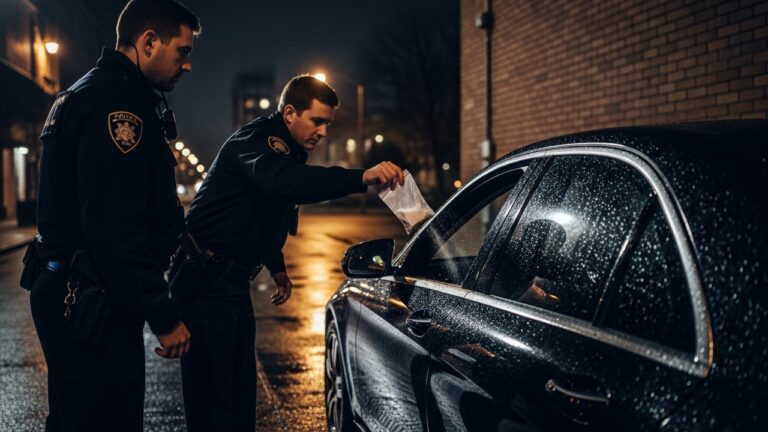
Two Officers Tossed A Bag Of White Powder Into My Mercedes At 2 AM… They Had No Idea Who They Just Framed.
The flashing red and blue lights hit my rearview mirror at exactly 2:14 AM. I was two blocks away from…
 Dog Story
43 min read
Dog Story
43 min read
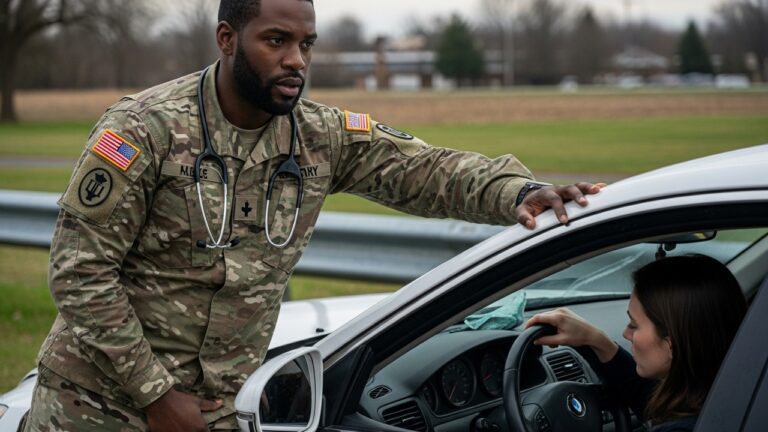
I Pulled His Daughter From The Burning Wreckage At 3 AM… Then He Looked The Police In The Eye And Said I Was The One Who Kidnapped Her. They Didn’t See My Uniform. They Didn’t See My Medkit. They Only Saw My Skin And A Story They Already Wanted To Believe. But That Night, I Left My Body-Cam Running.
Chapter 1 The rain in Clear Creek doesn’t just fall; it punishes. It’s that cold, mid-October Appalachian rain that turns…
Leave a Reply