

Chapter 1
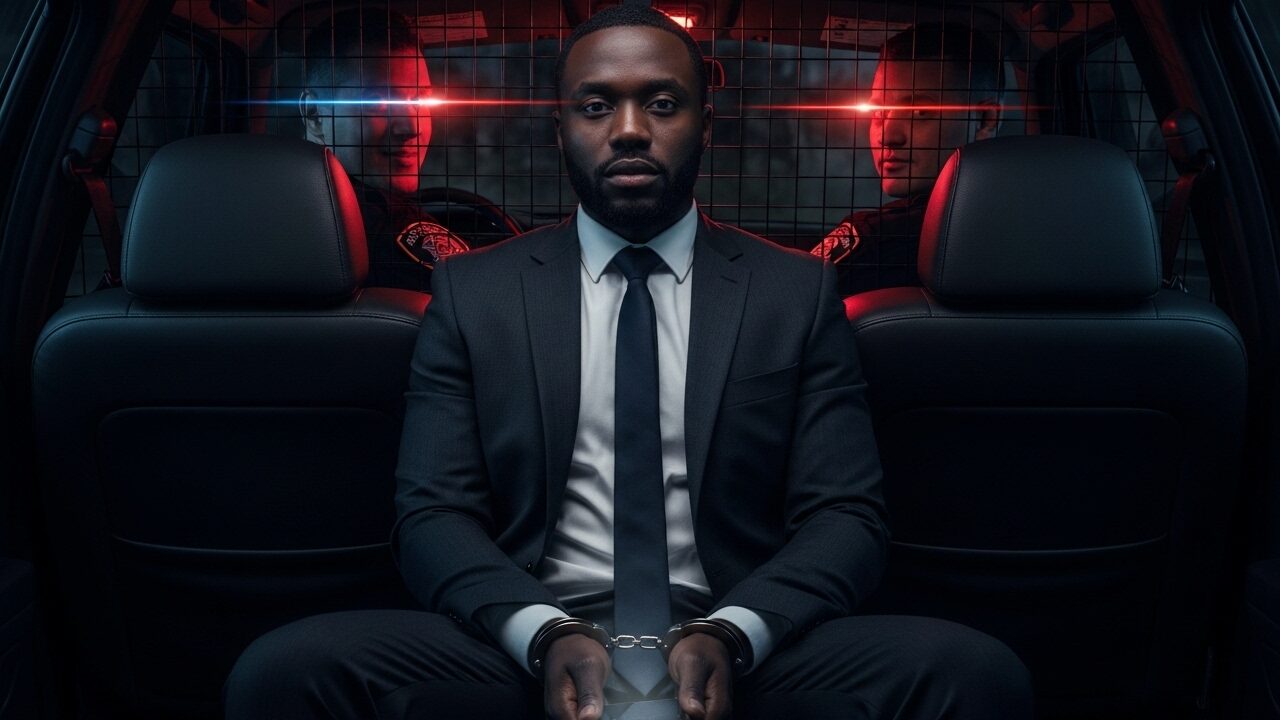
Red and blue lights flashed in my rearview mirror, painting the plush leather interior of my truck in a harsh, terrifying strobe.
My stomach dropped instantly. Not because I had done anything wrong, but because of a survival instinct I learned when I was twelve years old.
I was driving exactly three miles under the speed limit through Oakridge Estates, a neighborhood where the driveways are longer than the house I grew up in. I was the lead architect on a $4 million custom build at the end of the cul-de-sac.
But to the two cops pulling me over, I wasn’t an architect. I was just a target in a truck that looked “too expensive” for me to be driving.
I pulled over to the shoulder, put the car in park, turned off the engine, and placed both hands flat on the steering wheel. Ten and two. Visible. Perfectly still.
My heart hammered against my ribs like a trapped bird.
Footsteps crunched on the gravel. I glanced in the side mirror. Two officers. One older, built like a linebacker with a heavy jaw and dead, cynical eyes. The other was younger, fidgety, his hand resting a little too close to his holster.
“License, registration, and insurance,” the older cop demanded. He didn’t say good evening. He didn’t ask if I knew why he stopped me.
“Yes, Officer,” I said, my voice steady, though my throat felt like sandpaper. “My license is in my back right pocket. My registration is in the glove box. I am going to reach for them now.”
“Just get it,” he snapped, shining his blinding flashlight directly into my eyes.
I handed him the paperwork. He looked at my ID, then looked at me, a nasty smirk pulling at the corner of his mouth. “Marcus. Long way from the city, aren’t you, Marcus?”
“I work just up the road,” I said. “I’m the architect for the Vance property.”
The younger cop chuckled. It was a dry, ugly sound. “Right. And I’m an astronaut. Step out of the vehicle.”
“Officer, why am I being asked to step out?”
“Because I smelled marijuana, and I’m asking you to step out of the vehicle,” the older cop barked, his hand dropping to his belt.
There was no marijuana. I had never touched the stuff in my life. I had asthma and a pristine record. But I knew the script. I knew arguing on the side of a dark road was a death sentence.
I unbuckled my seatbelt and stepped out into the freezing night air.
“Face the truck. Hands on the roof. Spread your legs,” the older cop ordered.
The humiliation washed over me like acid. Cars drove past. People from the wealthy neighborhood I was helping to build slowed down, staring at me spread-eagled against my own truck, their faces confirming everything the cops were trying to project onto me. Criminal. Threat. Thug.
The younger cop patted me down aggressively while the older one walked to the back of my truck.
“Pop the trunk,” the older cop yelled.
“I do not consent to a search,” I said, my voice shaking with a mix of terror and boiling rage.
“I don’t need your consent, I have probable cause,” he sneered. Before I could process what was happening, I heard the electronic beep of my tailgate unlocking. The younger cop had grabbed my keys.
I turned my head just enough to see the older cop leaning into my empty truck bed. He rummaged around an empty toolbox. He had his back to me for three full seconds.
When he turned around, he was holding a clear plastic baggie filled with a heavy cluster of white pills.
“Well, well, well,” the older cop smiled, walking toward me holding the bag up to the streetlamp. “Looks like our architect is dealing.”
The world tilted on its axis. My breath caught in my throat.
“That is not mine,” I said, my voice cracking. “My truck bed was empty. You know it was empty.”
“Shut your mouth,” the younger cop hissed, grabbing my wrists and violently twisting them behind my back. The cold steel of handcuffs bit into my skin, clicking shut with a terrifying finality.
I was shoved into the back of the freezing cruiser. The hard plastic seat dug into my back. Through the wire mesh, I could hear them laughing in the front seats.
They were going to ruin my life. My career. Everything I had built from the ground up, erased in three minutes by a plastic bag they brought with them.
“You’re looking at ten to fifteen years for intent to distribute, Marcus,” the older cop called back to me, adjusting his rearview mirror so he could look at my face. He wanted to see me break. He wanted tears. He wanted me to beg.
“Tell you what,” the cop said, tossing my cell phone through the partition gap onto the floorboard between my feet. “I’m feeling generous. I’ll give you three minutes to make a call before we get to the station and book you into county. Better call someone with a lot of bail money. Or a really good lawyer.”
They chuckled again, turning up the police radio, completely convinced they had just buried another nobody.
My hands were cuffed behind my back, but I managed to contort my body, sliding down the seat to grab the phone with my bound fingers.
I didn’t call a bail bondsman. I didn’t call a defense attorney.
I pulled up my favorites list and blindly mashed the dial button for my godfather, Uncle Artie.
The cops up front were smirking, waiting for me to panic. They had absolutely no idea that Arthur Sterling wasn’t just my godfather.
He was the Chief Judge of the United States District Court.
Chapter 2
The physical geometry of the back seat of a police cruiser is designed for maximum discomfort. It’s hard, slippery plastic molded to offer zero support, ensuring that if you have your hands cuffed behind your back, your shoulders are pushed forward into agonizing, unnatural angles.
My phone was glowing on the grimy rubber floorboard. I had thirty seconds, maybe a minute, before the older cop—whose name tag in the mirror read MILLER—realized I wasn’t weeping. I had to move.
I slid my hips forward on the slick plastic, ignoring the sharp, biting pain of the steel cuffs cutting into my wrists. I bent my knees inward, trapping the phone between my tailored suit pants and my calf. With a contortionist’s desperate twist, I managed to angle my bound hands down just far enough. My right index finger grazed the screen.
Face ID failed. Enter Passcode. My heart hammered against my ribs, a frantic, syncopated rhythm of pure panic. I couldn’t see the keypad. I had to do it by muscle memory, entirely blind, with my hands secured behind me.
Six. Eight. Zero. Two. Nine. Nine. A soft click. Unlocked.
I swiped up, tapped what I prayed was the green phone icon, and hit the first contact in my favorites list. I couldn’t lift the phone to my ear, so I blindly tapped the screen again, praying I hit the speaker button.
From the front seat, a blast of static erupted as the younger cop, DAVIS, turned up the police scanner, drowning out the ambient noise. They were laughing about a high school football game, their voices completely devoid of the reality that they had just committed a felony to destroy my life.
From the floorboard between my ankles, a deep, gravelly voice echoed faintly.
“Arthur.”
It was a single word, spoken with the calm, immovable weight of a man who spent his life making decisions that altered destinies. Arthur Sterling. My father’s best friend. My godfather. And the Chief Judge of the United States District Court for the state we were currently in.
I leaned down as far as my spine would allow, bringing my mouth inches from the speaker, whispering with a frantic intensity that burned my throat.
“Uncle Artie. It’s Marcus.”
A half-second pause. Artie’s tone shifted instantly from judicial to paternal, recognizing the unnatural, hushed terror in my voice. “Marcus. Where are you? What is wrong?”
“Oakridge Estates,” I breathed, my eyes darting to the wire mesh partition, watching the backs of Miller and Davis’s heads. “County police. They pulled me over. I was leaving the Vance build. They… Artie, they planted something in my truck bed. A bag of pills. I didn’t have anything. I swear to God, the bed was empty.”
I expected gasps. I expected a barrage of questions. Instead, I got the chilling, absolute silence of a veteran legal mind shifting gears from family man to apex predator.
“Are you in cuffs?” Artie’s voice was a low rumble, stripped of all emotion.
“Yes. In the back of the cruiser. They gave me the phone to mock me. They’re trying to break me.”
“Listen to me very carefully, Marcus,” Artie said, his words measured and precise. “You are going to experience a profound amount of humiliation in the next two hours. You are going to want to fight. You are going to want to scream your innocence. Do not. I forbid you from saying a single, solitary word to those officers. You do not explain yourself. You do not argue the law. You do not show anger. You give them a blank wall.”
“They’re talking about ten to fifteen years, Artie,” my voice cracked, a tear finally breaking free and tracking hot down my cheek. “They’re framing me.”
“They are trying to,” Artie corrected, his voice dropping an octave, radiating a quiet, terrifying menace. “Marcus, I need you to breathe. Do exactly as they say. Comply physically. But mentally, you shut down. You are a vault. Let them bring you to the precinct. Let them book you. By the time they finish their paperwork…”
He paused, and I could hear the faint sound of a heavy oak chair scraping against a hardwood floor through the speaker.
“…the earth is going to open up and swallow them whole. Stay quiet, son. I am on my way.”
The line clicked dead.
I managed to kick the phone back under the front seat, hiding it in the shadows just as Miller adjusted the rearview mirror to look back at me.
“What’s the matter, Marcus?” Miller sneered, his thick neck flushed with arrogant amusement. “Daddy didn’t answer? Or did your lawyer tell you how screwed you actually are?”
I stared back at his reflection in the mirror. I clamped my jaw shut. A blank wall. “Silent treatment. Cute,” Davis chimed in from the passenger seat, turning around to press his face against the wire mesh. He looked no older than twenty-five, a kid playing soldier with a badge and a gun. “You guys always clam up when the reality sets in. Thinking about that county food? Thinking about losing that nice shiny truck?”
“It’s a shame, really,” Miller added conversationally, leaning back in his seat as he navigated the dark, winding roads out of the affluent neighborhood. “You see a guy like this, Davis. Got the suit. Got the corporate gig. Probably some diversity hire firm trying to hit their quotas, right? But you can put a stray dog in a sweater, it’s still gonna dig through the trash. They always revert to type.”
The blatant, venomous racism hit me like a physical blow. It wasn’t hidden. It wasn’t coded in microaggressions or polite corporate double-speak. It was naked, raw, and delivered with the absolute confidence of men who operated with total impunity.
My knuckles turned white behind my back. I thought about the six years of architecture school. I thought about the sleepless nights staring at AutoCAD blueprints until my eyes bled. I thought about the loans my mother took out, cleaning office buildings at night so I could have the drafting supplies I needed. I had spent my entire adult life building an impenetrable armor of respectability. I spoke flawlessly. I dressed impeccably. I drove the speed limit. I paid my taxes. I played their game by their rules, sacrificing pieces of my own identity just to make people like Miller and Davis feel “comfortable” around me.
And it meant absolutely nothing.
To them, my degree, my career, my humanity—they were all rendered entirely invisible by the color of my skin and a ten-cent plastic bag of prop evidence.
The drive to the precinct felt like it lasted a lifetime. Every bump in the road sent jolts of pain through my locked shoulders. The flashing lights painted the passing trees in a sinister, rhythmic strobe. I focused on my breathing. In for four. Hold for four. Out for four. I built a fortress in my mind, retreating behind the walls just as Artie had instructed.
We pulled into the rear garage of the county precinct. The heavy steel door rolled down behind us, sealing me inside a concrete tomb that smelled of exhaust fumes and stale sweat.
“End of the line, architect,” Miller barked, opening the back door and hauling me out by the chain of the handcuffs. The sudden upward pull wrenched my shoulder sockets, forcing a sharp gasp through my teeth.
“Walk,” he commanded, shoving me toward a set of heavy metal double doors.
Central Booking was a sensory nightmare. The fluorescent lights were blindingly harsh, buzzing with an angry, mechanical hum. The air was a thick, suffocating blend of bleach, body odor, and the unmistakable, metallic scent of human despair. Telephones rang constantly. Cops shouted over each other.
I was shoved toward a high desk where a bored-looking desk sergeant sat behind thick bulletproof glass, casually scrolling through his phone.
“What do we have tonight, Miller?” the sergeant asked without looking up.
“Got a live one, Sarge,” Miller grinned, leaning against the counter. “Traffic stop in Oakridge. Reeked of marijuana. Found a heavy bag of unprescribed oxycodone stashed in the trunk bed. Distribution quantities. Looks like our boy here is supplying the rich kids.”
The sergeant finally looked up, his eyes sweeping over my tailored wool suit, the expensive silk tie, the polished Oxford shoes. He let out a low whistle. “Damn. Drug game is paying out better than my pension. Take off the watch, fancy man.”
A female officer approached with a plastic bin. “Empty your pockets. Take off the belt, the tie, the shoelaces, and the watch.”
Davis unlocked my cuffs. The rush of blood back into my numb hands felt like a thousand needles piercing my skin. I rubbed my raw, red wrists, keeping my eyes fixed on the scuffed linoleum floor.
I complied in total silence. I unbuckled my belt, feeling the immediate loss of dignity as my trousers loosened. I pulled the silk tie from my neck—a gift from my mother when I landed my first firm partner track. I took off my Rolex, a physical manifestation of thousands of hours of grueling work, and dropped it into the cheap plastic bin. It landed with a hollow, tragic thud.
“Name?” the sergeant barked.
I gave him my name. My date of birth. My address. Nothing more.
“Alright, tough guy. Step over to the wall for processing.”
They took my fingerprints, pressing my fingers violently onto the glass scanner, treating my hands like pieces of meat. They stood me against a cinderblock wall marked with height lines.
“Look at the camera,” the booking officer ordered.
I stared into the lens. I didn’t scowl. I didn’t cry. I channeled every ounce of Arthur Sterling’s chilling stoicism. I stared through the camera, locking my rage into a tight, dense sphere in the center of my chest.
Flash. “Turn to the right.”
Flash. “Take him to Holding Cell 4.”
I was marched down a long, narrow corridor lined with iron bars. The sounds of the jail hit me like a physical wave—men screaming, someone vomiting in the corner, the rhythmic, maddening clatter of tin cups against iron bars. It was a warehouse for human misery, a system designed to strip you of your soul before you even saw a judge.
Cell 4 was an eight-by-ten concrete box with a single, exposed metal toilet in the corner and a long steel bench bolted to the wall. The air conditioning blasted from a ceiling vent, keeping the room at a freezing temperature—a deliberate psychological tactic to keep inmates uncomfortable and compliant.
The heavy iron door slammed shut behind me. The lock engaged with a deafening, final CLANG that reverberated in my teeth.
I was entirely alone.
I sat on the freezing metal bench, pulling my suit jacket tight around my chest, shivering uncontrollably. The adrenaline that had sustained me through the arrest was beginning to crash, leaving behind a profound, terrifying exhaustion.
I closed my eyes, and the doubts began to creep in. What if Artie couldn’t fix this? He was a federal judge, yes, but this was a local county precinct. They had physical evidence, even if they planted it. It would be my word—a Black man—against two sworn police officers. I knew the statistics. I knew the history of this country. Innocent men with darker skin than mine went to prison every single day in America based on the exact same lies.
An hour passed. Then two.
The precinct grew quiet as the night shift settled in. My muscles cramped from the cold.
Suddenly, the heavy security door at the end of the cellblock buzzed open. I opened my eyes.
Footsteps echoed on the concrete floor. Slow, deliberate, and heavy.
It was Officer Miller. He was alone. He held a manila folder in his left hand, and a smug, predatory smile played on his lips. He walked up to the bars of my cell and leaned against them, wrapping his thick, meaty hands around the iron.
“Comfortable, Marcus?” he asked, his voice dripping with mock sympathy.
I stared at him from the bench. I didn’t move. I didn’t speak.
“You know, I ran your background while you were chilling in here,” Miller continued, opening the folder. “Pristine. Not even a parking ticket. Architect. Good credit score. It’s almost impressive how well you’ve faked it for so long.”
He pulled a piece of paper from the folder and held it up to the bars.
“This is a standard waiver and confession,” Miller said, his tone turning transactional, like a salesman closing a deal. “I just got off the phone with the Assistant District Attorney. Now, she’s a reasonable woman. She sees your clean record, she thinks maybe you just made a bad choice. Trying to make some extra cash on the side. It happens.”
He tapped the paper against the iron bar.
“You sign this, admitting the pills were yours, and you give us the name of your supplier. You do that for me right now, and I’ll have the ADA drop the intent to distribute charge. You plead down to simple possession. You might even get probation. You keep your little job. You go home to your nice apartment.”
He leaned closer, his face pressing between the bars, his breath smelling of stale coffee and cheap mints.
“But if you want to play the martyr? If you want to lawyer up and fight us in court? I promise you, Marcus, I will personally make sure you get the maximum sentence. Fifteen years in a state penitentiary. You won’t be drafting blueprints in there, buddy. You’ll be laundry duty. Your life, as you know it, ends tonight.”
The sheer audacity of it was breathtaking. He had planted the drugs. He had kidnapped me under the color of law. And now, he was trying to extort a false confession out of me to wrap his corrupt little bow around my ruined life, preventing me from fighting back.
He slid a cheap plastic pen through the bars, letting it clatter onto the floor of my cell.
“Don’t be stupid, Marcus,” Miller whispered. “Take the deal. You can’t beat us. Nobody beats us in this county.”
I looked at the pen on the floor. I looked back up at Miller’s dead, cynical eyes.
I opened my mouth, remembering Artie’s command to stay silent, but the absolute injustice of the moment forced the words from my throat.
“You planted that bag,” I said, my voice low, steady, and vibrating with an icy hatred I didn’t know I possessed. “You put it in my truck, and you smiled while you ruined my life. I will never sign that paper.”
Miller’s smug expression vanished, replaced instantly by a dark, ugly fury. The mask slipped completely.
“You arrogant piece of sh*t,” he hissed, gripping the bars so hard his knuckles turned white. “You think because you speak well and wear a nice suit you’re better than the rest of the trash we bring in here? I’ve seen a hundred of you. You’re all exactly the same underneath. I am going to bury you, Marcus. You hear me? I am going to make sure you—”
Miller’s threat was abruptly cut off by the violent, slamming sound of the cellblock’s main security door being thrown open so hard it hit the concrete wall behind it with a deafening crash.
Miller jumped, spinning around toward the noise.
Heavy, frantic footsteps sprinted down the corridor. It wasn’t the slow, arrogant walk of a cop on patrol. It was the panicked run of a man terrified for his life.
Captain Henderson, the precinct’s Watch Commander, rounded the corner. His uniform shirt was untucked, his face was drained of all color, entirely ashen, and he was sweating profusely despite the freezing air conditioning. He looked like he had just seen a ghost.
He didn’t even look at me. He lunged at Miller, grabbing him violently by the shoulder of his uniform.
“Miller!” the Captain gasped, his voice cracking with sheer, unadulterated panic. “What the hell have you done?”
Miller looked bewildered. “Captain? I’m in the middle of securing a confession from the suspect—”
“Shut your mouth!” the Captain roared, a spray of spit hitting Miller’s face. He shoved Miller backward against the opposing wall of the cellblock. “Do you have any earthly idea who is standing in my lobby right now?”
Chapter 3
“Captain?” Miller stammered, his voice suddenly stripped of all its sneering bravado. The cheap plastic pen he had tried to force me to use was still lying on the floor, forgotten. “What are you talking about? It’s just this guy, a traffic stop—”
“Shut your goddamn mouth, Miller!” Captain Henderson roared. The sound echoed off the cinderblock walls, silencing the distant murmurs of the other inmates down the block. Henderson wasn’t just angry; he was exhibiting the pure, unadulterated terror of a man watching his entire pension and career evaporate in real-time. He grabbed Miller by the lapels of his uniform, shoving him backward so hard the younger officer stumbled against the steel bars of the cell opposite mine.
“You absolute, catastrophic idiot,” Henderson hissed, his chest heaving. Sweat was beading on his forehead, catching the harsh, buzzing fluorescent light. “Do you have any idea what you’ve done? Do you know who is standing in my lobby right now, holding a court order with my name on it?”
Miller swallowed hard, his Adam’s apple bobbing nervously. “Who?”
“The Chief Judge of the United States District Court,” Henderson said, his voice dropping to a harsh, trembling whisper that somehow carried more weight than his shouting. “Arthur Sterling. He is flanked by two armed United States Marshals. And he is demanding the immediate, unconditional release of his godson. The man you just threw in my cage.”
The color drained from Miller’s face so fast it looked like a medical emergency. His skin went from a flushed, arrogant red to a sickening, translucent gray in the span of three seconds. His jaw actually went slack. He slowly turned his head, his wide, terrified eyes locking onto me sitting quietly on the cold metal bench.
The silence that followed was absolute. The buzzing of the overhead lights suddenly sounded as loud as a chainsaw.
I didn’t smile. I didn’t gloat. I remembered Artie’s instructions. You are a vault. I just stared back at him, letting the crushing weight of his own profound stupidity settle over him like a suffocating blanket.
“Keys,” Henderson demanded, snapping his fingers frantically. “Give me the goddamn keys right now!”
Miller fumbled at his belt, his hands shaking so violently he could barely unclip the heavy brass keyring. He dropped them twice on the concrete floor, the sharp clatter echoing like gunshots. He finally managed to hand them to the Captain.
Henderson practically ripped the keys from Miller’s trembling fingers. He jammed the large iron key into the lock of Cell 4. The heavy mechanism turned with a loud, metallic clank, and Henderson shoved the barred door open.
“Mr. Vance… I mean, Marcus. Sir,” Henderson stammered, the authoritative Watch Commander persona completely vanishing, replaced by the frantic groveling of a middle manager trying to save his own skin. “Please. Step out. There has been a… a monumental misunderstanding.”
I stood up slowly from the freezing metal bench. My joints ached, my wrists were still burning and raw from the tight steel of the handcuffs, and my muscles were incredibly stiff. I adjusted my suit jacket, taking my time, letting them wait. Every second of my slow, deliberate movement was agonizing for them. I walked out of the cell, my dress shoes clicking softly against the concrete.
I stopped directly in front of Miller. I was two inches taller than him, and without the handcuffs forcing my shoulders down, I let my full posture return. I looked down into his eyes. The dead, cynical, racist predator I had met on the side of the road was gone. In his place was a terrified, small man realizing he had just stepped onto a landmine.
He couldn’t even meet my gaze. He looked away, staring at the floor, his breathing shallow and erratic.
“Follow me, please, sir,” Henderson said, gesturing frantically down the hallway.
We walked back through the precinct, but the atmosphere had entirely shifted. It was like walking through a morgue. Ten minutes ago, this place had been a cacophony of ringing phones, shouting cops, and clacking keyboards. Now, it was a ghost town. Every officer we passed had stopped whatever they were doing. They were standing behind their desks, backs pressed against the walls, heads down, actively avoiding making eye contact with me. Word had already spread through the precinct like wildfire. The apex predator had entered their territory, and they all knew someone was about to get eaten.
We approached the heavy double doors leading to Central Booking and the front lobby.
“Sir, before we go out there,” Henderson whispered, stopping just short of the doors, his hands clasped together in a pleading gesture. “Please know that the actions of Officer Miller and Officer Davis do not reflect the values of this department. We will conduct a full, transparent internal investigation—”
I didn’t let him finish. I didn’t say a word. I just pushed past him, hitting the metal crash bar on the double doors and stepping out into the lobby.
The visual hit me with a wave of emotion so profound I almost choked on it.
The precinct lobby was normally a chaotic space filled with crying relatives, angry suspects, and indifferent desk sergeants. Tonight, it was completely empty of civilians. The desk sergeant who had mocked my suit earlier was standing at rigid attention behind his bulletproof glass, completely pale, looking like he was facing a firing squad.
And standing dead center in the middle of the room, leaning casually on a silver-tipped walking cane, was Arthur Sterling.
He was wearing a beautifully tailored charcoal wool overcoat over his pajamas, having clearly thrown it on the second he got out of bed. Despite the late hour, he radiated an immovable, terrifying authority. He didn’t look angry. He looked absolute. To his left and right stood two men in dark suits with earpieces and tactical vests over their dress shirts, the bold yellow letters U.S. MARSHAL emblazoned across their chests. They were standing in a relaxed, wide stance, their hands resting comfortably near their duty weapons.
Artie’s sharp, assessing eyes locked onto me the second I came through the doors. He took in the state of me—the lack of a tie, the missing belt, the way my shoulders hunched slightly from the lingering pain in my wrists, the exhaustion etched into my face.
I saw a microscopic tightening in his jaw. The only sign of the volcanic fury brewing beneath his calm exterior.
“Marcus,” Artie said. His voice was a rich, deep baritone that carried perfectly across the silent room. He didn’t ask if I was okay. He didn’t ask what happened. He simply acknowledged my presence.
“Uncle Artie,” I replied, my voice raspy. Just saying his name felt like dropping a massive weight off my chest.
Captain Henderson scurried out from behind me, practically tripping over his own feet to get to the desk sergeant. “His belongings! Now! Give Mr. Vance his belongings!”
The desk sergeant frantically pushed the plastic bin through the slot under the bulletproof glass.
“Put your belt on, Marcus,” Artie instructed calmly. “Put your tie on. Put your watch on. Do not rush. We have all the time in the world, and these gentlemen are going to stand here and watch you do it.”
The silence in the room was suffocating. The only sound was the rustle of my clothes as I threaded my leather belt back through the loops of my trousers. I tied my silk tie, the familiar knot grounding me, restoring the dignity they had tried so hard to strip away. I picked up my Rolex. The heavy steel felt cool against my skin as I clasped it shut over my red, bruised wrist.
“Where are the arresting officers?” Artie asked, his voice conversational, completely devoid of yelling. He addressed the question to the air, not looking at Henderson.
“They… they are in the back, Your Honor,” Henderson stammered, wiping sweat from his brow. “I have ordered them to remain in the holding area.”
“Bring them out here,” Artie commanded. It wasn’t a request. It was an edict.
“Your Honor, with all due respect, I’m not sure that’s procedure—”
One of the Federal Marshals shifted his weight, his hand dropping just an inch lower toward his belt. The sound of his tactical gear shifting echoed in the quiet lobby.
Henderson swallowed the rest of his sentence. “Right away, Your Honor.”
He practically sprinted back through the double doors. A minute later, he returned. Behind him walked Officer Miller and Officer Davis.
Davis, the young cop who had been so eager to mock me in the car, looked like he was going to vomit. His eyes were darting wildly around the room, taking in the Federal Marshals and the Chief Judge. Miller walked with his head down, the bullish swagger completely eradicated. He looked exactly like what he was: a bully who had finally picked on someone who could destroy him.
They lined up in front of the front desk, staring at the floor.
Artie stepped forward. His cane tapped once against the linoleum. Click. “Officer Miller,” Artie said, reading the nameplate. “Officer Davis.”
They didn’t look up. They mumbled unintelligible acknowledgments.
“Look at me when I speak to you,” Artie said, his voice dropping to a terrifying, quiet rumble.
Both officers snapped their heads up, their eyes wide with fear.
“You pulled over a vehicle tonight in Oakridge Estates,” Artie began, pacing slowly back and forth in front of them, leaning heavily on his cane. “You claimed you smelled marijuana. A fascinating olfactory achievement, considering the driver has severe asthma, has never smoked a day in his life, and his vehicle is less than a month old.”
He stopped, locking eyes with Miller.
“You ordered him out of the vehicle. You illegally searched his trunk bed without consent and without a warrant. And then, miraculously, you discovered a substantial quantity of unprescribed oxycodone.” Artie paused, letting the words hang in the air. “A plastic baggie of pills. Found in a completely empty truck bed. During a routine traffic stop.”
“Your Honor,” Miller croaked, his voice cracking. “We had probable cause—”
“You have nothing,” Artie interrupted, his voice slicing through Miller’s defense like a scalpel. “You have no bodycam footage, because according to the precinct log I had subpoenaed while I was getting dressed twenty minutes ago, both of your cameras conveniently malfunctioned at the exact moment of the stop.”
Miller and Davis exchanged a panicked, sickening glance. They hadn’t realized Artie had already been moving pieces on the board before he even arrived.
“However,” Artie continued, a cold, predatory smile touching the corners of his mouth. “You are clearly unaware that Marcus’s truck, being a 2024 luxury model, is equipped with a 360-degree security sentry system. High-definition cameras built into the side mirrors, the tailgate, and the cab, which record continuously to a secure cloud server the moment the vehicle is put into park.”
Miller literally swayed on his feet. Davis let out a small, involuntary whimper.
I looked at Artie in shock. I didn’t even know my truck had that feature activated. Artie didn’t look at me; his eyes were entirely fixed on the prey in front of him.
“I have already had my clerks pull the footage,” Artie lied smoothly, brilliantly, bluffing with the absolute conviction of a master poker player holding a royal flush. “I watched it on my tablet on the ride over here. I watched you, Officer Miller, reach into your own tactical vest. I watched you pull a plastic baggie from your own pocket. And I watched you drop it into my godson’s empty truck bed.”
The complete and utter devastation on Miller’s face was cinematic. His knees actually buckled slightly. He reached out to grip the edge of the desk to keep from collapsing.
“Do you know what Title 18, United States Code, Section 242 is, Officer Miller?” Artie asked quietly.
Miller shook his head numbly.
“It is the Deprivation of Rights under Color of Law,” Artie explained, stepping so close to Miller that the officer had to lean back. “It is a federal felony. When a law enforcement officer uses their badge to willfully deprive a citizen of their constitutional rights. When it involves kidnapping—which false arrest and imprisonment absolutely are—it carries a maximum sentence of life in federal prison.”
The word life hung in the sterile air of the lobby, heavy and absolute.
“You saw a young Black man driving a truck you decided he had no business driving,” Artie continued, his voice finally rising, filled with a righteous, furious indignation that resonated in my very bones. “You decided to teach him a lesson. You decided to play God with his life, his career, his freedom. You thought you were throwing a nobody into a cage. You thought there would be no consequences because the system is designed to protect you from people who look like him.”
Artie turned, gesturing toward me with his cane.
“But you didn’t catch a nobody. You caught an architect. You caught a man with no criminal record. And you caught the godson of a man who signs the warrants for the Federal Bureau of Investigation.”
Artie turned back to Captain Henderson, who was practically hyperventilating behind the desk.
“Captain Henderson. Is there any paperwork filed yet? Are there any official charges in your system regarding Mr. Vance?”
“No, Your Honor!” Henderson practically screamed, desperate to distance himself. “Nothing has been finalized! The arrest is voided! It’s erased!”
“Good,” Artie said simply. “Because if a single keystroke regarding this fabricated arrest enters the county database, I will have the Department of Justice tear this precinct down to the foundation studs.”
Artie turned to the two Federal Marshals.
“Gentlemen, I believe we are finished here. Mr. Vance is coming with me.”
Artie walked over to me, placed a warm, heavy hand on my shoulder, and guided me toward the glass doors leading out into the night.
I looked back one last time. Miller was slumped against the front desk, his face buried in his hands. Davis was staring blankly at the wall, realizing his entire life was over before it really began. Captain Henderson was glaring at them with a look of murderous intent. They were completely, utterly destroyed.
The heavy glass doors slid open, and the freezing night air hit my face. It felt like the first real breath I had taken in hours.
We walked out into the parking lot. An imposing black Chevy Suburban was idling at the curb.
I stopped before we reached the car. I turned to Artie. The adrenaline was finally leaving my system, replaced by a profound, shaking exhaustion, and an overwhelming surge of gratitude.
“Uncle Artie…” I started, my voice cracking, the tears I had held back in the cell finally threatening to spill over. “I… I don’t know my truck has a sentry mode.”
Artie stopped. He looked at me, the stern, terrifying judicial mask melting away, replaced by the warm, protective smile of the man who had taught me how to tie my shoes.
He leaned in close, checking to make sure the Marshals were out of earshot.
“It doesn’t, Marcus,” Artie whispered, his eyes twinkling in the streetlights. “I made that part up.”
Chapter 4
I stared at Artie, the cold night air suddenly feeling non-existent as his words washed over me.
I made that part up.
He had bluffed. The Chief Judge of the United States District Court had walked into a hostile, corrupt police precinct, stared down the Watch Commander and two armed, predatory officers, and completely fabricated a piece of digital evidence to secure my release. He hadn’t just used his authority; he had used their own paralyzing fear of exposure against them.
“You bluffed,” I whispered, my voice barely audible over the low, powerful hum of the idling Suburban. “Uncle Artie… if they had called your bluff. If they had checked the truck…”
“They were never going to check the truck, Marcus,” Artie said, his voice soft but laced with an absolute, terrifying certainty. “Bullies do not fact-check when a gun is pointed at their heads. And make no mistake, my presence in that lobby was a loaded gun.”
He placed his hand on the small of my back and gently guided me toward the rear door of the SUV. One of the Federal Marshals held it open. I climbed into the cavernous, leather-scented interior, the sheer luxury of it a jarring contrast to the freezing, urine-soaked concrete of Holding Cell 4. Artie climbed in next to me, and the heavy door slammed shut with a solid, bank-vault thud, sealing us off from the nightmare outside.
The Suburban pulled away from the curb, merging onto the dark, empty county highway. The physical toll of the last few hours finally breached my adrenaline-fueled defenses. I leaned my head against the cool tinted glass of the window, and my body began to shake. It wasn’t a gentle shiver; it was a violent, uncontrollable tremor that started in my core and radiated out to my fingertips. My wrists throbbed with a dull, burning agony where the steel handcuffs had bitten into the flesh.
Artie didn’t say a word. He didn’t offer empty platitudes like “it’s over” or “you’re safe now.” He knew those words were meaningless to a Black man in America who had just had the illusion of his safety violently shattered. Instead, he reached over and clamped his large, warm hand onto my knee, offering a silent, grounding anchor in the middle of my psychological storm.
We drove in silence for twenty minutes. The flashing neon signs of strip malls and gas stations blurred together in my peripheral vision. Every time we passed a car with headlights that sat a little too high, my breath caught in my throat, my heart hammering against my ribs, expecting the flashing red and blue lights to return and finish the job.
“I did everything right,” I finally said, the words tearing out of my throat, thick with a sudden, overwhelming grief. I wasn’t just grieving for the night; I was grieving for the lie I had believed my entire life. “Artie, I did everything right. I went to the right schools. I got the right degree. I wear the suits. I speak the way they want me to speak. I keep my head down. I work eighty-hour weeks. I built a life that was supposed to make me immune to this.”
I turned to look at him, tears finally breaking free, carving hot tracks down my face.
“And it meant absolutely nothing. To Miller, I wasn’t an architect. I wasn’t a citizen. I was just prey. A stray dog in a sweater, he called me. If you hadn’t answered that phone… Artie, if you hadn’t answered…”
I couldn’t finish the sentence. The abyss of what would have happened—the mugshot, the perp walk, the lost job, the shattered reputation, the fifteen-year sentence—loomed so close I could still feel its gravity pulling at me.
Artie turned to me, his face illuminated by the passing streetlights. The judicial armor was completely gone. In his eyes, I saw a deep, ancient sorrow that transcended my individual experience. It was the collective sorrow of generations.
“Marcus, listen to me,” Artie said, his voice a low, steady rumble. “The armor you built—the degrees, the suits, the vocabulary—that armor wasn’t built to protect you from the wolves. It was built to make the sheep feel comfortable around you. But a wolf doesn’t care about your resume. A wolf only sees the color of your skin and the opportunity to feed his own power.”
He squeezed my knee, his grip tightening.
“You survived tonight because you were smart, because you stayed quiet, and yes, because you had access to power. But do not ever let what happened tonight make you feel like you are less than what you are. They tried to strip you of your humanity because they are devoid of their own. They are cowards hiding behind badges.”
“But they got away with it,” I muttered, wiping my face with the back of my trembling hand. “You got me out, but they’re still there. Tomorrow night, they’re going to pull someone else over. Someone who doesn’t have a federal judge on speed dial. Someone who won’t be able to fight back.”
A slow, chilling smile spread across Artie’s face. It wasn’t a happy smile. It was the smile of an apex predator who had just locked the cage from the outside.
“Who said they got away with it?” Artie asked quietly.
I frowned, confused. “But you said the sentry camera was a bluff. There’s no footage. It’s my word against theirs. Even with your influence, a prosecutor won’t touch a he-said, she-said case against two sworn officers without hard evidence.”
“You’re right. I did bluff about your truck,” Artie said, leaning back into the plush leather seat, his eyes gleaming in the shadows. “But Marcus, you are one of the most meticulous, obsessive-compulsive architects I have ever known. When you design a project, you oversee every single microscopic detail. Isn’t that right?”
“Yes,” I answered slowly, not understanding where he was going.
“Tell me about the Vance property,” Artie said. “The house you are building in Oakridge Estates. The site you were leaving when they pulled you over.”
“It’s a four-million-dollar custom build. State-of-the-art everything,” I said, my mind struggling to shift from the trauma of the arrest back to my work. “We just finished the framing and the roof structure. We were starting the exterior stonework this week.”
“And because the property is so valuable, and the materials on site are so expensive, what did you insist the general contractor install before the first shovel even hit the dirt?”
My breath hitched. The memory hit me like a lightning bolt.
Three months ago, during the initial site planning meeting, I had argued aggressively with the contractor about site security. Oakridge Estates was secluded, and the lumber and custom steel beams we were using were prime targets for theft. I had forced the contractor to install a high-end, discreet security system around the perimeter of the lot.
“The owls,” I whispered, my eyes widening.
Artie’s smile widened. “The owls.”
I had designed custom, weatherproof housings that looked exactly like decorative wooden owl boxes, mounting them high in the ancient oak trees lining the edge of the property and the street. Inside those boxes were ultra-high-definition, night-vision, motion-activated 4K security cameras. They were pointed directly at the driveway, the street, and the cul-de-sac.
And the spot where Miller and Davis had pulled me over was less than fifty yards from the property line. Directly in the sightline of the eastern-facing camera.
“While you were sitting in that cell, freezing and terrified,” Artie explained, his tone shifting into the methodical, clinical cadence of a judge outlining a conviction, “I wasn’t just getting dressed. I was making phone calls. I called the general contractor of the Vance property. I woke him up. I had him remotely access the cloud server for the site’s security cameras.”
Artie reached into the inner pocket of his coat and pulled out his smartphone. He unlocked it and handed it to me.
“I didn’t need your truck’s cameras, Marcus,” Artie said softly. “You had already built the trap yourself.”
My hands shook as I took the phone. I tapped the play button on the video file displayed on the screen.
The footage was breathtakingly clear, bathed in the sharp, monochromatic contrast of high-end infrared night vision. The angle was high, looking down on the street.
I saw my truck pull over to the shoulder. I saw the cruiser pull up behind it. The video had no audio, which somehow made it even more haunting. It was like watching a silent film of my own execution.
I watched myself step out of the truck, placing my hands on the roof. I watched the younger cop, Davis, pat me down roughly.
And then, the moment of absolute, undeniable truth.
The camera angle clearly showed the truck bed. It was completely empty. There was nothing but the textured black lining of the bed.
I watched Miller walk to the back of the truck. I watched him look over his shoulder, ensuring my head was turned away. And then, in crystal-clear 4K resolution, I watched Officer Miller reach his right hand under his tactical vest, pull out a small, dark object, and drop it directly into the empty bed of my truck.
He waited three seconds, leaned over, and triumphantly pulled the same object back out, holding it up to the streetlamp.
I hit pause. I stared at the frozen frame of Miller holding the planted drugs.
The profound, crushing weight of the injustice threatened to drown me, but it was immediately violently countered by the explosive realization of what I was holding in my hands. It was the silver bullet. It was the absolute, irrefutable destruction of the men who had tried to destroy me.
“I forwarded that video file to the Special Agent in Charge of the FBI’s regional field office twenty minutes before I walked into that precinct,” Artie said quietly. “By the time we walked out of those glass doors, federal warrants were already being drafted. They didn’t just target you, Marcus. They targeted the wrong man, on the wrong street, under the watchful eye of a system you built to protect your work.”
I handed the phone back to Artie, sinking back into the seat. The adrenaline crash was total now. I felt hollowed out, empty, but for the first time all night, I felt a tiny, fragile ember of safety return to my chest.
“What happens now?” I asked.
“Now,” Artie said, looking out the window into the darkness. “We let the federal government do what it does best. We let them turn the hunters into the hunted.”
The next few weeks were a surreal, disjointed blur of trauma and vengeance.
The psychological hangover of the arrest was severe. The bruises on my wrists faded after a week, but the internal scars were entirely fresh. I couldn’t drive my truck. The smell of the leather interior instantly transported me back to the side of that dark road, triggering massive, paralyzing panic attacks. I had to take an Uber to work, sitting in the back seat, staring out the window, jumping every time a police siren wailed in the distance.
My sleep was shattered. I would wake up at 3:00 AM, drenched in sweat, feeling the phantom weight of the steel handcuffs on my wrists, hearing the heavy CLANG of the iron cell door sliding shut. I started seeing a therapist who specialized in PTSD and racial trauma. She helped me understand that what I had experienced wasn’t just a bad encounter; it was a targeted psychological assault. It was terrorism, executed under the color of law.
But while I was privately rebuilding my shattered peace of mind, the public execution of Officer Miller and Officer Davis was taking place with a swift, brutal efficiency that left the entire state breathless.
The FBI did not knock.
Two days after my arrest, at 5:00 AM, a team of twenty armed federal agents executed a no-knock raid on the homes of both Miller and Davis. They dragged them out of their beds in their underwear, in front of their neighbors, securing them in federal handcuffs—the heavy, unyielding kind.
The raid on the precinct was even worse. The FBI locked down the entire building, seizing servers, hard drives, locker contents, and body camera logs. Captain Henderson was placed on immediate administrative leave, his career effectively terminated.
The footage from the owl cameras was leaked to the press—though Artie swore up and down he had no idea how it got to the local news stations.
The video went viral globally within hours. It was the perfect storm of undeniable visual evidence and a narrative that struck at the core of the American consciousness. The public watched, in high definition, as a corrupt cop framed an innocent man. There were no “he should have complied” arguments. There were no “we don’t know the whole context” excuses. It was naked, undeniable malice.
The fallout was catastrophic for the department. The FBI investigation revealed that Miller had a history of “miraculous” drug discoveries during traffic stops, predominantly involving minorities. Dozens of past convictions were immediately flagged for review. The county was looking at millions of dollars in civil rights lawsuits.
Six weeks later, I found myself sitting in the gallery of the United States District Court.
It wasn’t Artie’s courtroom—he had to recuse himself due to his relationship with me—but the presiding federal judge was a woman known for her absolute lack of tolerance for police corruption.
I wore my best tailored suit. A crisp white shirt. A deep blue silk tie. My Rolex gleamed on my wrist. I sat perfectly still, my posture immaculate, surrounded by a heavy contingent of federal marshals who were there to ensure my safety from any retaliatory actions by local police sympathizers.
The heavy oak doors at the side of the courtroom opened.
Officer Miller and Officer Davis were led in by federal bailiffs.
They were unrecognizable.
They weren’t wearing their crisp, authoritative county uniforms. They were wearing standard-issue, bright orange federal jumpsuits. Their wrists were shackled to heavy iron chains wrapped around their waists. Their ankles were shackled, forcing them to take small, shuffling steps.
The swagger was gone. The arrogant smirks were eradicated. They looked small. They looked terrified. They looked exactly like the men they had spent their careers throwing into cages.
Miller’s eyes scanned the gallery as he was led to the defense table. He saw me sitting in the second row.
He stopped. The bailiff tugged on his chain, but Miller remained frozen for a second, staring at me.
I didn’t look away. I didn’t scowl. I didn’t smile. I channeled Arthur Sterling’s immovable, terrifying silence. I sat there, the architect who had built his ruin, and I stared right through him, letting him see the full, unbroken reflection of the man he failed to destroy.
Miller swallowed hard, his eyes dropping to the floor, and he shuffled to his seat, his chains clanking loudly in the dead silence of the federal courtroom.
The hearing was brief. The Assistant United States Attorney laid out the charges: Deprivation of Rights under Color of Law, Falsification of Records, Obstruction of Justice, and Federal Kidnapping. Because they had crossed state lines during the course of their duties that month, it triggered a massive federal multiplier.
The judge denied bail. Both men were remanded to federal custody pending trial. They were looking at a minimum of twenty years. They would serve it in federal penitentiaries, surrounded by men who harbored a profound, dangerous hatred for corrupt police officers.
As they were led out of the courtroom, the heavy wooden doors swinging shut behind them, I felt a sudden, massive release of pressure in my chest. The dense sphere of rage and terror that I had been carrying since the side of that dark road finally fractured, dissolving into the quiet, dignified air of the courtroom.
I walked out of the federal courthouse and stood on the wide marble steps. The sun was shining brightly, cutting through the crisp autumn air. The city bustled around me—people rushing to work, taxis honking, the endless, vibrant hum of life continuing.
Artie was waiting for me at the bottom of the steps. He wasn’t wearing his judicial robes today, just a classic tweed suit and a warm smile.
I walked down the steps, my dress shoes clicking softly against the marble.
“Are you okay?” Artie asked as I reached him.
I took a deep breath, letting the clean air fill my lungs. I looked at the courthouse, then at the sky, and finally at the man who had quite literally saved my life.
“I’m going to be,” I said softly.
They thought I was a target. They thought I was a victim waiting to be processed by a system designed to break me. They tried to bury me in the dark, confident that no one would hear me scream.
But they forgot one crucial detail.
They didn’t realize they were trying to bury a man who knew exactly how to build things from the ground up, and who had the vision to ensure that even in the darkest shadows, the cameras were always rolling.
[END OF FULL STORY]

About the Author
dream01
A writer passionate about human stories and real-life experiences that inspire and move readers.
 Dog Story
2 min read
Dog Story
2 min read
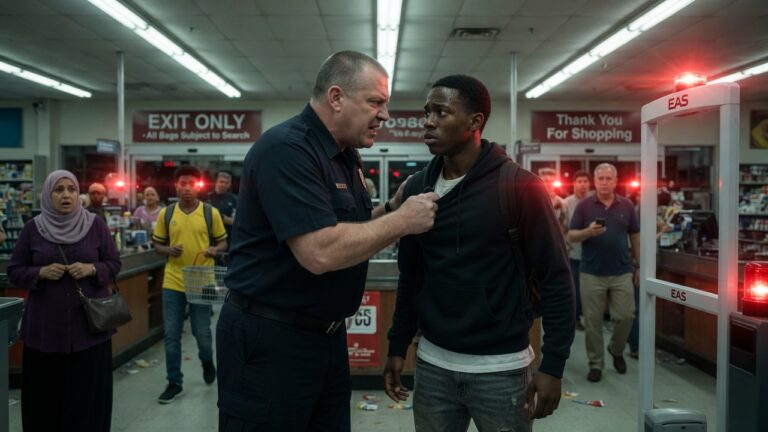
I Was Just Trying To Buy A Birthday Gift For My Mom. When The Store Alarm Went Off, I Thought It Was A Simple Mistake. I Was Dead Wrong. What Followed Was The Most Humiliating 20 Minutes Of My Entire Life.
Chapter 1: The Double Standard The piercing shriek of the security alarm ripped through the quiet murmur of the checkout…
 Dog Story
24 min read
Dog Story
24 min read
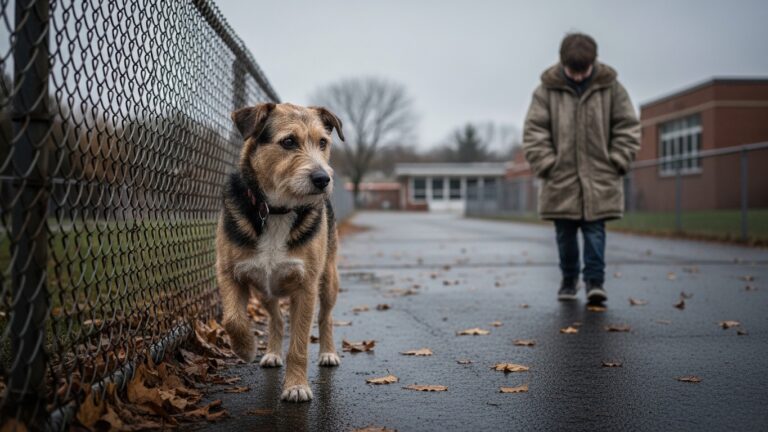
The Dog With The Crooked Leg Waited Outside The School Every Day, Hoping The Boy Who Never Smiled Would Look Back
The little wire-haired dog had learned a long time ago that the world was a fast and dangerous place, especially…
 Dog Story
34 min read
Dog Story
34 min read
For 45 Minutes, They Mocked A Black Man Kneeling In The Dirt—They Didn’t Know I Was The Federal Attorney Who Just Destroyed Their Entire Department
The gravel bit into my knees, sharp and unforgiving, but I didn’t flinch. I kept my eyes locked on the…
Leave a Reply