
I was the lead flight attendant on Flight 448 when I confronted the 6-foot-4 biker about his shaking duffel—noticing the “restricted” tag, I quietly signaled the captain to lock the cockpit door.

I’ve been a flight attendant for 19 years, working the grueling red-eye shifts out of Chicago, but absolutely nothing could have prepared me for the suffocating tension that took over our cabin last Tuesday night.
We were boarding in the middle of a massive thunderstorm. Rain was lashing against the terminal windows. Everyone walking down the jet bridge was soaked, exhausted, and irritable.
Then, he walked on.
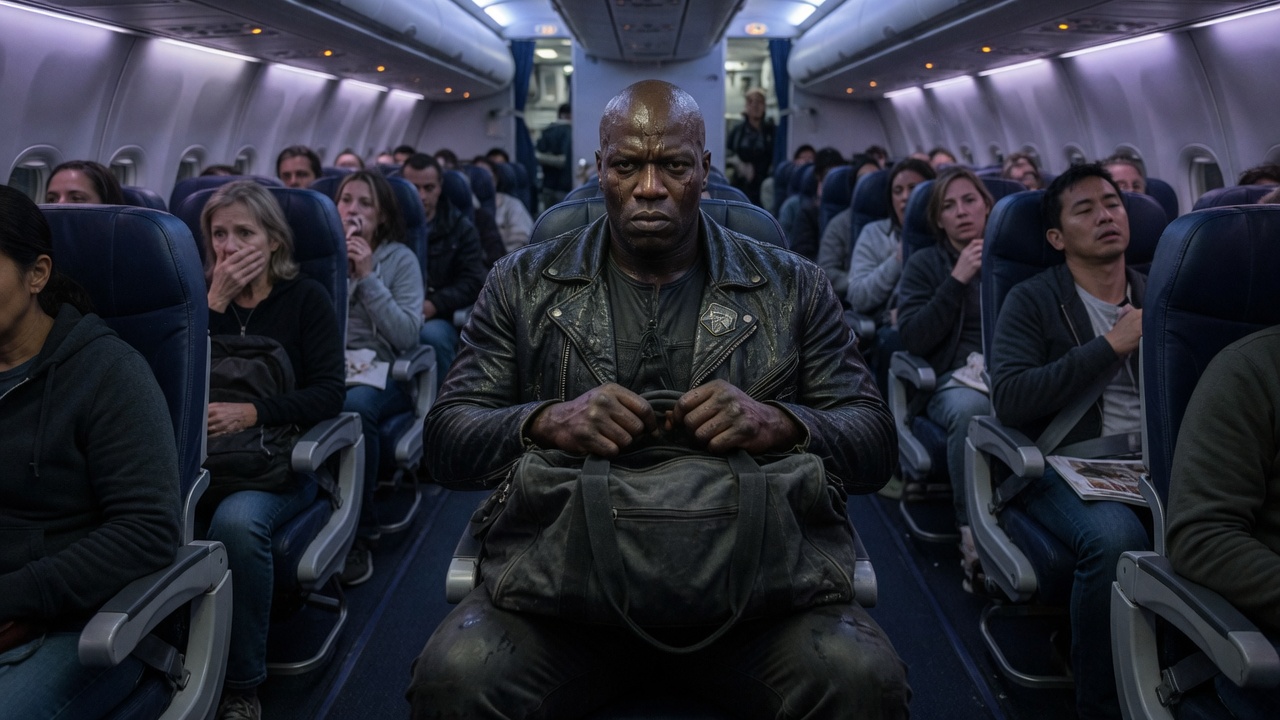
He actually had to duck his head to get through the main cabin door. He was easily 6-foot-4, incredibly broad-shouldered, and completely covered in heavy, wet leather.
A massive, hardened biker.
His leather cut was heavily worn, adorned with faded club patches that suggested a life spent entirely on the rough side of the asphalt. He wore heavy steel-toed boots, thick silver rings on his calloused fingers, and he had a jagged, pale scar cutting straight through his left eyebrow.
You could practically hear a pin drop in first class as he stomped his boots on the floor mat and walked through.
People instinctively pulled their knees in. A mother in row four stopped what she was doing and clutched her toddler tightly to her chest.
It wasn’t just his massive size. It was his energy. He was completely cold. Silent. Unmovable.
He made his way back to row 12. A dreaded middle seat.
In his massive hands, he carried a faded, black canvas duffel bag. But he wasn’t carrying it by the shoulder straps. He was cradling it against his chest. Holding it like it was made of fragile glass.
FAA regulations are incredibly strict during takeoff. Bags must go in the overhead bins or completely pushed under the seat in front of you to keep the aisles clear.
I watched from the front of the cabin as he squeezed into his seat. He didn’t even attempt to stow the black bag.
He just set it squarely on his lap, crossing his massive, tattooed arms securely over it.
The woman in the window seat—a sharply dressed businesswoman in her late fifties—pressed herself completely flat against the cabin wall, looking at me with wide, panicked eyes.
I took a deep breath, put on my practiced customer service smile, and walked down the aisle.
“Excuse me, sir,” I said, keeping my voice low and polite. “I’m going to need you to slide that bag under the seat in front of you for takeoff.”
He didn’t look up at me. His dark eyes stayed fixed straight ahead on the back of the seat.
“It stays right here,” he rumbled. His voice was incredibly deep, scraping the air like rough gravel.
“I’m sorry, sir, but it’s a strict safety regulation. The rows must be completely clear.”
His knuckles instantly turned white as he gripped the canvas. “I said, it stays with me.”
I’ve dealt with angry passengers, drunk passengers, and nervous flyers for almost two decades. But this was entirely different. He wasn’t acting angry. He was acting protective. Desperate.
And that made me incredibly nervous.
That’s when I saw it.
The black canvas bag on his lap… twitched.
It wasn’t the turbulence from the heavy storm outside. It wasn’t the vibration of the plane’s auxiliary engines.
Something inside that heavy canvas bag moved entirely on its own. A sharp, sudden jerk from the inside out.
I froze. The hair on the back of my neck stood straight up.
My eyes locked onto the heavy metal zipper. Tied to the pull was a frayed, yellow luggage tag, but someone had taken a thick black permanent marker and scrawled the word “restricted” across it in messy handwriting.
My mind immediately went to the absolute darkest places. Working in aviation, you are constantly trained to look for anomalies. This man, this bag, this situation—it was a walking, breathing anomaly.
“Sir,” I said, my voice completely losing its friendly tone. “What exactly is in the bag?”
“Nothing that concerns you,” he muttered, shifting his massive shoulders forward to block my view.
The businesswoman in the window seat suddenly snapped her seatbelt unbuckled.
“I want to move!” she hissed, her voice trembling loudly in the quiet cabin. “He’s got something alive in there! Or a bomb! I just saw it moving!”
Now, the surrounding rows were paying attention. People were unbuckling. Standing up in the aisle. Anxious whispers rapidly turned into panicked, echoing murmurs.
I immediately stepped back, went to the forward galley, and pulled the interphone off the wall. I dialed the flight deck.
“Captain, we have a major situation in row 12.” I quickly described the man, his refusal to comply, the sudden movement inside the heavy bag, and the strange handwritten tag.
The captain didn’t hesitate for a single second.
“I’m locking the cockpit door right now. Get the gate agent back down there. If he doesn’t open the bag and show you what it is, call airport police and pull him off my plane.”
I walked back down the long, narrow aisle to row 12. My heart was hammering wildly against my ribs.
“Sir, this is your final warning. You need to open the bag and show me what’s inside right now, or I am having you removed from this aircraft.”
The giant biker finally lifted his head and looked directly at me. His dark eyes were bloodshot and exhausted. A thick muscle feathered in his jaw.
“You really don’t want me to open this bag,” he whispered.
The threat hung in the recycled cabin air like poison.
Before I could even respond, two fully armed airport police officers stepped onto the front of the plane, their heavy boots thudding against the floorboards.
“Sir, step out of the seat right now,” the lead officer commanded loudly, marching down the aisle, his hand resting firmly on his heavy utility belt.
The biker slowly looked at the advancing cops. Then at me. Then down at his black canvas bag.
The bag shook again. Violently this time.
With a heavy, defeated sigh that seemed to drain the life right out of him, the massive man reached his thick, scarred fingers toward the zipper…
The sound of that heavy metal zipper being pulled back seemed to echo through the entirely silent cabin.
It was a slow, agonizingly loud rasp.
The two airport police officers immediately tensed. The lead officer dropped his hand straight to his duty belt, his fingers hovering instinctively over the yellow grip of his taser.
The sharply dressed businesswoman in the window seat pressed herself so hard against the curved plastic wall of the fuselage I thought she might crack it. She pulled her knees up to her chest, shutting her eyes tight, bracing for an explosion or the lunge of some smuggled, exotic predator.
I stood frozen in the aisle, my heart hammering against my ribs, mentally running through my emergency protocols. Evacuation routes. Fire suppression. Crowd control.
The giant biker didn’t look at the cops. He didn’t look at me.
His eyes were entirely focused on the dark opening of the faded canvas duffel.
His massive, calloused hands—hands that looked like they had spent a lifetime gripping heavy steel handlebars and throwing violent punches—parted the canvas flaps with agonizing slowness.
He didn’t reach inside. Instead, he gently cupped his palms together just outside the opening, waiting.
For a terrifying second, nothing happened. The cabin held its collective breath.
Then, a tiny, high-pitched whimper broke the silence.
It wasn’t a growl. It wasn’t a mechanical ticking. It was the softest, most pathetic sound I had ever heard.
Slowly, a small, black, wet nose poked out from the darkness of the bag.
Then came a pair of oversized, wildly trembling ears.
Finally, stepping hesitantly onto the giant man’s heavily tattooed forearm, was the source of the “restricted” cargo.
It was a dog.
But not a pit bull, a rottweiler, or any breed you would ever associate with a towering, scarred biker in heavy leather.
It was a completely bald, shivering, impossibly small Chinese Crested mix. It couldn’t have weighed more than five pounds. Its skin was mottled pink and grey, it was missing half its teeth, and one of its eyes was cloudy with age.
The tiny creature was vibrating with pure, unfiltered terror, letting out tiny, squeaking breaths as the harsh overhead cabin lights hit its face.
A collective gasp swept through the surrounding rows. It wasn’t a gasp of fear anymore. It was a gasp of sheer, absolute shock.
The lead police officer blinked, dropping his hand away from his taser. He looked at the dog, then up at the towering biker, utterly bewildered.
“Sir…” the officer started, his authoritative voice suddenly cracking. “Is that… a dog?”
The biker didn’t answer right away. He brought his massive arms inward, cradling the tiny, shivering creature against the worn leather of his chest.
Instantly, the dog buried its hairless little face into the fold of his thick leather vest, letting out a long, shuddering sigh. The biker brought one heavy, ring-covered finger up and began gently stroking the top of the dog’s head.
“Her name is Peanut,” the biker said.
His voice was still incredibly deep and gravelly, but the hard, threatening edge was completely gone. It was replaced by a quiet, protective vulnerability that caught me entirely off guard.
“Peanut?” the second officer echoed, sounding like he was trying to process a glitch in reality.
“She has terrible anxiety,” the biker muttered, keeping his eyes down on the dog. “The storm outside. The noise of the engines. It panics her. I put her in the bag to muffle the sound, but she hates the dark. That’s why she was shaking.”
The panicked businesswoman in the window seat finally opened her eyes. She stared at the tiny, toothless dog pressed against the man’s chest. Her face flushed bright red as the realization of her own hysteria washed over her.
“But…” I stammered, trying to regain my professional composure. “Sir, the tag on the zipper. It said ‘restricted’. Why would you label it like that?”
The biker let out a heavy, tired sigh. He reached into the inner pocket of his leather cut.
The officers tensed slightly again, but the man slowly pulled out a worn, heavily creased leather wallet. He opened it and pulled out two pieces of plastic.
He handed the first one to the lead officer. It was a military ID.
“I’m a combat veteran,” he said quietly. “Marine Corps. Two tours in Fallujah. The bag is an old surplus medical kit. ‘Restricted’ meant it held heavy narcotics and controlled trauma supplies.”
He handed the second card to me.
It was a laminated, official medical certificate signed by the Department of Veterans Affairs.
“I don’t carry those meds anymore,” he continued, his voice dropping so low I had to lean in to hear him over the hum of the plane’s auxiliary power. “I tried the pills. They made me a ghost. Now, I carry her.”
I looked down at the laminated card. It was an official Emotional Support Animal registration.
“She’s my lifeline,” he whispered, finally looking up at me. His dark, bloodshot eyes were filled with a profound, quiet pain. “When the panic attacks hit… when the walls start closing in and I think I’m back in the sand… she pulls me out. She grounds me. If I put her under the seat in the dark, she’ll panic. If she panics, I panic. And you don’t want me panicking at thirty thousand feet.”
I stood there in the narrow aisle, completely paralyzed by a sudden, crushing wave of guilt.
I have been a flight attendant for almost two decades. I am trained to read people. I am trained to spot threats. I saw a giant man in rough leather with a scar on his face, and I immediately categorized him as a danger.
I let my bias, and the hysteria of the passengers around him, dictate my actions. I almost had a decorated combat veteran dragged off a plane by armed police simply because he was trying to protect the tiny creature that kept his mind from collapsing.
The lead police officer handed the military ID back. His posture completely changed. He stood up straight and offered the biker a tight, respectful nod.
“Thank you for your service, Marine,” the officer said softly. He turned to me. “Ma’am, there is no security threat here. This is a medical equipment issue. It’s in your hands now.”
With that, the two heavily armed officers turned around and walked back up the aisle, exiting the aircraft into the rainy jet bridge.
The silence they left behind was heavy.
The passengers in the surrounding rows were all staring at me. They were waiting to see what the rule-enforcing lead flight attendant was going to do next.
FAA regulations regarding animals in the cabin had gotten incredibly strict recently. Technically, even an ESA is required to remain in an approved carrier stowed under the seat during taxi, takeoff, and landing.
The rules were black and white.
But looking at this massive, broken man, gently rocking a five-pound, hairless rescue dog against his chest while a thunderstorm raged outside, the rules suddenly seemed incredibly inadequate.
The businesswoman in the window seat cleared her throat. She had recovered from her embarrassment and was now trying to salvage her pride.
“Well,” she said, adjusting the collar of her silk blouse. “Medical or not, it’s still a dog. And I am highly allergic to dander. I cannot sit next to an animal for a four-hour flight. I’ll break out in hives.”
I looked at her, then down at Peanut. The dog didn’t even have hair to produce dander.
But I didn’t argue. I didn’t want to argue anymore. I just wanted to fix this.
I looked at the biker. “Sir, please wait right here.”
I turned and walked quickly back up the aisle to the forward galley. I picked up the heavy red interphone and dialed the flight deck.
“Captain,” I said when he answered.
“Is the police handling it?” the captain asked, his voice tight with stress. “We are already twenty minutes past our departure slot. Ground control is breathing down my neck.”
“The police are gone, Captain. It wasn’t a threat. It’s a disabled combat veteran with a registered emotional support animal. A very small one.”
There was a long pause on the other end of the line. “A dog?”
“Yes, sir.”
“Well, is it secured under the seat?”
“No, sir,” I replied, keeping my voice steady. “He cannot stow the animal. He needs to hold her for his own medical stability. It’s a severe PTSD case.”
“We can’t push back if the cabin isn’t secure,” the captain warned, citing the manual. “If he can’t comply with takeoff regulations, we have to rebook him.”
“Captain,” I interrupted, my voice taking on a firmness that surprised even me. “I am not kicking a Marine off this flight in the middle of a thunderstorm because he needs to hold his medical support. I’m moving him.”
“Moving him where? The flight is completely sold out.”
“We have the crew rest seat in row 1A,” I said.
Row 1A was a bulkhead seat in first class. It was legally reserved for flight crew on long hauls, but on domestic flights, it was usually left empty unless there was a deadheading pilot. It had massive legroom, and more importantly, it had a solid wall right in front of it.
“You want to put a dog in first class?” the captain asked.
“I want to secure the cabin so we can take off,” I replied diplomatically. “If he is in the bulkhead window seat, holding the dog against the wall, he is not blocking any passenger egress route. Technically, it fulfills the safety requirement of maintaining clear aisles.”
I was stretching the rules so far they were practically snapping, but I didn’t care.
“Fine,” the captain finally sighed. “Make it happen. We push back in five minutes.”
I hung up the phone and walked back down to row 12.
“Sir,” I said, leaning down to speak directly to the biker. “Gather your things. You’re moving.”
He looked up, a flash of defensiveness returning to his eyes. “I told you, I’m not—”
“You’re not getting off the plane,” I interrupted gently. “But the lady next to you is uncomfortable, and the middle seat is too cramped. I’m moving you to the front row. You’ll have the window to yourself, and you can hold Peanut for the entire flight.”
The biker stared at me. For a moment, the hardened, impenetrable mask of the tough guy completely slipped. I saw the exhausted, deeply traumatized man underneath.
He didn’t say thank you. He didn’t have to. The way his shoulders instantly dropped two inches was all the gratitude I needed.
He stood up, towering over me once again, cradling the tiny dog carefully in one arm while grabbing his heavy black duffel with the other.
I led him up to the first-class cabin. The wealthy passengers sipping their pre-departure champagne stared in absolute shock as the massive, wet, leather-clad biker squeezed into the luxurious bulkhead seat, gently settling a tiny, bald dog into his lap.
I helped him buckle his seatbelt. “Can I get you anything before we push back?” I asked.
“Just water,” he rumbled softly. “For her.”
I brought him a small plastic cup of water and a warm towel.
As the heavy cabin doors finally slammed shut and the loud mechanical whir of the plane pushing back from the gate began, I strapped myself into my jump seat at the front of the cabin, directly facing him.
The storm outside was brutal. The plane began to shake violently as we taxied toward the runway.
I watched the man.
As the engines roared to life, deafeningly loud, the biker closed his eyes tight. His massive jaw clenched, and I could see the veins bulging in his thick neck. He was entering his own personal hell, trapped in a metal tube, surrounded by the deafening noise of jet engines that likely sounded far too much like incoming artillery.
His breathing became shallow and rapid. He was teetering right on the edge of a severe panic attack.
But then, tiny Peanut moved.
She crawled up his massive chest, placed her two tiny, fragile front paws directly over his heart, and began to aggressively lick the thick scar running through his eyebrow.
Slowly, miraculously, the giant man’s breathing began to steady. His jaw unclenched. His shoulders relaxed into the plush seat.
He wrapped his huge hands around her tiny body, grounding himself in the reality of her warmth.
I sat in my jump seat, the plane hurtling down the dark, rain-soaked runway, and wiped a single tear from my eye.
The flight had finally begun. But as the plane broke through the heavy storm clouds and leveled out into the dark night sky, I had absolutely no idea that the real crisis of Flight 448 hadn’t even started yet.
And when it did hit, two hours over the Rocky Mountains, it wouldn’t be me, the captain, or the rulebook that saved us.
It would be the giant Marine and his five-pound dog.
For the first hour and forty-five minutes, Flight 448 was deceptively peaceful.
We were cruising at 36,000 feet, swallowed entirely by the ink-black night. Outside the double-paned acrylic windows, the storm raged on, but from our altitude, it looked like a silent, distant war. Massive supercell clouds bloomed in the darkness, illuminated entirely from within by violent, erratic flashes of sheet lightning that painted the sky in bruising shades of purple and sickly green.
Inside the cabin, however, the heavy rhythmic hum of the twin Pratt & Whitney engines provided a lullaby. Most of the passengers had succumbed to exhaustion. The reading lights were clicked off one by one, leaving the long, narrow fuselage bathed in the soft, artificial blue glow of the floor track lighting.
I was in the forward galley, quietly sorting the beverage carts with Sarah, a twenty-two-year-old junior flight attendant who had only been flying the line for three months. She was pale, her hands visibly trembling as she stacked plastic cups. She hated flying over the Rockies, especially in rough weather.
“It’s just air pockets, honey,” I told her, keeping my voice soothing and maternal. “The plane is built to flex. It’s like driving down a bumpy dirt road. That’s all.”
I glanced through the heavy curtain dividing the galley from first class.
The giant Marine in the bulkhead seat, row 1A, was fast asleep. His massive, leather-clad chest rose and fell in a slow, steady rhythm. Tucked securely inside his unzipped leather vest, resting directly over his heart, was Peanut. The tiny, hairless dog was completely dead to the world, her small pink snout resting against his collarbone.
It was a beautiful, quiet picture of redemption. A man broken by the horrors of war, finding peace at 36,000 feet because of a five-pound rescue dog.
I smiled, turned back to the coffee maker, and reached for a fresh filter.
That was the exact moment the bottom fell out of the world.
There was no warning chime. No announcement from the flight deck. No gradual build-up of turbulence.
One second, I was holding a plastic coffee filter. The next second, gravity completely ceased to exist.
The aircraft dropped.
It wasn’t a dip. It was a catastrophic, stomach-churning plunge. We hit a massive pocket of clear-air turbulence, compounded by the violent updrafts of the supercell beneath us, and the plane simply fell out of the sky like a stone dropped from a bridge.
The laws of physics violently asserted themselves inside the cabin.
Everything that wasn’t bolted down instantly levitated. Unsecured cups, magazines, phones, and blankets shot straight up toward the ceiling. I was thrown completely off my feet, my head smashing brutally against the metal edge of the catering cart.
The sound was unimaginable.
It wasn’t just the roar of the wind. It was the terrifying, agonizing groan of the plane’s aluminum skeleton bending and twisting under immense aerodynamic stress. It sounded like the hull of a submarine buckling under deep ocean pressure.
And then came the screaming.
One hundred and forty passengers woke up simultaneously to the sensation of freefall. A collective, deafening shriek of absolute, primal terror echoed through the fuselage.
The drop lasted maybe four seconds, but in the grip of pure panic, it felt like an eternity.
When the plane finally hit solid air again, the impact was bone-shattering.
Gravity slammed back into us with the force of a freight train. I was slammed into the galley floor, all the air rushing out of my lungs in a sharp gasp. The catering cart jumped off its locking brakes and slammed into the bulkhead.
Overhead bins snapped open under the immense G-force. Heavy carry-on bags, laptops, and hard-shell suitcases rained down on the passengers like artillery shells.
The heavy plastic oxygen mask panels deployed above the seats with a rapid, staccato popping sound. Dozens of yellow masks dangled from the ceiling, swaying violently like hanged men as the plane bucked and yawed uncontrollably.
The cabin lights flickered, buzzed aggressively, and then died completely.
We were plunged into total, suffocating darkness, illuminated only by the faint, eerie emergency floor strips and the frantic, flashing strobe of the lightning outside.
I lay on the galley floor, my vision swimming. A warm, sticky trail of blood trickled down my forehead, stinging my left eye. My shoulder screamed in agony.
“Sarah?” I rasped, trying to push myself up on my good arm.
I heard a whimpering sound near the forward lavatory door. Sarah was curled into a tight fetal position, clutching her head, completely paralyzed by fear.
The plane was still shaking violently. The turbulence hadn’t stopped; we had just survived the worst of the downdraft. The engines were whining at an incredibly high, strained pitch as the captain desperately fought to regain altitude and stabilize the aircraft.
From the main cabin behind me, the chaos was escalating into a full-scale riot.
People were screaming for their loved ones. A man was shouting in another language. The sharp, terrifying sound of a baby wailing pierced through the mechanical roar.
I forced myself onto my knees, my flight attendant training fighting through the concussion. I needed to get to the PA system. I needed to issue the brace command. I needed to establish order before the panic turned deadly.
But before I could even stand up, the heavy curtain separating the galley from first class was violently ripped open.
A massive silhouette filled the doorway, backlit by the faint red glow of an emergency exit sign.
It was the Marine.
In the chaotic, terrifying darkness, he didn’t look like a traumatized passenger anymore. He looked like an absolute force of nature. His posture was perfectly rigid, his broad shoulders squared, his movements terrifyingly precise and deliberate.
The chaos that was paralyzing the rest of the plane had triggered something deep inside him. He wasn’t in a cramped commercial airliner anymore. The noise, the screaming, the blood, the darkness—his brain had seamlessly shifted gears.
He was back in the combat zone. And in the combat zone, he was the alpha predator.
He looked down at me bleeding on the floor, then at Sarah cowering in the corner. His dark eyes were cold, calculating, and completely devoid of fear.
“Are you the senior crew?” his voice boomed over the noise, completely steady, carrying that rough gravel tone that demanded absolute obedience.
“Y-yes,” I stammered, gripping the edge of the counter to pull myself up.
“Your junior is in shock. Leave her. How many passengers?”
“One hundred… forty-two,” I gasped, pressing my sleeve against the cut on my forehead.
“Any medical professionals onboard?”
“I don’t know, we didn’t—”
“I’ll find out,” he interrupted. He didn’t ask for permission. He was taking operational control.
He turned his massive frame and stepped into the aisle of the main cabin.
I staggered after him, clinging to the seatbacks to keep my balance as the plane continued to pitch violently.
The scene in the economy cabin was a nightmare. Bags were strewn everywhere, blocking the aisles. People were bleeding from head wounds caused by falling luggage. Passengers were frantically trying to secure the deployed oxygen masks over their faces, even though the cabin hadn’t actually depressurized. The smell of fear, sweat, and spilled alcohol was suffocating.
The Marine stood at the front of the main aisle. He took a deep breath, his massive chest expanding.
“LISTEN UP!”
His voice didn’t just project; it detonated. It was a terrifying, authoritative roar honed on battlefields and drill decks. It completely cut through the screaming, the crying, and the engine noise.
The sheer volume and command in his tone shocked the cabin into a sudden, stunned silence. Dozens of terrified faces turned toward the front, looking at this giant leather-clad figure illuminated by the lightning flashes.
“Nobody moves!” he ordered, his voice echoing down the aluminum tube. “If you are uninjured, stay in your seat and keep your belt fastened! If you have medical training—doctor, nurse, EMT—raise your hand right now!”
Three hands hesitantly went up in the darkness.
“Good. Unbuckle and start moving down the aisle. Triage only. Head wounds and bleeding first. Do not move anyone with neck pain.”
He pointed a thick, heavily scarred finger at a large, young man in row three who looked like a college football player. “You. Get out of your seat. Start clearing this debris from the aisle. Toss the bags onto the empty seats. We need a clear path for the medics.”
The young man, operating purely on the momentum of the Marine’s command, immediately unbuckled and started throwing heavy suitcases out of the walkway.
I watched in absolute awe. The Marine was instantly bringing structure to the chaos. He was giving terrified people a purpose, turning their panic into action.
He moved down the aisle with surprising grace for a man his size, stepping over debris, assessing injuries with a single glance. He stopped at row nine, where an older gentleman was bleeding heavily from a deep gash on his scalp, struck by a falling laptop.
The Marine dropped to one knee. He didn’t hesitate. He reached down, grabbed the hem of his own heavy flannel shirt worn under his leather cut, and violently ripped a massive strip of fabric right off his own back.
He pressed the makeshift bandage firmly against the man’s head. “Hold this,” he told the man’s terrified wife. “Hard pressure. Do not let up.”
As he stood back up, I noticed something incredible.
Tucked securely into the deep interior pocket of his heavy leather vest, with only her tiny, bald head poking out, was Peanut.
The five-pound dog wasn’t shaking anymore. She wasn’t whimpering. Her large, bat-like ears were swiveled forward, and her dark, cloudy eyes were wide open, scanning the dark cabin.
The Marine’s chaotic environment had completely neutralized his PTSD, and the dog, intimately connected to his heart rate and emotional state, felt his absolute calm. She was mirroring his strength.
Suddenly, a woman’s voice shrieked from the very back of the plane.
It wasn’t a scream of pain. It was a scream of pure, unadulterated heartbreak.
“My baby! Oh my god, where is he?! He was right here!”
It was a young mother in row 28. During the massive drop, the G-force had violently ripped her sleeping toddler right out of her arms.
“He’s under the seats!” she screamed frantically, clawing at the dark floorboards. “I can’t see him! Please help me!”
The plane hit another rough pocket of air, shuddering violently. The emergency floor track lighting flickered and suddenly shorted out in the rear half of the cabin, plunging rows 15 through 30 into absolute, impenetrable darkness.
“Nobody move in the back!” the Marine roared, instantly realizing the danger. “Do not step into the aisle! You will crush him!”
He shoved past me, moving rapidly toward the rear of the plane. I followed close behind, grabbing a heavy-duty emergency flashlight from the mid-cabin jump seat compartment.
We reached row 28. The young mother was hysterical, completely inconsolable, restrained by the passengers next to her so she wouldn’t blindly trample into the dark aisle.
“He’s wearing a blue sweater,” she sobbed, grabbing the Marine’s massive leather arm. “He’s only two. Please.”
I clicked on the heavy flashlight, sweeping the harsh white beam across the floor.
It was a tangled mess of scattered luggage, spilled food, oxygen masks dangling all the way to the carpet, and terrified passengers’ legs. In the cramped, chaotic space beneath the seats, finding a small child was like finding a needle in a haystack.
“Kid!” the Marine shouted, his voice dropping an octave, trying to sound less threatening. “Hey, buddy! Make a sound!”
Nothing. No crying. No movement. Just the roar of the engines and the storm outside.
“He might be unconscious,” I whispered, panic rising in my throat. “If a bag hit him during the drop…”
The Marine’s jaw tightened. He dropped to his hands and knees, ignoring the shattered plastic and debris digging into his skin. He wedged his massive shoulders into the narrow aisle, trying to shine the flashlight under the rows.
“Too much clutter,” he grunted, frustrated. “I can’t see past row 26.”
That’s when Peanut moved.
The tiny dog wiggled her way out of the leather pocket on his chest. She dropped lightly onto the carpeted floor.
The Marine immediately reached for her. “No, Peanut, stay—”
But the little bald dog ignored him. She lowered her tiny snout to the floor, her large ears twitching independently. She took three steps forward, completely ignoring the massive strangers and the violent shaking of the floorboards.
She wasn’t a trained search and rescue dog. She wasn’t a police K9. She was a frail, toothless, anxious little rescue mutt.
But her instincts were ancient, and her bond with the giant man behind her gave her an impossible courage.
She let out a sharp, high-pitched “Yip!” and darted straight under the seats of row 27.
“Hold the light steady!” the Marine commanded me, instantly following his dog’s lead.
He crawled forward, pressing his face against the dirty carpet.
Peanut was squeezing through a gap between a crushed hardshell suitcase and the aluminum seat mounting bracket—a gap far too small for any human hand or flashlight beam to penetrate.
She stopped, sniffing frantically at a dark, tangled mass wedged tightly against the fuselage wall under the window seat.
She looked back at the Marine, let out another sharp bark, and began furiously digging at a heavy canvas duffel bag that was blocking the view.
The Marine didn’t hesitate. He reached his massive, heavily muscled arm under the seat. He grabbed the heavy canvas bag blocking the way, and with a terrifying grunt of raw physical power, he ripped it completely out, snapping the plastic handle in the process.
I shined the flashlight into the newly cleared space.
Wedged tightly against the wall, pinned under a life vest container that had broken loose, was a tiny boy in a blue sweater.
He was curled into a tight ball, his eyes squeezed shut, entirely paralyzed by fear, but he was breathing.
The mother let out a strangled gasp of relief.
The space was too tight for the Marine to reach in and pull the boy out without risking injury. The seat frame was bent inward from the impact of the turbulence.
“I have to lift the row,” the Marine said, his voice terrifyingly calm.
“You can’t,” I said. “Those are bolted to the floor tracks with reinforced titanium.”
The Marine didn’t look at me. He looked at the passengers sitting in row 27. “Get out of those seats. Now.”
The three terrified passengers scrambled into the aisle.
The giant man stood up. He wedged his heavy steel-toed boots against the floor track for leverage. He grabbed the solid aluminum frame of the triple-seat block with his massive, scarred hands.
He took a deep breath, his chest expanding like a bellows.
And he pulled.
It was an impossible feat of sheer adrenaline and brute strength. The muscles in his neck strained against his skin. The heavy leather of his jacket groaned.
With a sickening crack of shearing metal, the titanium bolts holding the seat row gave way. He actually bent the aluminum frame upward, creating a six-inch clearance beneath the seats.
“Get him!” the Marine grunted, his teeth locked together in intense strain.
I dove to the floor, reached into the gap, and grabbed the little boy by his blue sweater. I pulled him out just as the Marine let go of the heavy seat frame, letting it crash back down to the floor.
I handed the sobbing toddler up to his hysterical mother. She collapsed into the aisle, burying her face in his neck, crying uncontrollably.
The Marine dropped back to his knees, his breathing heavy. He held his hand out.
Tiny Peanut emerged from the shadows beneath the seats, stepping carefully over the debris, and climbed right back into the giant man’s waiting palm. He lifted her up and tucked her securely back into his leather vest.
I looked at the man. He had just saved the cabin from mass panic, organized a medical triage, and single-handedly dismantled a seat frame to save a child.
“Thank you,” I breathed, my voice shaking with raw emotion. “My god, thank you.”
He didn’t get a chance to reply.
Because at that exact moment, a sharp, piercing alarm began ringing from the forward galley.
It wasn’t the seatbelt chime. It wasn’t the passenger call button.
It was a rapid, high-low electronic screech that chilled the blood in my veins. It was the smoke detector alarm from the main avionics bay beneath the cockpit.
Suddenly, a thick, acrid smell filled the cabin. It wasn’t the smell of spilled coffee or fear.
It was the unmistakable, toxic scent of melting electrical insulation.
I whipped my head toward the front of the plane.
Thick, black smoke was rapidly billowing out from beneath the locked cockpit door, filling the first-class cabin and creeping down the aisle toward us.
The plane violently lurched to the left, banking at a terrifying, unnatural angle.
The turbulence hadn’t just shaken the cabin. It had severed something critical in the flight deck.
We were on fire. And we were going down.
The smell of an electrical fire at thirty-six thousand feet is something you never, ever forget.
It doesn’t smell like a campfire or burning wood. It smells like melting plastic, burning copper, and toxic chemicals. It is a harsh, acrid stench that instantly coats the back of your throat, burns your eyes, and tells your primitive brain that you are entirely out of options.
The high-low screech of the smoke detector from the forward galley was deafening, bouncing off the curved aluminum walls of the cabin.
Thick, oily black smoke began to pour out from the lower ventilation grates near the locked cockpit door. It crept along the ceiling first, a dark, suffocating canopy that slowly began to lower over the first-class seats, swallowing the faint emergency floor lights.
The plane banked sharply to the left. It wasn’t a controlled turn. It was a violent, sickening lurch that threw everyone who wasn’t strapped down entirely off balance.
The turbulence had shattered something deep inside the avionics bay beneath the flight deck floorboards. We were losing vital systems, and we were losing them fast.
The absolute silence that had followed the Marine’s rescue of the toddler was instantly shattered. The panic returned, but this time, it was infinitely worse.
Turbulence is terrifying, but fire on an airplane is a death sentence.
“STAY DOWN!” I screamed, my voice cracking violently as I scrambled to my feet, my boots slipping on the debris-littered carpet. “COVER YOUR NOSES AND MOUTHS! GET LOW!”
I didn’t have time to think. I didn’t have time to be terrified. Nineteen years of repetitive, monotonous emergency training completely took over my body.
I bolted up the aisle toward the forward galley. The smoke was already so thick in the front of the plane that I couldn’t see the heavy curtains dividing first class from the main cabin.
I hit the galley and immediately grabbed the heavy red Halon fire extinguisher mounted behind the jump seat. I ripped the metal safety pin out with my teeth, spitting it onto the floor. Next to it was the PBE—the Protective Breathing Equipment. It’s a heavy, oxygen-fed smoke hood.
I ripped the vacuum-sealed foil pouch open, pulled the heavy rubber hood over my head, and snapped the oxygen toggle. The hiss of pure, cool oxygen filling the hood was the only thing keeping me from suffocating in the toxic cloud.
I grabbed the heavy metal crash axe mounted on the wall.
“Captain!” I screamed into the galley interphone, practically crushing the receiver in my hand. “Captain, we have heavy smoke in the cabin! Source appears to be the lower forward avionics vents! Do you have control?!”
Static. A terrifying, hissing wall of absolute static.
The intercom was dead. The fire had burned right through the communication lines.
The plane suddenly pitched forward, the nose dropping into a steep, terrifying dive. The engines whined at a sickening, high-pitched scream. We were losing altitude at an uncontrollable rate.
Through the thick, swirling black smoke, a massive shadow appeared in the galley doorway.
It was the Marine.
He had left the main cabin, pushing through the terrified passengers, and marched straight into the epicenter of the fire.
He wasn’t wearing a smoke hood. He had tied the remaining piece of his torn flannel shirt tightly around his nose and mouth, his dark, bloodshot eyes squinting against the burning, toxic air.
He looked at the Halon extinguisher in my hands. Then he looked at the heavy crash axe.
“Where is the fire?” his voice boomed, completely muffled by the makeshift mask, but still carrying that undeniable, terrifying authority.
“Under the floorboards!” I shouted through the rubber material of my smoke hood. “Avionics bay! But I can’t reach it! The access panel is sealed!”
The Marine didn’t hesitate. He reached out and snatched the heavy steel crash axe right out of my hands.
“Show me the panel.”
I pointed a shaking, adrenaline-fueled finger at the heavy titanium grate secured to the floor directly in front of the reinforced cockpit door.
“Stand back,” he ordered.
The plane bucked wildly again. The G-forces were immense, pressing us heavily into the floor. The pilots were fighting an agonizing, losing battle against gravity and failing electrical systems.
The Marine planted his heavy steel-toed boots wide on the shifting, vibrating floor. He raised the heavy steel crash axe high above his head. His massive, leather-clad shoulders bunched up, the muscles straining against his torn vest.
He brought the axe down with the force of an absolute sledgehammer.
CLANG!
The sound was deafening, a brutal clash of metal on metal that echoed even over the screaming engines. Sparks showered across the dark galley.
He raised it again. And again.
He was swinging with raw, unadulterated fury, a man entirely possessed by the singular mission of survival. He wasn’t just fighting the titanium grate; he was fighting the storm, the fire, the plunging aircraft, and the ghosts of his own trauma.
On the fourth brutal swing, the titanium panel buckled. The locking mechanism shattered into sharp, jagged pieces.
The Marine kicked the heavy grate aside with his boot.
Instantly, a pillar of thick, orange flame shot up from the dark hole in the floorboards, accompanied by a blinding shower of electrical sparks. The heat was immediate and unbearable, instantly blistering the skin on my exposed arms.
The fire was eating through the primary wiring harnesses.
“Extinguisher! Now!” the Marine roared over the roar of the flames.
I stepped forward, aiming the heavy black nozzle of the Halon tank directly into the burning hole, and squeezed the metal trigger with everything I had.
A massive, high-pressure cloud of freezing white Halon gas blasted into the dark void. The roar of the chemical suppressing the fire sounded like a jet engine reversing thrust.
I emptied the entire heavy metal canister into the hole.
The orange flames violently flickered, fought back for a terrible, agonizing second, and then were completely smothered by the heavy, oxygen-starving gas.
The immediate threat of the fire was dead.
But the smoke was still agonizingly thick, and the plane was still plunging.
The Marine dropped the heavy crash axe onto the floor. He dropped to one knee, coughing violently, the toxic smoke finally catching up to his lungs.
I dropped the empty extinguisher and grabbed his massive shoulders. “Are you okay?! We need to brace! We’re going down!”
He didn’t answer me right away.
Instead, with hands that were completely covered in black soot, blistered from the intense heat, and shaking from adrenaline, he slowly reached into the deep inner pocket of his leather vest.
He pulled the zipper down.
Slowly, poking her tiny, hairless head out of the protective leather womb, was Peanut.
She let out a soft, tiny sneeze, shaking her oversized bat-like ears. She was completely unburnt. The Marine’s massive body and heavy leather cut had shielded her entirely from the heat, the smoke, and the sparks.
The giant man let out a ragged, choking sob of pure relief. He brought a trembling, soot-stained finger up and gently stroked the top of her bald little head.
“Good girl,” he rasped, his voice completely broken. “You’re a good girl.”
He looked up at me, his eyes watering fiercely from the smoke. “She’s okay. We’re okay.”
Even in the absolute epicenter of a catastrophic aviation emergency, with the plane plummeting toward the jagged peaks of the Rocky Mountains, his only concern was the five-pound creature that held his shattered mind together.
Suddenly, the violent, uncontrolled dive stopped.
The sickening sensation of weightlessness was replaced by a crushing, heavy G-force that pressed us flat against the galley floor.
The pilots had regained manual control. The fire in the avionics bay had likely shorted out the autopilot and the fly-by-wire systems, forcing the aircraft into a dive, but with the fire out, the physical hydraulic linkages were still miraculously intact.
The captain was pulling us out of the death spiral by sheer, brute physical strength on the flight yoke.
The plane shuddered violently, groaning under the immense aerodynamic stress, but the nose slowly pitched back up.
A terrifying, crackling voice suddenly echoed over the main cabin PA system. It wasn’t the calm, reassuring voice of a commercial pilot. It was the frantic, breathless shout of a man fighting for his life.
“BRACE FOR IMPACT! BRACE! BRACE! BRACE!”
“Get to a seat!” I screamed at the Marine, shoving his heavy shoulder.
“No time!” he barked back.
He grabbed the heavy webbing of my galley jump seat harness. He physically shoved me into the small fold-down seat and rapidly clicked the four-point harness over my chest, locking me in securely.
He didn’t have a seat. The closest one was back in first class, and the angle of the plane’s descent was too steep to walk.
He backed himself hard against the solid metal bulkhead wall of the forward lavatory. He wedged his massive, heavy steel-toed boots against the base of the galley counter, locking his knees.
He wrapped both of his massive, heavily muscled arms tightly across his chest, completely burying the pocket that held Peanut beneath a wall of unyielding muscle and thick leather. He tucked his chin down hard against his collarbone.
He made his entire body a human shield for the tiny dog.
“BRACE!” I screamed into the main cabin, my voice tearing through my raw throat. “HEADS DOWN! STAY DOWN!”
The descent felt like falling down an endless, jagged flight of stairs in total darkness.
The wind outside was roaring like a hurricane. The engines were screaming in reverse thrust, the pilots desperately trying to bleed off our excessive speed.
Through the small porthole window in the galley door, I could see the terrifyingly close, jagged black silhouettes of the mountain peaks flashing past in the lightning strikes.
We were completely beneath the cloud layer now. The rain was hammering against the aluminum hull like machine-gun fire.
And then, I saw them.
The runway lights.
They weren’t the long, glowing, welcoming strips of a major international hub. They were the faint, sparse, rain-blurred lights of a tiny, remote regional airfield hidden in a deep valley between the peaks.
The pilots had found an emergency divert field, but it was far too small for a commercial jetliner of our size, especially one coming in heavy, fast, and entirely crippled.
“HOLD ON!” I shrieked.
The impact was absolute violence.
The main landing gear slammed onto the wet tarmac with a force that shattered overhead bins and sent the remaining oxygen masks swinging wildly. The entire fuselage groaned, a terrifying sound of twisting aluminum and snapping rivets.
The anti-lock brakes engaged instantly, violently shuddering the entire aircraft. The smell of burning rubber immediately overpowered the lingering smell of the electrical fire.
We were moving too fast. The runway was too short.
I watched in absolute horror as the end of the paved runway rapidly approached through the window. Beyond it was nothing but dark, muddy fields and a line of thick pine trees.
The captain stood entirely on the brake pedals. The tires screamed, a deafening, high-pitched wail of friction.
The plane violently skidded to the right, the nose gear slipping on the rain-slicked asphalt.
We careened off the edge of the runway.
The nose wheel hit the soft mud and instantly snapped off with a sickening crunch. The front of the plane slammed down into the earth, throwing everyone violently forward against their seatbelts.
The heavy metal belly of the aircraft ground through the thick mud and rocks, tearing the outer skin, shooting massive sparks into the rainy night.
For ten agonizing, bone-shattering seconds, we skidded across the muddy field.
And then, with one final, violent jolt that threw the Marine hard against the galley wall, Flight 448 came to a complete and total stop.
Absolute silence.
The engines were dead. The alarms had shorted out.
The only sound was the heavy, rhythmic drumming of the rain against the roof of the fuselage, and the soft, terrified weeping of the passengers in the dark cabin behind us.
I sat frozen in my jump seat, my chest heaving against the tight straps. My head was spinning, blood trickling into my left eye from the gash on my forehead.
I couldn’t breathe. I couldn’t process it. We were on the ground. We were alive.
The Marine slowly lowered his massive arms.
He didn’t check his own injuries. He didn’t check the bleeding gash on his own cheek where he had struck the bulkhead during the crash landing.
He immediately looked down at his chest.
Peanut poked her tiny head out. She looked around the dark, tilted galley, let out a soft little yawn, and licked his soot-stained chin.
The giant Marine closed his eyes, let his head fall back against the metal wall, and let out a long, shuddering breath.
“Evacuate,” he rasped quietly, looking over at me. “Get them off the bird.”
My training slammed back into my brain. There was still a massive risk of a post-crash fuel fire. The plane was resting in the mud, leaking aviation fuel.
I unbuckled my harness, grabbed the heavy red lever on the galley door, and pulled with everything I had.
The heavy door swung open, and the massive inflatable evacuation slide rapidly deployed with a loud hiss, unfurling down into the dark, muddy field. The freezing rain and howling wind instantly poured into the smoke-filled cabin.
“EVACUATE! EVACUATE! LEAVE EVERYTHING!” I screamed, grabbing my emergency flashlight and shining it down the aisle.
The passengers didn’t need to be told twice. Driven by pure survival instinct, they unbuckled and scrambled blindly toward the emergency exits.
“Come this way! Jump and slide!” I yelled, pulling people forward by their collars, tossing them onto the slick yellow slide.
The over-wing exits were popped. I could see the faint silhouettes of passengers sliding down the wings into the mud.
The Marine didn’t leave.
Despite having the closest exit, despite having every right to save himself and his dog, the giant man stayed on the crippled aircraft.
He stood at the threshold between first class and the main cabin, acting as an immovable, calming anchor in the chaotic sea of terrified people.
He grabbed the heavy carry-on bags out of people’s hands and threw them to the floor. “Leave it! Move! Move! Keep your heads down!”
He lifted elderly passengers who couldn’t walk on the tilted floorboards and physically carried them to the door, handing them gently to me to put on the slide.
He was a machine. A towering, unstoppable force of pure, selfless protection.
I saw the sharply dressed businesswoman from row 12—the one who had originally demanded to be moved away from the “disgusting animal.” Her silk blouse was torn, her hair was a mess, and she was hyperventilating, completely paralyzed by fear at the top of the slide.
“I can’t!” she sobbed, looking down into the dark, rainy abyss. “I can’t jump!”
The Marine stepped up behind her. He didn’t yell. He didn’t scold her.
He gently placed one massive, scarred hand on her trembling shoulder.
“Yes, you can, ma’am,” he said, his gravelly voice surprisingly gentle. “You’re safe now. I’ve got you.”
He gently, but firmly, guided her onto the slide.
Within ninety seconds, the entire aircraft was empty. One hundred and forty-two passengers, the junior flight attendants, and the flight crew were all out in the freezing rain.
I stood alone in the dark, tilted doorway. The smoke was clearing, replaced by the freezing mountain air.
“Clear!” I yelled, shining my flashlight down the empty, debris-filled aisle one last time.
The Marine walked slowly up to the door. He looked exhausted. Completely drained. The adrenaline was finally wearing off, leaving behind the heavy toll of his heroic actions.
He looked at me. “After you, ma’am.”
I sat on the edge of the slide and pushed off, sliding rapidly down into the freezing mud.
A second later, the massive Marine followed, his heavy boots hitting the ground with a soft thud.
We stood together in the dark, rainy field, ankle-deep in mud, surrounded by the shivering, traumatized passengers of Flight 448. In the distance, the wailing sirens of the small town’s volunteer fire department were rapidly approaching, their red and blue lights cutting through the heavy storm.
The rain was washing the thick black soot from the Marine’s scarred face.
He unzipped his heavy leather vest entirely.
He pulled the tiny, shivering Chinese Crested out and gently tucked her inside his heavy flannel shirt, pressing her bare skin directly against his warm chest to protect her from the freezing rain.
He wrapped his massive arms around himself, rocking slowly back and forth, staring blankly out at the flashing lights in the distance. The trauma of the flight, the crash, the fire—it was all catching up to him. The walls were starting to close in again.
I walked slowly over to him. The mud sucked at my shoes.
I didn’t say a word. I just reached out and gently placed my hand on his thick, cold forearm.
He looked down at me. His dark eyes were completely haunted.
Then, the businesswoman from row 12 walked up. She was covered in mud, shivering violently in the cold air.
She stood in front of the towering, scarred biker. She looked at his bruised face, then down at the tiny, wet nose poking out from his shirt collar.
Slowly, she reached her shaking, manicured hand out.
She didn’t touch the Marine. She gently, hesitantly, stroked the top of Peanut’s bald little head.
“She’s a very brave girl,” the woman whispered, her voice cracking with emotion. “And you… you are a very brave man. Thank you.”
The Marine stared at her for a long moment. Slowly, the tight, defensive tension in his massive jaw relaxed. The haunted look in his eyes softened.
“She’s a good girl,” he whispered back, his voice thick with tears.
I stood in the rain, watching the flashing emergency lights illuminate the giant, broken warrior and his five-pound savior.
I thought about the yellow tag on his heavy canvas duffel bag. Restricted.
I finally understood what it meant.
It didn’t mean dangerous. It didn’t mean prohibited.
It meant that the cargo inside was fragile. It meant that it was vital for survival. It meant that in a world full of noise, chaos, and overwhelming darkness, this tiny, terrified creature was the only thing standing between a hero and the abyss.
I’ve been a flight attendant for nineteen years. I’ve flown millions of miles. I’ve seen the best and the absolute worst of humanity at thirty thousand feet.
But I have never seen anything as powerful, or as profoundly beautiful, as the unbreakable bond between a scarred giant and his tiny, restricted dog.

About the Author
giấc mơ04
A writer passionate about human stories and real-life experiences that inspire and move readers.
 Dog Story
49 min read
Dog Story
49 min read
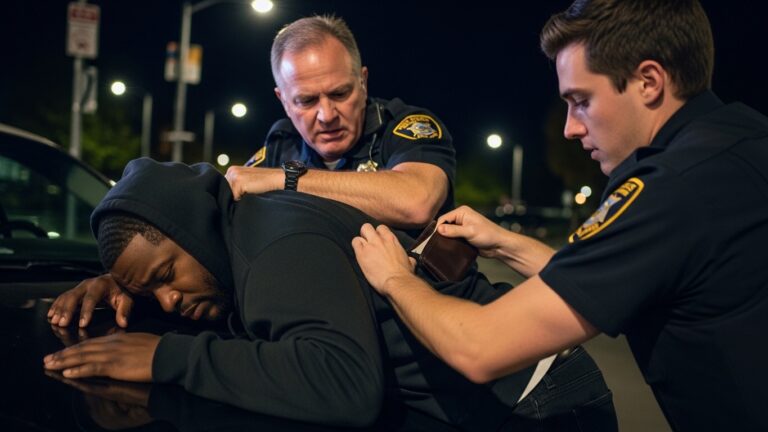
15 Minutes Pinned Against A Police Cruiser—These Two Corrupt Cops Had No Idea Who I Really Was
Chapter 1 The hood of the Ford Interceptor was radiating a blistering July heat, but it was the cold steel…
 Dog Story
52 min read
Dog Story
52 min read
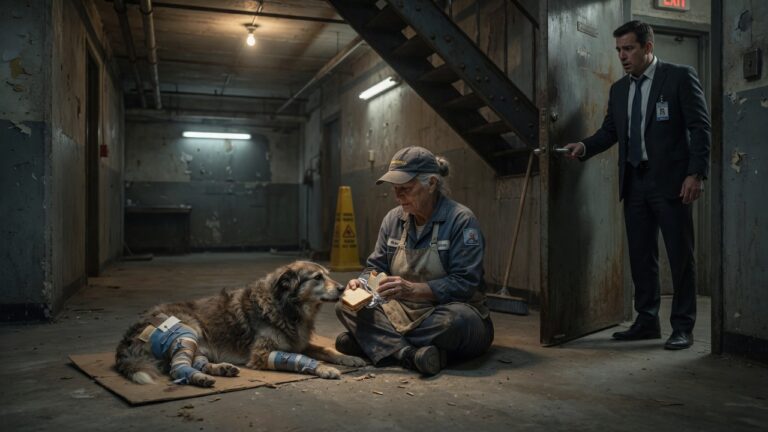
I managed a high-rise office for 12 years, but when my 62-year-old janitor vanished into the “restricted” sub-basement at exactly 12:00 PM for 43 straight days—I quietly locked the stairwell door behind me.
I’ve managed commercial properties in downtown Chicago for over a decade, but absolutely nothing could have prepared me for the…
 Dog Story
3 min read
Dog Story
3 min read
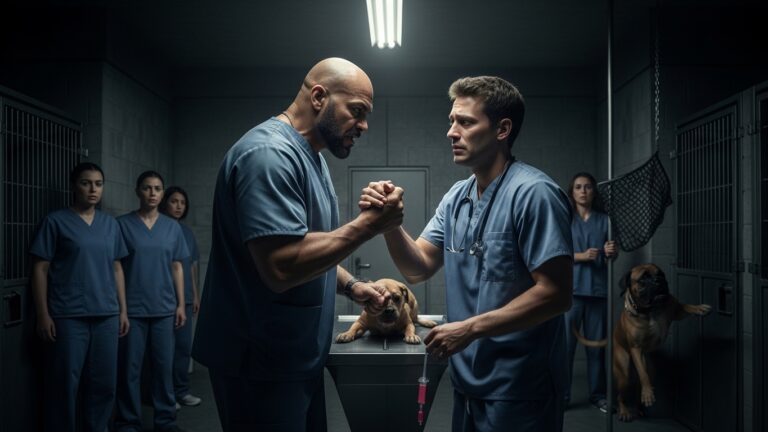
They told me he was a monster. The needle was drawn, the paperwork signed, and I was seconds away from ending this “violent” dog’s life. But when I leaned in for the final injection, my stomach dropped. What I saw changed everything I thought I knew about animals.
Chapter 1: The Pink Juice I had the pink liquid drawn up in the syringe. Three CCs of sodium pentobarbital.…
Leave a Reply