
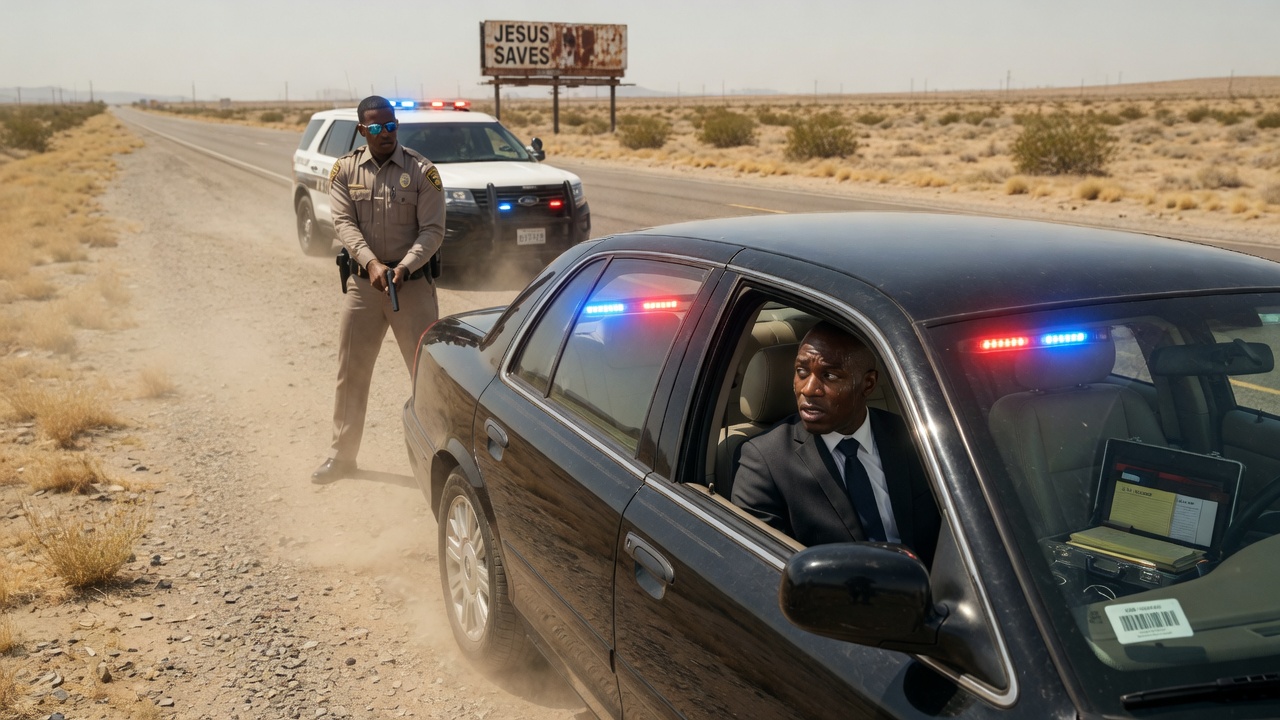
“I Thought My Elite Law Degree And A $3,000 Suit Made Me Bulletproof. But When Flashing Lights Appeared Behind My Luxury Rental On A Deserted Highway, I Realized Exactly How Fast Everything Can Be Stripped Away.”

I’ve been a defense attorney for over 15 years, standing in front of federal judges, dismantling expert witnesses, and holding the fates of powerful people in my hands, but absolutely nothing prepared me for the terror I felt when I saw that state trooper’s hand resting on his gun.
People think that success changes the rules of the world. You go to a top-tier law school, you pass the bar, you climb the ranks at a prestigious firm, and you start to believe that you’ve built an invisible shield around yourself.
You think your education is your armor. You think your vocabulary is your weapon.
You think that if you play everything perfectly by the book, the book will protect you.
I really believed that. Up until a sweltering Tuesday afternoon in a rural county that felt like a million miles away from civilization.
Let me set the scene for you, because context is everything. I was on my way to the most crucial court hearing of my entire career. It was the kind of case that makes or breaks a firm, the kind of defense that ends up on the front page of national newspapers.
I had flown into a small regional airport a few hours earlier, my mind buzzing with opening statements, case precedents, and cross-examination strategies.
I had stepped up to the rental car counter, an elite rewards member, expecting a quick transaction.
The woman behind the desk had seemed frazzled. She kept tapping her keyboard, muttering apologies about their system running slow that morning, doing some sort of manual override to get me out the door.
She finally handed me the keys to a brand-new, jet-black luxury sedan. An upgrade, she said, to apologize for the wait.
I didn’t think twice about it. I grabbed the keys, loaded my briefcase into the trunk, and hit the road.
The drive started out fine. But as the hours ticked by, the scenery changed drastically. The multi-lane interstate narrowed into a two-lane state highway. The bustling suburban towns faded into endless stretches of barren, sun-scorched earth.
This was a part of the state where cell phone service drops to a single bar, where the radio stations fade into static until all you can pick up is a local preacher or old country songs.
It was completely desolate. Just me, the black ribbon of asphalt, and the blistering heat.
The thermometer on my dashboard read 104 degrees. Outside, the air was shimmering with heat waves, making the road ahead look like a mirage.
Inside the car, the air conditioning was humming quietly. I was in my element. I was wearing a perfectly tailored charcoal suit, my tie perfectly knotted, listening to a legal podcast, running through my arguments one last time.
I felt untouchable.
And then, I saw him.
Parked in a dusty gravel turnout, hidden behind a large, rusted billboard, was a state trooper’s SUV.
As I drove past, I didn’t hit the brakes. I didn’t panic. Why would I?
I had the cruise control set precisely at the speed limit. Both hands were on the steering wheel at the ten and two positions. I was a respected officer of the court driving a legitimate rental vehicle. I was doing nothing wrong.
But as I looked in my rearview mirror, my stomach did a slow, sickening flip.
The trooper had pulled out of the dirt lot, kicking up a massive cloud of yellow dust.
He was behind me.
Now, if you are a Black man in America, I don’t care how many degrees you have on your wall, I don’t care how much money is in your bank account—when a police cruiser pulls in behind you on a deserted road, your heart rate spikes. It is a physiological response baked into our DNA.
I kept my eyes on the road. He’s just running plates, I told myself. He’s just pacing traffic. He’s going to pass me.
For three agonizingly long miles, he rode my bumper. So close I could see the reflection of the sun glaring off his aviator sunglasses.
The silence in the car was deafening. The podcast I was listening to faded into white noise as my hyper-focus zeroed in on the mirror.
Then, the world erupted in red and blue.
The flashing lights bounced violently off the pristine interior of my rental car. The siren gave a short, aggressive wail—a command, not a request.
I immediately activated my right turn signal to acknowledge him. I smoothly guided the heavy sedan off the asphalt and onto the dirt shoulder, my tires crunching against the gravel.
Dust billowed up around the car, thick and suffocating, before slowly settling in the stagnant, heavy air.
I shifted the car into park. I turned off the engine.
My training kicked in. Not my legal training—my survival training. The rules my father taught me when I first got my driver’s license.
Turn off the music. Roll down all the windows so the officer has total visibility. Keep your hands planted firmly on the steering wheel where they can be seen. Do not reach for your wallet. Do not reach for your phone. Do not make any sudden movements.
I did everything perfectly.
I took a deep, steadying breath, waiting for the officer to approach. I expected the standard routine: “License and registration, do you know how fast you were going,” followed by a brief check and me being on my way.
But I noticed something terrifying in my side mirror.
The trooper had stepped out of his vehicle, but he wasn’t walking up to my car normally.
He had taken a wide, tactical stance. His body was bladed, angled away from me.
And his right hand was resting squarely on the grip of his unholstered firearm.
My breath caught in my throat. The temperature in the car suddenly felt like it was freezing, despite the 104-degree heat outside.
Why is his hand on his gun? I thought frantically. I haven’t even spoken to him. I haven’t moved a muscle.
He advanced slowly through the swirling dust, his boots crunching loudly on the gravel. Every step felt agonizingly deliberate. He didn’t come to the window. He stopped just behind the B-pillar of my car, staying in my blind spot, forcing me to turn my head awkwardly to even see him.
“Officer,” I started to say, keeping my voice as calm, professional, and respectful as humanly possible. “Good afternoon. How can I—”
“SHUT YOUR MOUTH!” he roared.
The sheer volume and aggression of his voice made me flinch. The heavy, oppressive heat of the afternoon flooded into the open window, but it was nothing compared to the sudden, suffocating wave of fear that washed over me.
“DRIVER!” he barked, his voice dripping with pure, unadulterated hostility. “PUT YOUR HANDS OUT THE WINDOW NOW! DO IT NOW OR I WILL PULL YOU OUT OF THAT SEAT!”
I froze. My legal mind—the mind that negotiated multi-million dollar settlements and debated constitutional law—went completely blank.
This wasn’t a traffic stop.
This was an ambush.
And out here, in the middle of absolutely nowhere, with no witnesses, no cameras, and no cell phone signal… I was completely at his mercy.
Chapter 2
“SHUT YOUR MOUTH! DRIVER! PUT YOUR HANDS OUT THE WINDOW NOW!”
The words didn’t just hang in the air; they violently struck me, echoing across the desolate highway like a physical blow.
For a fraction of a second, my brain short-circuited. I am a man who makes his living with words. I negotiate. I explain. I dismantle misunderstandings with logic and calm, measured tones.
But out here, under the blinding glare of the afternoon sun, my words meant absolutely nothing.
I didn’t move my head. I didn’t reach for the door handle. I slowly, deliberately raised both of my hands off the steering wheel. I spread my fingers wide, proving they were empty, and extended my arms through the open driver’s side window.
The metal of the car door was searing hot against my forearms, baking under the 104-degree heat. I could feel the skin on my arms starting to burn, but I didn’t dare pull away.
“Officer,” I said, pitching my voice to be as unthreatening as possible. “My hands are visible. I am unarmed. This is a rental vehicle. There is a digital contract on my phone in the cup holder.”
He didn’t care. He didn’t even seem to hear me.
“I SAID SHUT YOUR MOUTH!” he roared again.
I could hear the gravel crunching as he finally stepped out of my blind spot and moved toward my open window. My peripheral vision caught the dull black of his uniform pants and the heavy leather of his utility belt.
His hand was no longer just resting on his gun. He had unsnapped the retention holster.
My heart felt like it was going to shatter my ribcage. The blood was pounding so loudly in my ears that it sounded like a roaring ocean.
I was terrified. A deep, primal, paralyzing terror that I had never experienced in my entire forty-two years of life.
“Officer, please,” I tried one last time, my voice trembling despite my best efforts to control it. “The agency had a computer glitch this morning. They did a manual override. The plate might be flagged, but the car is legally rented to me. My name is David. I’m an attorney. I am on my way to federal court.”
I thought that saying it out loud would break the spell. I thought that establishing who I was would make him pause. I thought the word “attorney” would act as a shield.
It did the exact opposite.
“I don’t care what lies you’re spinning, boy!” he yelled, the venom in his voice making my blood run completely cold.
The word “boy” hit me harder than a closed fist. It stripped away my degree. It stripped away my expensive charcoal suit. It stripped away the $3,000 watch on my wrist.
In that single syllable, he told me exactly how he saw me. And he told me exactly how much danger I was truly in.
“Unlock the door from the outside,” he commanded. “Do not bring your hands back inside the vehicle. Use your fingers. Now!”
I contorted my left hand, reaching down awkwardly against the burning hot exterior panel of the door, and fumbled for the latch. I pulled it.
The heavy door swung open.
Before I could even process what was happening, a massive, heavy hand clamped down onto the collar of my suit jacket.
He didn’t ask me to step out. He didn’t guide me out.
He yanked me.
With a surge of brutal, terrifying force, I was violently pulled from the driver’s seat. My seatbelt wasn’t on—I had unclicked it when I parked to reach for my wallet, a mistake that now left me completely unanchored.
I tumbled out of the air-conditioned cabin and into the suffocating, oven-like heat of the highway.
My expensive leather dress shoes tangled together. I tried to catch my balance, tried to keep my hands visible, but the trooper used my momentum against me.
He grabbed my right arm, twisting it sharply behind my back. The pain shot through my shoulder like a bolt of lightning, a sharp, tearing sensation that made me gasp out loud.
“Stop resisting!” he screamed, though I was doing absolutely nothing but trying not to fall.
“I’m not!” I choked out. “I’m not resisting!”
But the narrative was already written. He shoved me hard, driving his full body weight into my back.
I went down.
I hit the asphalt with a sickening thud. The impact knocked the wind completely out of my lungs. I couldn’t breathe. I lay there gasping like a fish out of water, staring sideways at the yellow lines painted on the road.
The pavement was unimaginably hot. It felt like I had been thrown onto an open frying pan. The left side of my face was pressed directly against the searing, jagged asphalt. I could feel the skin on my cheek instantly blistering.
The smell of melting tar, hot dirt, and my own sweat filled my nose.
A heavy, tactical boot planted itself squarely between my shoulder blades, pinning me to the ground. The pressure was immense. It felt like my spine was going to snap.
“Give me your other hand! Give it to me!” he yelled.
“It’s… it’s trapped under me,” I wheezed, struggling to draw a single breath into my crushed lungs. “Please. The ground is burning me.”
He didn’t care. He grabbed my left wrist, pulling it out from under my body with a violent jerk that nearly popped my elbow out of its socket.
I heard the cold, metallic *click-click-click* of handcuffs ratchet tightly around my wrists. He squeezed them shut so hard that the metal bit deeply into my skin, pinching my nerves and sending a wave of fiery numbness down to my fingertips.
I was completely immobilized. Face down in the dirt, cooking alive on the side of a deserted highway.
And then, above the ringing in my ears and my own panicked breathing, I heard a new sound.
It came from the trooper’s SUV, parked just a few yards behind my rental car.
It was a deep, guttural, vicious snarling.
The trooper had left his rear windows cracked, and inside the back of his cruiser, a K-9 unit was going absolutely ballistic. The dog was hurling its massive body against the heavy metal mesh partition of the police vehicle. The sheer force of the animal was making the heavy SUV rock slightly on its suspension.
*Thud. Bark. Snarl. Thud.* The sound was primal and terrifying. The dog smelled the fear. It sensed the violence. And it wanted out.
“Settle down, Duke!” the trooper yelled back at the cruiser, though his voice lacked any real command. It sounded more like he was winding the animal up.
He looked down at me, his knee still digging mercilessly into my back. Sweat was dripping from his face onto my expensive, dust-ruined suit.
“You think you’re smart, huh?” he sneered, pulling a heavy radio microphone from his shoulder. “You think you can just drive a stolen vehicle through my county?”
“It’s a rental,” I whispered, the gravel scraping against my lips as I spoke. The pain in my face was agonizing. “Check the glove box. Check my phone. Please. I am begging you to just look.”
He ignored me. He pressed the button on his radio.
“Dispatch, this is Unit 4. I have one Black male in custody. Suspect is combative. Vehicle confirms stolen. Send a flatbed for a tow, and get me backup. We might need to do a search.”
Combative. Stolen. Search.
Every word he fed into that radio was a nail in my coffin. He was building a case. He was creating a reality out of thin air, and out here on this dusty road, his reality was the only one that mattered.
I closed my eyes, the burning asphalt searing my cheek. I was an elite defense attorney. I had saved men from life in prison. I understood the law better than the man currently crushing my spine.
But as the police dog continued to bark savagely in the background, a chilling, horrifying realization washed over me.
The law wasn’t going to save me today. Out here, the law was whatever this man with the badge and the gun decided it was.
And I was completely, utterly at his mercy.
Chapter 3
The heavy, crushing weight of the trooper’s knee finally lifted off my spine, but the relief was entirely nonexistent.
I was still pinned. I was pinned by the agonizingly tight steel of the handcuffs biting into my wrists, and I was pinned by the sheer, unyielding heat of the asphalt.
The right side of my face was mashed against the road. The black tar was literally baking under the 104-degree afternoon sun, and I could feel the delicate skin of my cheek and jawline beginning to blister and peel.
I tried to turn my head just an inch to find a cooler patch of dirt, but the moment I moved, a heavy boot slammed down onto the back of my neck.
“Don’t you move a single muscle,” the trooper hissed. “You twitch, and I’ll consider it a threat. Do we understand each other?”
“Yes,” I gasped, the word tasting like dust and blood. “Yes, sir.”
I am a forty-two-year-old man. I am a senior partner at one of the most prestigious defense firms in the country. I have stood toe-to-toe with ruthless federal prosecutors. I have cross-examined hostile witnesses until they broke down in tears. I have dined with judges and senators.
But laying there, tasting the grit of the highway, I was reduced to absolutely nothing.
My mind—the legal machine that had built my entire career—was racing at a million miles an hour. It was violently cataloging every single civil rights violation occurring in real-time.
*Unlawful detainment. Lack of probable cause. Excessive use of force. Violation of the Fourth Amendment. Assault under the color of law.*
I knew the statutes. I knew the case law. I knew the exact precedents that made everything he was doing illegal.
But the terrifying reality of my situation silenced all of it. Out here on this deserted, sun-scorched highway, there was no judge to hear my motions. There was no jury to look at the evidence. There was no stenographer recording this man’s brutal actions.
There was only a man with a badge, a gun, and absolute power over whether I lived or died today.
Rough hands suddenly grabbed the back of my tailored suit jacket, yanking it up and exposing my lower back. I felt him aggressively patting down my sides, his hands moving roughly over my ribs, my waist, and down my legs.
He reached into my back pocket and violently yanked out my wallet.
“Let’s see who we really have here,” the trooper muttered, stepping back slightly so he was standing right by my head.
I could hear the leather of my wallet creaking as he flipped it open. I could hear the faint rustle of my credit cards.
“David,” he read out loud, his tone dripping with condescension. He didn’t use my last name. He just used my first, speaking to me like I was a disobedient child.
“David, why are you driving a stolen vehicle, David?”
“It is a rental,” I repeated, my voice hoarse, fighting through the searing pain in my shoulder. “If you look in the wallet, behind my driver’s license, there is a State Bar card. I am an attorney.”
The silence that followed was suffocating.
I prayed that the piece of plastic would act as a shield. It was my proof of belonging. It was my proof of status. It was the only tangible evidence I had that I was not the criminal he desperately wanted me to be.
Then, I heard a low, dry chuckle.
“An attorney,” he mocked, the sound of his laughter sending a fresh wave of terror down my spine. “Sure you are, buddy. A hotshot lawyer out here in the middle of the desert, driving a stolen car. You boys are getting real creative with your fake IDs these days.”
“It’s not fake,” I pleaded. “Call the number on the back of the card. Call the state registry. Call the rental agency! My phone is in the cup holder. The contract is right there on the screen.”
Something hit the back of my head. Hard.
It took me a second to realize he had thrown my wallet at me. It bounced off my skull and landed in the dirt a few inches from my nose.
“I told you to shut your mouth!” he barked. “I don’t take orders from car thieves. I don’t care what kind of garbage you printed off the internet to put in your little wallet.”
He was completely unreachable. Logic was dead. Reason was dead. He had already written the script for this encounter in his head, and I was just playing the part of the villain he needed to justify his actions.
“Now,” he said, his voice dropping to a low, menacing growl. “I’m going to search this vehicle. And if I find anything—drugs, weapons, contraband—you’re going to be spending a very long, very uncomfortable time in my county jail.”
“You don’t have my consent to search that vehicle,” I said. It was a reflex. My legal training spoke before my survival instincts could stop it.
The boot pressed down harder on my neck. I choked, gasping for air as my windpipe was compressed against the hot road.
“I don’t need your consent,” he whispered, leaning down so his voice was right next to my ear. “I have a stolen vehicle. That gives me inventory search rights. And if you say one more word about the law to me, I’m going to let Duke out of the cruiser to do his own search. Have you ever been bitten by a Belgian Malinois, David? It’s not pretty.”
My blood ran completely cold.
As if on cue, the massive dog in the back of the police cruiser erupted into another frenzy of violent barking. The sound of its claws desperately scratching at the metal partition echoed across the empty highway.
*Thud. Thud. Snarl.*
The thought of those teeth sinking into my flesh paralyzed me. I squeezed my eyes shut, tears of pain and pure frustration stinging the corners of my eyes, mixing with the dirt and sweat on my face.
I stayed completely silent. I surrendered. I had no other choice.
I listened to the heavy crunch of his boots as he walked away from me and over to my rental car. I heard the solid *thunk* of the driver’s side door opening wider.
For the next twenty minutes, I lay in the dust and listened to the destruction of my professional life.
It started with the center console. I heard him ripping things out, tossing them onto the passenger seat. Then the glove compartment was violently popped open, the owner’s manual and rental registration papers thrown carelessly onto the floorboards.
But the worst part came when he moved to the backseat.
My briefcase was back there. It was a beautiful, custom-made leather briefcase my wife had bought me when I made partner.
Inside that briefcase were my case files. The physical documents, the printed emails, the annotated legal briefs, the perfectly organized arguments that I needed for the federal hearing that was supposed to start in exactly two hours.
I heard the distinct, metallic snap of the briefcase latches being popped open.
“What do we have here?” the trooper muttered to himself.
“Please,” I whispered to the asphalt, knowing he couldn’t hear me, knowing it wouldn’t matter if he did. “Don’t.”
I heard the sound of heavy paper stacks being aggressively shuffled. Then, I heard the rustle of paper catching the wind.
He wasn’t just searching them. He was dumping them.
Out of the corner of my eye, through the hazy distortion of the heat waves radiating off the road, I watched a white piece of paper flutter down and land in the dirt near the car’s tire. Then another. Then a whole stack of them.
He was pulling my meticulously organized legal defense apart and throwing it out the open door of the car. Hundreds of hours of research. Late nights spent away from my family. The very literal key to a man’s freedom in federal court.
All of it, scattered in the red dirt and highway trash, blowing aimlessly in the hot, dry breeze.
I felt a sob rise in my chest, thick and agonizing. It wasn’t just fear anymore. It was a deep, soul-crushing humiliation.
I had played by every single rule society had ever given me. I had worked twice as hard, studied twice as long, dressed perfectly, spoke perfectly, built a flawless reputation.
And none of it mattered. The suit, the vocabulary, the degree—they were paper-thin illusions. The moment this man decided I was a threat, I was nothing more than a body on the ground, stripped of all humanity, waiting for a dog to tear me apart.
Just as the despair threatened to swallow me completely, a new sound cut through the heavy afternoon heat.
It was the high-pitched, rapidly approaching wail of another siren.
Backup was arriving.
I felt a sudden, desperate surge of hope. Maybe this new officer would be different. Maybe this was a veteran cop, a supervisor, someone with a cooler head. Someone who would look at the rental agreement on my phone. Someone who would recognize that this was a massive, catastrophic mistake.
A second state trooper SUV came tearing down the highway, kicking up a massive cloud of dust as it slammed on its brakes and skidded onto the shoulder right behind the first cruiser.
The doors flew open before the vehicle had even completely stopped.
“Miller! You good?” a new voice shouted over the fading siren.
“I’m good, Stokes!” the first trooper yelled back from inside my rental car. He stepped out, holding a stack of my legal briefs in his hands. He casually tossed them onto the roof of the car. “Got a combative suspect. Driving a flagged 10-81. Stolen vehicle.”
I strained my neck, trying to see the new officer.
He was a younger guy, a bit stockier, his uniform perfectly crisp. He jogged over to where I was lying, his hand instinctively resting on his weapon just like the first guy.
He stopped a few feet from my head, looking down at me with an expression of pure disgust.
“Officer,” I rasped out, trying to project my voice, pouring every ounce of pleading desperation into my words. “Officer, please. Please listen to me. I am a lawyer. My name is David. This is a rental car. The agency did a manual override this morning. My phone is in the car, the contract is right there. I am begging you to just look at the contract.”
The young officer, Stokes, stopped. He looked at me. He looked at the expensive suit, now ruined with sweat, tar, and dirt. He looked at my wallet lying in the dust.
For a single, fleeting second, I thought I saw a flash of hesitation in his eyes. I thought I saw the gears turning in his head, putting the pieces together. The nice car, the nice clothes, the articulate speech. Maybe, just maybe, the guy on the ground was telling the truth.
I held my breath, waiting for him to walk over to the car, pick up my phone, and end this nightmare.
Instead, he looked up at the first trooper.
“He giving you trouble, Miller?” Stokes asked.
“Nothing I can’t handle,” Miller replied, walking over and standing right next to his partner. He wiped the sweat from his forehead. “He keeps babbling some nonsense about being a lawyer. Tried to resist when I pulled him out. We might need to call EMTs to medically clear him before transport, he hit the ground pretty hard when he fought me.”
He fought me.
The lie was so blatant, so casual, that it made my stomach violently churn. He was already establishing the official narrative. He was planting the seeds for the police report. *Suspect was combative. Suspect resisted. Force was necessary.* I looked at Stokes, the young backup officer. I looked him dead in the eyes, silently begging him to see through the lie.
Stokes looked back down at me. The hesitation I thought I saw earlier was completely gone. The blue wall had instantly formed, thick and impenetrable.
“Alright, buddy,” Stokes said, his voice hard and totally devoid of empathy. He pulled a pair of heavy black tactical gloves out of his back pocket and slowly pulled them on. “Let’s get you up. And if you try to kick or fight, I promise you, things are going to get a whole lot worse for you.”
They weren’t going to check the phone. They weren’t going to call the rental agency.
They stepped toward me, their shadows falling over my face, blocking out the scorching sun.
And as their rough, gloved hands grabbed my arms to drag me up from the dirt, I realized the most terrifying truth of all.
This wasn’t a misunderstanding. This was a trap. And I was already caught.
Chapter 4
“Get up,” Stokes grunted.
Between Stokes and Miller, they hoisted me off the burning asphalt. They didn’t do it carefully. They yanked me upward by my arms, which were still violently wrenched behind my back by the painfully tight handcuffs.
A sickening *pop* echoed in my right ear, followed immediately by a blinding flash of white-hot agony tearing through my rotator cuff.
I couldn’t stop the scream that ripped from my throat. It wasn’t a word; it was just a raw, guttural sound of pure, unadulterated pain. My knees buckled instantly as the physical shock cascaded through my nervous system, but the two troopers held me suspended in the air.
“Stand up straight, tough guy!” Miller barked, giving my trapped arms another vicious upward jerk.
“My shoulder,” I gasped, my vision swimming with dark spots. “You tore my shoulder.”
“You did that to yourself by resisting,” Stokes fired back, his voice completely hollow of any human empathy. The official narrative was already locked in his brain. He was a willing participant in the lie now.
They dragged me toward the rear of my rental car, my expensive leather shoes dragging uselessly through the dirt and gravel.
My suit jacket, custom-tailored in Italy, was hanging off me in ruins. It was coated in thick yellow dust, smeared with black highway tar, and soaked in my own sweat.
But the physical pain was nothing compared to the profound, suffocating devastation I felt as I looked at the ground.
There, scattered across the dirt shoulder, blowing aimlessly in the hot afternoon wind, were the contents of my briefcase.
My entire defense strategy.
Months of meticulous research. Sworn affidavits. Expert witness testimonies. The cross-examination notes I had stayed awake for three consecutive nights to perfect.
It was all lying in the dirt, being trampled beneath the heavy, black boots of the men who were currently holding me hostage.
I looked at my watch, the heavy silver face now scratched from scraping against the pavement.
1:15 PM.
My federal court hearing was scheduled to begin at 2:00 PM.
If I wasn’t standing at that defense table when the judge called the docket, my client—a young man who had been falsely accused of a massive financial crime, a young man who trusted me with his entire life—was going to lose his bail. He was going to be remanded into federal custody. His life would be over.
And there was absolutely nothing I could do to stop it.
They shoved me hard against the trunk of the rental car. The black metal had been baking in the 104-degree sun for half an hour. It was searing hot. The heat radiated through my ruined clothes, burning my stomach and chest, but I was pinned so tightly by Miller’s forearm against my neck that I couldn’t pull back.
“Spread your legs,” Miller commanded, kicking my ankles apart with the steel toe of his boot.
I complied. I stared straight ahead at the rusted billboard in the distance. I retreated deep into my own mind. I shut down my emotions. I had to, or I was going to lose my sanity entirely.
“Stokes, run his ID through the system,” Miller said, his breath hot on my neck. “Let’s see what warrants this piece of garbage has hiding in his closet.”
“Copy that,” Stokes said. I heard his boots crunching away toward the second cruiser.
Miller leaned in closer to my ear. I could smell the stale coffee and chewing tobacco on his breath.
“You’re done, boy,” he whispered, the venom in his voice so thick it made my skin crawl. “I don’t care how nice this suit is. I don’t care how big your vocabulary is. You come into my county driving a stolen vehicle, you catch an assault on an officer charge, resisting arrest… you are going to rot in a cell.”
He was trying to break me. He wanted me to argue back. He wanted me to curse at him, to fight back, to give him the justification he desperately needed to escalate the violence.
I gave him nothing. I took a slow, agonizing breath through my nose and exhaled quietly through my mouth.
Then, the dog started going crazy again.
Inside Miller’s cruiser, Duke, the massive Belgian Malinois, began throwing his eighty-pound body against the metal cage with renewed, terrifying ferocity. The barks weren’t just loud; they were aggressive, frantic, and primal.
“You hear that?” Miller sneered, tapping his fingers against my burning cheek. “Duke doesn’t like you. Duke smells a criminal. In fact, standard protocol for a stolen vehicle is a full perimeter sweep. I think I’m going to let Duke out right now to sniff you down.”
My heart stopped.
I had read the use-of-force reports. I had seen the horrific photos in civil rights lawsuits. A police K-9 is not a pet. It is a biological weapon. If he let that dog out while I was handcuffed and pinned, it would tear my flesh to the bone.
“Please,” I finally broke. My voice was a desperate, humiliating whisper. “Please, don’t do that. I surrender. I am doing everything you ask. Please.”
Miller smiled. A cold, victorious smirk. He reached for the radio on his shoulder to call Stokes, likely to tell him to pop the trunk on the cruiser.
But before his thumb could press the mic button, the piercing sound of screeching brakes shattered the tense silence.
It wasn’t a police siren. It was the loud, metallic groan of an old vehicle coming to a sudden, violent stop.
Miller’s head snapped up. His forearm loosened off my neck just a fraction of an inch.
I turned my head, wincing as the torn muscles in my shoulder screamed in protest.
A beaten-up, rust-colored minivan had veered off the highway, parking directly behind Stokes’ cruiser. The hazard lights were flashing rapidly. The engine sounded like it was struggling to stay alive, sputtering and coughing in the extreme heat.
Miller immediately dropped his arm from my neck. His right hand snapped back down to his gun holster.
“Hey!” Miller shouted, his voice echoing across the empty road. “Keep moving! This is an active police scene! Move that vehicle right now!”
But the driver’s side door of the minivan popped open.
A woman stepped out. She looked to be in her mid-thirties, wearing a faded blue uniform from a local diner. Her hair was pulled back into a messy ponytail, and she looked absolutely terrified. Her hands were shaking visibly as she held them up in the air, showing she was unarmed.
“I’m sorry!” she yelled back, her voice trembling. “My engine is overheating! The temperature gauge is in the red, I had to pull over or it was going to blow!”
“Get back in the vehicle and drive!” Miller roared, taking a step toward her. “I don’t care about your engine! This is a restricted area!”
Stokes jogged back from his cruiser, looking nervously between Miller, me, and the woman. The blue wall of isolation they had built around me was suddenly cracking. There was a witness.
But that wasn’t the twist.
The twist happened when the rear passenger window of the rusted minivan slowly rolled down.
A little girl, no older than nine or ten, leaned her head out the window. She had bright blonde pigtails and was wearing a faded pink t-shirt.
And in her small, fragile hands, she was holding an iPad. The screen was facing us, and the bright red record button was clearly illuminated.
“Mommy?” the little girl’s voice was high, innocent, and piercingly clear over the low rumble of the idling engines. “Mommy, why is that policeman hurting Mr. David?”
The entire highway seemed to freeze. Time completely stopped.
Miller froze in his tracks. Stokes stopped dead.
Even Duke, the rabid K-9 in the back of the cruiser, suddenly stopped barking, leaving the dusty highway in a shocking, heavy silence.
The little girl didn’t lower the iPad. She pointed her small finger directly at me.
“That’s Mr. David,” she said loudly, looking at her mother. “He was on the television this morning while we were eating breakfast. The news lady said he is a very important lawyer who helps innocent people. Why is he covered in dirt, Mommy? Why is he crying?”
I wasn’t crying, but my face was streaked with sweat, dust, and a slow trickle of blood from where my cheek had scraped the asphalt.
The mother looked at me. Really looked at me. She saw the ruined suit. She saw the violent way my arms were twisted behind my back. She saw the terrified, broken look in my eyes.
Then, she looked at Miller. She saw his hand on his gun. She saw the aggressive, tactical stance. She saw the papers scattered all over the dirt.
The woman reached into the minivan and grabbed her own smartphone. She held it up, pointing the camera directly at Miller’s face.
“I’m livestreaming,” the mother said. Her voice was no longer trembling. It was dead calm. “My daughter has her iPad recording, and I am broadcasting this live to my Facebook page. Over two hundred people from our church group are watching right now.”
Miller’s face went completely pale. The arrogant, untouchable smirk vanished, replaced by a sudden, sickening panic.
He looked at the iPad. He looked at the smartphone. He looked at me.
In a matter of three seconds, the power dynamic of the entire universe shifted. The impenetrable shield of the badge evaporated under the digital glare of a nine-year-old girl’s tablet.
“Ma’am, this is a police investigation,” Miller stammered, his voice suddenly losing all of its terrifying bass. It sounded weak. It sounded desperate. “This man is driving a stolen vehicle. He… he became combative.”
“He doesn’t look combative,” the mother replied sharply, keeping her camera perfectly steady. “He looks like he’s been thrown on the ground. And my daughter is right. He is a famous attorney. I recognize him now too.”
Stokes panicked. The young officer finally realized the catastrophic reality of what he had walked into. If this video got out, if they were caught lying about an elite defense attorney… his career wouldn’t just be over. He would face federal civil rights charges.
Stokes didn’t say a word to Miller. He spun around, sprinted to the open driver’s side door of my rental car, and leaned inside.
Ten seconds later, Stokes emerged. In his right hand, he was holding my smartphone.
The screen was still illuminated. The bright green logo of the elite rental car agency was perfectly visible, along with my name, the vehicle’s VIN, and the words: *ACTIVE RENTAL AGREEMENT*.
Stokes looked at the phone, then looked at Miller.
“Miller,” Stokes said, his voice dropping to a harsh, panicked whisper. “It’s a rental. The contract is right here. It’s perfectly legal. It’s not stolen.”
Miller stared at the phone as if it were a venomous snake. His jaw clenched so tight I thought his teeth were going to shatter. He looked back at the mother and daughter, who were still recording every single second of the exchange.
The silence dragged on for what felt like an eternity.
Finally, Miller broke eye contact with the camera. He walked over to me, his chest heaving, his face flushed dark red with suppressed rage and profound humiliation.
He grabbed my arm roughly and spun me around.
*Click. Click.*
The agonizing pressure on my wrists vanished as the handcuffs were released.
My arms fell lifelessly to my sides. I couldn’t lift my right arm at all. The pain in my torn shoulder was blinding, radiating down to my fingertips in waves of fire. I stumbled forward, gasping for air, bracing myself against the trunk of the car with my left hand.
“You’re free to go,” Miller muttered, not looking me in the eye. He sounded like he wanted to vomit. “It was a clerical error with the plates. A misunderstanding.”
A misunderstanding.
That was the word he used to describe the absolute destruction of my dignity, my physical safety, and my fundamental human rights.
He didn’t apologize. He didn’t offer medical help. He simply turned his back, walked to his cruiser, and got in. He slammed the door so hard the windows rattled.
Stokes lingered for a moment. He looked at me, a brief flash of genuine guilt crossing his young face. He gently placed my smartphone on the trunk of the car.
“I’m… I’m sorry, sir,” Stokes whispered. “I really am.”
I didn’t say a word to him. I didn’t have the breath, and he didn’t deserve my forgiveness.
Stokes jogged back to his vehicle, and within seconds, both police cruisers had executed chaotic U-turns, their tires tearing up the gravel as they sped away in the opposite direction, disappearing into the thick, dusty heat haze.
I was left alone on the side of the highway with the woman and her little girl.
I leaned against the car, sliding down until my knees hit the dirt. I couldn’t hold it in anymore. I put my left hand over my face and let out a single, shuddering sob. The adrenaline was draining from my body, leaving behind nothing but pain, exhaustion, and a deep, lingering terror.
I heard footsteps crunching in the gravel.
The mother knelt down next to me. She didn’t have her phone out anymore. She reached out and gently placed a cool, unopened bottle of water against my uninjured arm.
“Are you okay?” she asked softly. “Do you need me to call an ambulance?”
I took a deep breath, fighting through the pain, and looked up at her. Then I looked past her to the little girl in the minivan, who gave me a small, shy wave.
“No,” I managed to say, my voice raspy and broken. “No ambulance. I have to be in court.”
“You can’t go to court like this,” the woman said, her eyes welling with tears as she looked at my bloody cheek and destroyed suit. “You’re hurt.”
“If I don’t,” I said, slowly forcing myself to stand back up, my legs shaking violently, “an innocent man goes to prison today. I can’t let them take his life the way they just tried to take mine.”
With agonizing slowness, using only my left arm, I began walking across the dirt shoulder.
I spent the next ten minutes picking up my scattered legal documents from the dust. The crisp white pages were now stained with red clay and marked with heavy boot prints. I gathered them as best I could, shoving the disorganized mess into my damaged leather briefcase.
I thanked the mother and daughter one last time, promising them I would never, ever forget what they did for me.
Then, I got back into my rental car.
I didn’t bother turning on the podcast. I didn’t check the AC. I just put the car in drive and floored it toward the city.
At exactly 1:58 PM, the heavy wooden doors of Federal Courtroom 4B swung open.
The courtroom was completely silent. The judge was already seated at the bench. The federal prosecutors, dressed in immaculate, perfectly pressed suits, were organizing their binders. My client was sitting at the defense table, looking utterly terrified.
And then, I walked down the center aisle.
Gasps echoed through the gallery. The bailiff instinctively reached for his radio. The prosecutors stared in open-mouthed shock.
I looked like I had survived a warzone.
My incredibly expensive suit was ripped at the seams, caked in heavy dirt and black tar. My tie was missing. My shirt collar was torn. The entire right side of my face was an angry, red canvas of peeled skin, dried blood, and highway grit. My right arm hung limply, uselessly at my side.
I walked past the bewildered faces, keeping my spine perfectly straight, despite the excruciating pain radiating through my back.
I reached the defense table. I placed my scuffed, dirty briefcase down with my left hand. I looked my terrified client in the eyes and gave him a single, reassuring nod.
Then, I turned to face the judge.
The Honorable William Harrison stared down at me from his elevated bench, his eyes wide behind his reading glasses.
“Mr. Davis,” the judge said, his voice laced with profound concern and confusion. “Good God, man. What on earth happened to you? Do we need to call for a recess? Do you need a medic?”
I stood tall. I looked at the American flag standing behind the judge’s bench. I thought about the desolate highway. I thought about the knee on my neck. I thought about the little girl with the pink iPad who saved my life.
They wanted to break me. They wanted to strip me of my voice, my dignity, and my power. They wanted to prove that my education and my suit meant nothing.
But as I stood there, battered, broken, and bleeding, I realized something. My power wasn’t in the suit. It wasn’t in the car.
My power was my resilience. My power was the truth. And nobody, absolutely nobody, was going to take that from me.
I cleared my throat, tasting the lingering grit of the highway dust, and looked the judge dead in the eye.
“No, Your Honor,” I said, my voice ringing out clear, steady, and unbreakable across the silent courtroom. “The defense is ready. Let’s proceed.”

About the Author
dream02
A writer passionate about human stories and real-life experiences that inspire and move readers.
 Dog Story
58 min read
Dog Story
58 min read
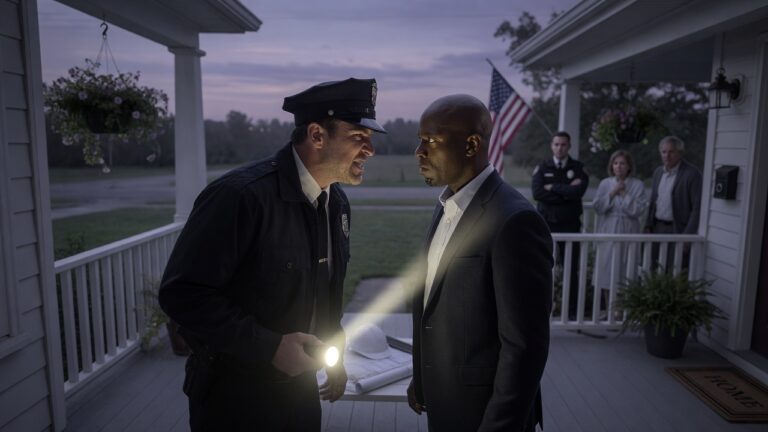
I Finally Built My Dream Home In The Most Exclusive, Heavily Guarded Gated Community In The State. But A Simple Evening Search Turned Into A Standoff On My Own Front Porch That Shattered My Reality Forever.
I’ve spent my entire life designing safe havens for other people, but absolutely nothing could have prepared me for the…
 Dog Story
18 min read
Dog Story
18 min read
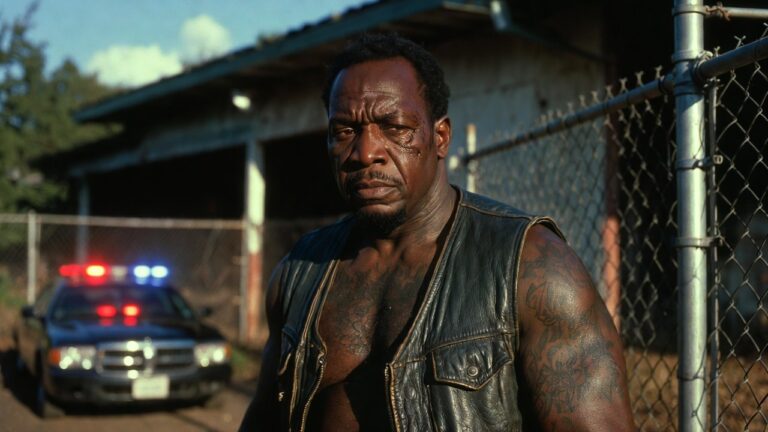
I responded to a panic call about a 6-foot-4 biker circling the Elm Tree Preschool—but noticing the “freshly torn” collar in his massive, trembling hand, I quietly signaled my rookie to lower his weapon.
I’ve been a patrol officer in this quiet suburban town for 14 years, but nothing prepared me for the sheer,…
 Dog Story
12 min read
Dog Story
12 min read
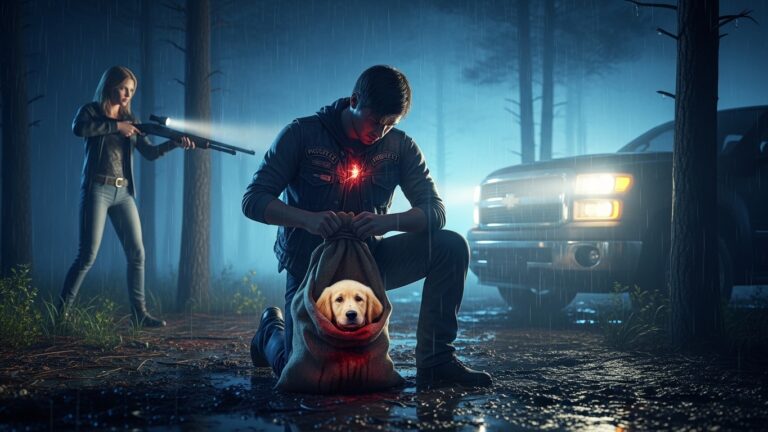
“My Club President Told Me To Bury A ‘Package’ In The Woods At Midnight… What Whimpered Inside Broke My Heart And Sealed My Fate.”
I’ve been taking beatings, scrubbing blood off clubhouse floors, and bleeding for the Iron Reapers Motorcycle Club since I was…
Leave a Reply