
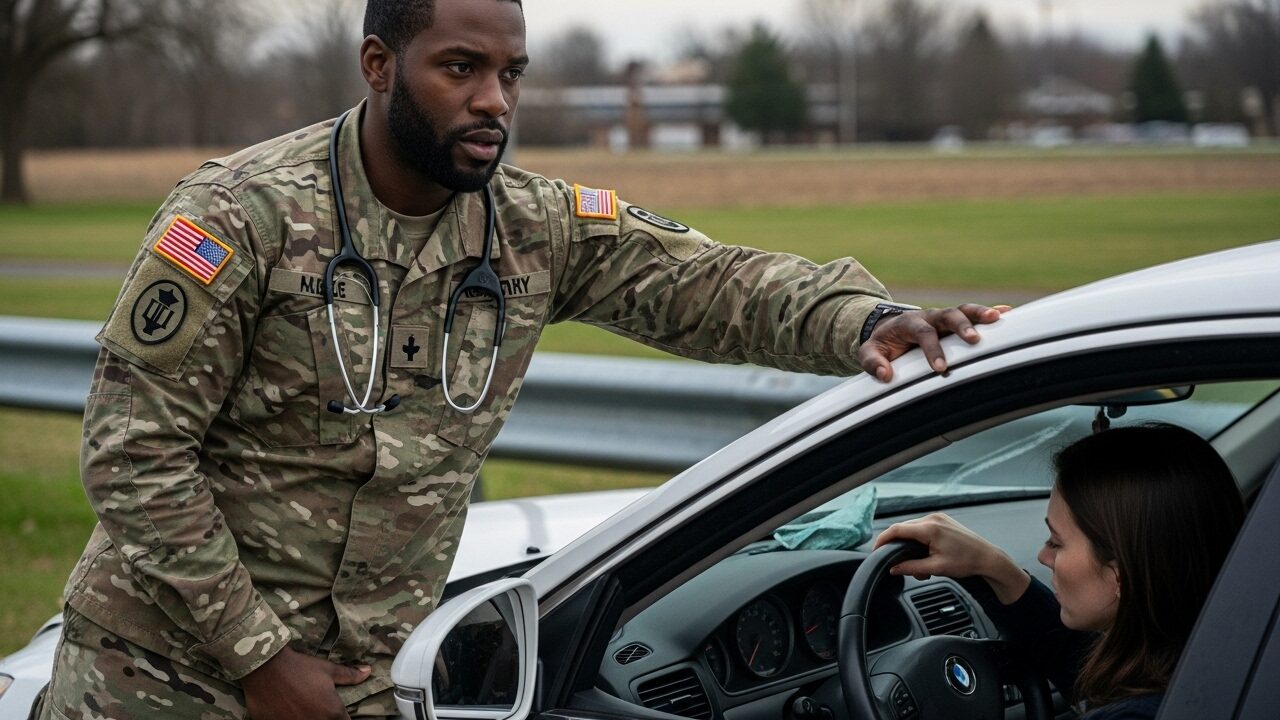
I Pulled His Daughter From The Burning Wreckage At 3 AM… Then He Looked The Police In The Eye And Said I Was The One Who Kidnapped Her. They Didn’t See My Uniform. They Didn’t See My Medkit. They Only Saw My Skin And A Story They Already Wanted To Believe. But That Night, I Left My Body-Cam Running.

Chapter 1
The rain in Clear Creek doesn’t just fall; it punishes. It’s that cold, mid-October Appalachian rain that turns the asphalt into a black mirror and makes the pine trees look like jagged teeth against a bruised sky.
I was pulling a double shift, delivering medical supplies in my beat-up 2014 Silverado. It wasn’t the life I’d imagined for myself when I was a combat medic in the 82nd Airborne, but the world has a funny way of stripping the stripes off your shoulders and replacing them with a debt-to-income ratio that keeps you awake at night.
I was the only soul on Route 42. My headlights were cutting through the fog, barely revealing ten feet of road at a time. I was thinking about my daughter’s tuition and the strange vibration in my front left tire when I saw it.
A flash of silver. A violent, metallic scream that cut through the thunder.
A high-end Mercedes SUV had caught the slick shoulder of the road, hydroplaned, and barrel-rolled three times before slamming into a massive oak tree.
I didn’t think. You don’t think when you’ve seen what I’ve seen. You react.
I slammed my brakes, grabbed my trauma bag from the passenger seat, and sprinted toward the smoking heap of German engineering. The smell of gasoline and ozone hit me instantly. The engine was crumpled, and smoke—thick, acrid, and white—was pouring from under the hood.
“Hey! Can you hear me?” I shouted, my voice swallowed by the wind.
Silence. Then, a faint, high-pitched whimper.
I reached the driver’s side. The door was crushed shut. I moved to the rear. The glass was shattered. Inside, hanging upside down by a seatbelt, was a girl. She couldn’t have been more than seventeen. Her blonde hair was matted with blood, and her eyes were rolled back, flickering in and out of consciousness.
The car groaned. A flicker of orange licked the undercarriage.
“I’ve got you,” I hissed, reaching through the broken window. My hands were steady, even if my heart was hammering against my ribs like a trapped bird. “I’m Marcus. I’m a medic. You’re going to be okay, baby girl. Just stay with me.”
I sliced through the seatbelt with my emergency cutter. I caught her weight—she was light, fragile as a bird—and pulled her out just as a “whoosh” of heat signaled the fire reaching the fuel line.
I carried her fifty yards back to the road, laying her on my raincoat. I was checking her pulse, my hands covered in her blood, when the headlights of a second car blinded me.
A black Cadillac Escalade screeched to a halt.
A man jumped out. I recognized him instantly. Everyone in Clear Creek knew Thomas Sterling. He was the wealthiest developer in the county, a man who essentially owned the local police force and half the city council. A “pillar of the community.”
“Elena!” he screamed, stumbling toward us.
“She’s alive,” I said, my voice calm, trying to project the professional authority I’d used a thousand times in the field. “She has a possible concussion and a compound fracture in her left arm. I’ve stabilized her neck. Don’t move her until the ambulance—”
Sterling didn’t thank me. He didn’t even look at his daughter at first.
He looked at me. He looked at my black skin, my soaked hoodie, and the blood on my hands. Then he looked at his daughter, pale and broken on the ground.
His face didn’t show grief. It showed a terrifying, cold calculation.
“Get away from her!” he roared, swinging a heavy fist at me. I dodged it easily, stepping back, my hands raised in a universal sign of peace.
“Sir, I’m the one who pulled her out. The car is on fire. Look—”
I pointed to the Mercedes, which was now a roaring bonfire in the woods.
Just then, two police cruisers screamed onto the scene, sirens wailing, blue and red lights turning the rain into a strobe light of chaos.
Officer Miller stepped out. I knew Miller. He had pulled me over three times in the last month for “failure to signal” or “suspicious loitering” while I was literally just pumping gas.
“Miller! Thank God!” Sterling shouted, his voice suddenly breaking into a performative sob. He pointed a shaking finger at me. “I caught him! He was dragging her into the woods! He ran her off the road and tried to take her!”
The world went silent for a second. The only sound was the crackle of the fire and the rain hitting the roof of the police cars.
I felt the air leave my lungs. “What? No—Thomas, I saved her! I was driving by, I saw the crash—”
“Shut up!” Miller barked, his hand already on his holster. His partner, a young guy I didn’t recognize, had his Glock drawn and aimed squarely at my chest.
“On the ground! Now! Face down in the dirt!”
“Officer, look at my truck,” I pleaded, staying still. I knew the rules. I knew that any sudden movement would be the last one I ever made. “My delivery logs are in there. I’m a medic. Check my bag—it’s full of gauze and saline. I was helping her!”
“I said on the ground, boy!” Miller stepped forward and kicked my back of my knees.
I went down. The cold mud pressed against my cheek. I felt the heavy metal of the handcuffs ratcheting shut around my wrists, biting into the bone.
“He’s lying!” Sterling cried out, clutching his daughter now, appearing for all the world like a grieving father. But as Miller shoved my head into the dirt, I saw Sterling look at me over his daughter’s shoulder.
There was no grief in his eyes. There was a warning.
He didn’t want a hero. He needed a scapegoat. Because as I had pulled that girl from the car, I’d smelled it. It wasn’t just gasoline.
The interior of that Mercedes had reeked of high-end vodka. And the girl wasn’t the one driving.
Sterling had been the one behind the wheel. He had crashed that car, and he was going to let me rot in a cell to make sure no one ever found out.
“You’re making a mistake,” I whispered into the mud.
Miller leaned down, his breath smelling of stale coffee and malice. “We don’t make mistakes in this town, Reed. We just clean up the trash.”
They threw me into the back of the cruiser. As the door slammed, I looked out the window. Sterling was talking to Miller, his hand on the officer’s shoulder like they were old friends.
They thought they had won. They thought that in a town like Clear Creek, a Black man’s word wasn’t worth the paper it wasn’t written on.
But they forgot one thing.
I wasn’t just a delivery driver. And I wasn’t just a medic.
I was a man who had survived the worst the world had to throw at him, and I had a secret hidden in the lining of my vest that was still recording every single word they said.
Chapter 2
The inside of a police cruiser doesn’t smell like justice. It smells like cheap upholstery, stale cigarettes, and the cold, metallic tang of fear. I sat in the back, my wrists burning where the steel teeth of the cuffs dug in every time the car hit a pothole. Through the plexiglass partition, I watched the back of Officer Miller’s head. He was whistling. A low, off-key tune that sounded like he was celebrating a successful hunt.
“You know, Reed,” Miller said, not bothering to look back. “You had a decent life for a guy like you. Kept your head down. Delivered your little boxes. Why’d you have to go and ruin it? Why’d you have to touch that girl?”
I didn’t answer. I knew the game. In the Army, they teach you about SERE—Survival, Evasion, Resistance, and Escape. They teach you that when you’re captured, your words are weapons that can be turned against you. But this wasn’t a mountain range in Afghanistan. This was Clear Creek, Tennessee. And the enemy was wearing a badge I’d been taught to respect since I was five years old.
“I’m talking to you, boy,” Miller barked, his eyes catching mine in the rearview mirror. “You think you’re better than us because you went overseas? You think that vest makes you a hero? You’re just a predator who got caught in the act. Mr. Sterling is going to make sure you never see the sun again.”
I stared out the window. The rain was still lashing against the glass, blurring the world into a gray smear. I thought about my daughter, Maya. She was eighteen, a freshman at Vanderbilt. She wanted to be a surgeon. Every cent I made, every extra shift I took delivering those medical supplies, went to her. If I went to prison for this, her future would vanish. Sterling wouldn’t just take my freedom; he’d take hers too.
We pulled into the precinct. It was a squat, brick building that looked more like a bunker than a place of law. They didn’t take me through the front. They took me through the sally port, where the shadows were deeper.
Miller and his partner, a kid named Higgins who looked like he’d never seen a day of real trouble in his life, hauled me out. They didn’t walk me; they dragged me. My boots scraped against the concrete.
“Watch the step,” Higgins muttered, a flicker of something—guilt, maybe?—crossing his face.
“Don’t be nice to him, Higgins,” Miller snapped. “He’s a kidnapper. Treat him like one.”
They threw me into Interrogation Room B. It was four walls of peeling paint and a bolted-down table that had seen more lies than a funeral home. They left me there for three hours. That’s the first tactic: the wait. They want you to sit with your thoughts until your thoughts start eating you alive. They want you to sweat, to rehearse your story until it sounds fake even to you.
But I wasn’t sweating. I was breathing. Four seconds in, four seconds hold, four seconds out. Box breathing. It’s how you stay calm when the mortar rounds are walking toward your position.
The door finally creaked open. Two people walked in. One was Detective Vance. He was a thick-necked man in his fifties with skin the color of old parchment and eyes that looked like they’d seen the bottom of a thousand whiskey bottles. He was a local legend—not for his brilliance, but for his closing rate. Vance didn’t care about the truth; he cared about a confession.
The second person was a woman. She was younger, maybe mid-thirties, with sharp features and blonde hair pulled into a tight, severe bun. She wore a suit that cost more than my truck.
“I’m Detective Vance,” the man said, dropping a thick folder onto the table. “And this is Sarah Jenkins from the D.A.’s office. We’re here to talk about what happened on Route 42.”
“I told the officers at the scene,” I said, my voice raspy. “I saw a crash. I pulled the victim out of a burning vehicle. I administered first aid. I was waiting for the ambulance when Thomas Sterling arrived and assaulted me.”
Vance laughed. It was a dry, hacking sound. “That’s a hell of a story, Marcus. Truly. The Good Samaritan. Only problem is, Mr. Sterling says he saw you dragging his daughter away from the road. He says you were trying to force her into your truck. He says when he tried to stop you, you fought him.”
“He’s lying,” I said flatly. “The girl was in the backseat of a Mercedes SUV. The car was on its roof. It was about to blow. If I hadn’t pulled her out, she’d be ashes right now.”
Jenkins stepped forward, leaning over the table. She smelled like expensive perfume and cold ambition. “Marcus, let’s be real. We looked at your records. You’re a veteran. PTSD, right? Medically discharged? You’ve been struggling. Debt is piling up. Maybe you saw a pretty girl in an expensive car and thought you could make a quick buck. A kidnapping for ransom? Or maybe it was something darker. Something more… impulsive.”
The implication hit me like a physical blow. They weren’t just accusing me of a crime; they were painting me as a monster.
“I’m a medic,” I said, leaning in. “I’ve saved lives in places you couldn’t find on a map. I don’t hurt children. And if you check that Mercedes, you’ll find it reeks of alcohol. Thomas Sterling was drunk. He crashed that car with his daughter inside. He’s using me to cover his tracks.”
Vance and Jenkins exchanged a look.
“The Mercedes is a total loss, Marcus,” Vance said. “Fire destroyed everything. The interior is gone. There’s no smell of alcohol. There’s just the word of a man who built this town versus the word of a delivery driver with a history of ‘combat-related instability’.”
He opened the folder and slid a photo across the table. It was Elena. She was in a hospital bed, her face bruised, a neck brace on. She looked terrified.
“She hasn’t woken up yet,” Jenkins said softly, though there was no softness in her eyes. “But when she does, whose side do you think she’s going to take? Her father’s? Or the stranger she saw through a haze of pain and smoke?”
I looked at the photo. I remembered her weight in my arms. I remembered the way her pulse felt under my thumb—thready, weak, but there. I had saved her. I knew I had.
“I want a lawyer,” I said.
Vance sighed and stood up. “You’ll get one. Public defender will be by in the morning. In the meantime, you’re being charged with attempted kidnapping, aggravated assault, and reckless endangerment. Enjoy the cell, Marcus. It’s the last room you’re going to see for a long time.”
They led me out, but as we passed the observation window, I saw him.
Thomas Sterling was standing in the hallway, talking to the Chief of Police. He looked perfectly composed. He had a small bandage on his hand where he’d hit me. He looked over and saw me being led away in chains. He didn’t smirk. He didn’t gloat. He just gave me a small, solemn nod, as if he were officiating a funeral.
My funeral.
They threw me into a holding cell with three other guys. Two were passed out, smelling of vomit. The third was a skinny white kid, no more than twenty, sitting in the corner and shaking. He looked at me and scooted further away.
I sat on the cold metal bench and closed my eyes.
I thought about the night I lost my squad leader in the Helmand Province. We were pinned down in an orchard. The air was thick with the smell of almond blossoms and cordite. Miller—my Sergeant, not the cop—had been hit in the femoral artery. I was over him, my hands inside his leg, trying to find the bleeder. The bullets were snapping overhead like angry hornets.
I didn’t quit then. I didn’t let the fear take me. I held on until the Medevac arrived.
I opened my eyes and looked at my hands. They were still stained with Elena’s blood. The soap in the precinct bathroom hadn’t been enough to get it all out from under my fingernails.
Then, I remembered.
When I’d been discharged, I struggled to find work. I eventually landed the delivery gig, but the neighborhoods I had to drive through at 2 AM weren’t always friendly. My brother, a tech geek in Atlanta, had bought me a gift for my birthday six months ago.
“It’s a body-cam, Marc,” he’d said. “Low profile. Looks like a button on your vest. These days, a man like you needs a witness that doesn’t blink.”
I had worn it every day. It was a habit. I’d put it on that morning without even thinking about it.
I looked down at my tactical vest, which was sitting in a pile with my boots and belt outside the cell in the intake locker. I could see the edge of it through the bars.
The light on the device was tiny. Infrared. Invisible to the naked eye unless you knew exactly what to look for.
I had been wearing it when I pulled Elena from the car. I had been wearing it when Sterling arrived. I had been wearing it when he told me he was going to ruin me. And I had been wearing it when Officer Miller told me that they “clean up the trash” in this town.
But there was a problem.
The locker wasn’t locked.
As I watched, a man in a expensive charcoal suit—the kind of man who didn’t belong in a police station at midnight—walked up to the intake desk. He spoke quietly to the sergeant on duty. The sergeant nodded and looked away, heading toward the breakroom.
The man in the suit reached into the locker. He picked up my vest.
He wasn’t a cop. He was Elias Thorne, Sterling’s personal attorney. I’d seen his face on billboards all over the state. “The Hammer,” they called him.
My heart skipped. If he found the camera, I was dead. Not just legally—physically. They couldn’t afford to let that footage exist.
Thorne began to systematically go through the pockets of my vest. He pulled out my wallet, my keys, and my extra pair of gloves. He tossed them back in with disdain.
Then, his fingers brushed the front flap. Right where the lens was hidden.
He paused. He pulled the vest closer to his face, squinting in the dim light of the hallway.
I held my breath. I felt the sweat finally start to break on my forehead. Please, God. Just this once.
Suddenly, the door at the end of the hall swung open. Officer Sarah Jenkins walked out, her heels clicking sharply on the linoleum.
“Elias?” she asked, her voice echoing. “What are you doing back here? This area is restricted.”
Thorne didn’t flinch. He dropped the vest back into the locker with practiced ease and turned to her with a charming, predatory smile. “Just looking for my client’s daughter’s belongings, Sarah. Detective Vance said they might have been mixed in with the suspect’s items.”
“You know the protocol,” Jenkins said, her voice tight. “Any evidence recovery has to be logged by an officer. Get out of here before I have to report this.”
Thorne laughed, a smooth, oily sound. “Always so formal. I’m leaving. Tell Thomas I’ll see him at the hearing tomorrow.”
He turned and walked away, his polished shoes silent on the floor. Jenkins watched him go, her expression unreadable. Then, she walked over to the locker.
She looked at my vest. She looked at me, sitting in the cell, my eyes locked onto hers.
For a second, I thought about telling her. I thought about shouting, There’s a camera! Look at the camera!
But then I saw the way she looked at the “property” tag on my bag. She looked at it with the same indifference someone might look at a piece of garbage on the sidewalk. She didn’t see a person. She saw a case file. A stepping stone for her career.
She closed the locker door and clicked the latch.
I let out a breath I didn’t know I was holding. The camera was still there. But it was trapped in a locker in a police station controlled by the man who wanted me gone.
I had the truth. But the truth was behind a locked door, and the clock was ticking.
The skinny kid in the corner started crying softly.
“Hey,” I whispered.
He looked up, his eyes red and wide. “What?”
“You got a phone call yet?”
“They said I have to wait for the morning,” he sniffled. “I just… I just wanted to buy some weed, man. I didn’t do anything.”
“Listen to me,” I said, my voice low and steady. “When you get your call, I need you to do something for me. I’m going to give you a number. It’s for a man named Leon Reed. You tell him where I am. You tell him ‘The eagle is in the cage, but the eye is open.’ Can you remember that?”
The kid blinked. “What? That sounds like some movie shit.”
“Just remember it,” I said, my eyes burning into his. “It’s the only way either of us gets out of this town alive.”
Because Leon wasn’t just my brother. He was a former signals intelligence officer with the NSA. And if he knew the “eye” was open, he’d know exactly what to do.
The war wasn’t over. It was just moving to a different battlefield. And this time, I wasn’t just fighting for my life. I was fighting for the soul of a town that had forgotten what the truth looked like.
I sat back against the cold stone wall and waited for the sun to rise. Tomorrow, they would try to break me in court. They would bring out the witnesses, the doctored reports, and the grieving father.
But I had the eye. And the eye never forgets.
Chapter 3
The morning sun didn’t rise over Clear Creek; it just turned the fog into a thick, suffocating wall of gray. I was woken up at 5:00 AM by the sound of a heavy steel baton clanging against the bars of the cell.
“Rise and shine, Reed,” Officer Miller sneered. He looked like he hadn’t slept, but he had a fresh cup of coffee in his hand and a look of predatory satisfaction on his face. “Big day. The town’s been waiting for a monster to point at, and you’re the main attraction.”
They didn’t let me shower. They didn’t let me shave. They wanted me looking as “dangerous” as possible for the cameras. They handed me an orange jumpsuit that was two sizes too small and orange plastic slides for my feet. By the time they led me out to the transport van, my spirit felt like it was being ground down by a slow-moving stone.
As the van pulled out of the sally port, I saw the crowd. Clear Creek was a small town, and news of the “assault on the Sterling girl” had traveled like a wildfire in a drought. There were people holding signs. Justice for Elena. Protect Our Children. I saw faces I recognized—people I’d delivered packages to, people I’d nodded to at the gas station. Now, they looked at me with a visceral, jagged hatred. They didn’t see a veteran. They didn’t see a father. They saw a headline.
Inside the courthouse, I was ushered into a small, windowless room. Sitting at the table was a man in a rumpled gray suit. He looked like he’d been born in a basement and raised on lukewarm coffee.
“I’m David Kessler,” he said, not looking up from a stack of papers. “Public Defender. I’ve been assigned to your case.”
“Mr. Kessler,” I said, sitting down. “I have evidence. There’s a—”
“Stop,” Kessler held up a hand. His eyes were tired, sunken into deep bags. “I’ve seen the police report, Marcus. I’ve seen the witness statements from Thomas Sterling and Officer Miller. I’ve seen the photos of the victim. This isn’t a case I can win. This is a case where we negotiate for a life sentence instead of the needle.”
“The needle? For something I didn’t do?” My voice rose, the anger I’d been suppressing finally bubbling over. “I saved that girl’s life! Sterling was drunk! He’s the one who crashed!”
Kessler finally looked at me. There was a flicker of something in his eyes—pity? “Marcus, look at where you are. This is Clear Creek. Thomas Sterling owns the bank that holds the mortgage on the judge’s house. He’s the biggest donor to the DA’s reelection campaign. And you… you’re a man who moved here three years ago and keeps to himself. Even if you’re telling the truth, the truth doesn’t have a seat in this courtroom today.”
“I have a camera,” I whispered, leaning over the table. “A body-cam. It’s on my vest in the evidence locker. It recorded everything. The crash, Sterling’s confession, Miller’s threats.”
Kessler froze. “A body-cam? Why wasn’t that in the inventory?”
“Because they didn’t find it. Or they did, and they’re hiding it. You need to get that vest, Kessler. You need to get it before it ‘disappears’.”
Kessler’s face went pale. He knew exactly what I was asking him to do. He was asking him to go up against the most powerful men in the county and accuse them of evidence tampering. He looked at the door, then back at me.
“If I file a motion for that vest, and it’s not there, I’m finished in this town,” he said.
“And if you don’t, I’m dead,” I countered. “Please. I’m a medic. I took an oath to do no harm. I didn’t break it.”
Before he could answer, the door swung open. “Time’s up. The judge is ready.”
The courtroom was packed. The air was hot and thick with the smell of damp coats and resentment. I was led to the defense table, the heavy chains around my ankles clinking with every step. I felt every eye in the room burning into the back of my neck.
At the front of the room, Thomas Sterling sat in the front row. He was dressed in a charcoal suit, his arm in a sling, looking every bit the grieving, injured father. Beside him was Elias Thorne, his lawyer, leaning back with an air of effortless arrogance.
Judge Halloway took the bench. He was a man who looked like he had been carved out of a piece of old oak—hard, unyielding, and deeply rooted in the traditions of the town.
“We are here for the preliminary hearing of the State versus Marcus Reed,” Halloway announced, his voice a deep baritone that commanded silence.
Sarah Jenkins stood up for the prosecution. She looked sharp, professional, and entirely devoid of mercy.
“Your Honor,” she began, her voice ringing through the room. “The State intends to prove that on the night of October 14th, the defendant, Marcus Reed, deliberately targeted the vehicle of Elena Sterling. After causing a collision, the defendant attempted to abduct the unconscious victim. Only the timely arrival of her father, Mr. Thomas Sterling, prevented a tragedy of unthinkable proportions.”
She spoke for twenty minutes, painting a picture of me as a calculated predator. She used words like “opportunistic,” “violent,” and “unstable.” She showed photos of the charred Mercedes, making it look like a crime scene rather than an accident.
Then, she called her first witness: Thomas Sterling.
The room went silent as Sterling walked to the stand. He took the oath with a solemn nod. Jenkins led him through his testimony with the practiced ease of a director guiding a star actor.
“Mr. Sterling,” Jenkins said softly. “Tell the court what you saw when you arrived at the scene.”
Sterling wiped his eyes with a handkerchief. “I… I was driving home from a late meeting at the office. I saw headlights in the woods. I stopped, thinking someone needed help. When I got to the road, I saw him.” He pointed a trembling finger at me. “He had Elena. He was dragging her away from the car. She was limp… she looked dead. I screamed at him to stop, and he… he just looked at me with this… this coldness. He attacked me. I’m not a young man, but I fought for my daughter. I fought until the police arrived.”
The courtroom erupted in a low murmur of outrage. Judge Halloway banged his gavel.
“And the car, Mr. Sterling?” Jenkins asked. “Was it on fire?”
“Not yet,” Sterling lied smoothly. “The fire started later. I believe the defendant might have started it himself to cover his tracks.”
I felt the blood rushing to my ears. It was a perfect lie. It accounted for the fire, the injuries, and the timing. He was rewriting reality in real-time, and everyone was buying it.
“Your witness, Mr. Kessler,” Halloway said.
Kessler stood up slowly. I could see his hands shaking. He looked at me, then at the vest inventory on his desk.
“Mr. Sterling,” Kessler began. “You say you were coming from a late meeting? At 3:00 AM?”
“Development projects don’t sleep, Mr. Kessler,” Sterling replied coolly.
“And did you consume any alcohol at this meeting?”
“Absolutely not. I don’t drink when I’m working.”
“Interesting. Because the defendant claims the car—and you—smelled strongly of vodka.”
Thorne stood up immediately. “Objection, Your Honor! Scurrilous accusations with no basis in fact.”
“Sustained,” Halloway snapped. “Move on, Mr. Kessler.”
Kessler looked defeated. He glanced at the back of the room. I followed his gaze.
Standing by the heavy wooden doors was a man I didn’t recognize at first. He was wearing a nondescript delivery uniform and holding a tablet. He looked like he was just there to drop off a package. But then he caught my eye and gave a barely perceptible nod.
Leon.
My brother had made it. But how? He lived six hours away. He must have driven through the night.
Leon didn’t stay. He turned and walked out the door.
I looked back at the prosecution table. Jenkins was whispering to Detective Vance. Vance looked annoyed, checking his watch. They were confident. They had the town, the judge, and the “truth.”
“The State calls Officer Miller to the stand,” Jenkins announced.
Miller walked up, his chest puffed out, the light glinting off his silver badge. He told the same story Sterling did. He claimed I was “combative” and “disoriented.” He claimed that my medical bag was “suspicious” and that he hadn’t seen any evidence of first aid being performed.
“Officer Miller,” Kessler said, standing up for cross-examination. “Where is the defendant’s clothing? Specifically, the tactical vest he was wearing?”
Miller didn’t flinch. “It’s in evidence, Counselor. Standard procedure.”
“I’d like to see it,” Kessler said. “I’d like it brought into the courtroom.”
Jenkins jumped up. “Your Honor, this is a preliminary hearing. The physical evidence is being processed by the state lab. There is no reason to disrupt these proceedings for a piece of clothing.”
“The defense has a right to examine the evidence used to detain my client,” Kessler argued, his voice finally finding some strength.
Halloway sighed. “Officer Miller, is the vest at the precinct?”
“It should be, Judge. But like the DA said, it’s being logged.”
“Bring it in,” Halloway ordered. “We’ll take a thirty-minute recess while the bailiff retrieves it.”
The courtroom cleared out, but I was kept at the table, handcuffed to the railing. Kessler sat next to me.
“I did it,” he whispered. “But Marcus, if that camera isn’t there… or if it’s broken…”
“It’s there,” I said. “It has to be.”
Twenty minutes later, the bailiff returned. He was carrying a clear plastic evidence bag. Inside was my black tactical vest. It was torn, stained with mud and blood, but it was there.
Detective Vance followed the bailiff in, his face a mask of iron. He looked at me, and for the first time, I saw a flicker of genuine concern in his eyes. He knew. He knew what was on that vest.
The court resumed.
“Officer Miller,” Kessler said, pointing to the bag. “Please identify this item.”
“That’s the vest the defendant was wearing,” Miller said.
“And you searched this vest?”
“Yes. Personally.”
“And did you find any recording devices? Any cameras?”
The room went deathly silent. Sterling shifted in his seat. Jenkins stopped writing.
Miller laughed, a hollow, nervous sound. “A camera? No. It’s just a vest. Lots of pockets. No tech.”
“Your Honor,” Kessler said, his voice trembling with excitement. “I request permission to examine the vest. My client claims there is a low-profile body-cam integrated into the front seam.”
“Permission granted,” Halloway said, leaning forward.
Kessler walked over to the evidence bag. He reached in and pulled the vest out. He began to feel along the seams of the chest plate. The crowd leaned in, a hundred people holding their breath at once.
Kessler stopped. He frowned. He turned the vest over. He checked the other side.
“Mr. Kessler?” Halloway prompted.
Kessler looked at me, his face turning a ghostly shade of white. “Your Honor… there is no camera.”
I felt the floor drop out from under me. “What? No! Check the third button from the top! It’s hidden in the threading!”
Kessler looked again. He held the vest up to the light. “The threading has been cut, Your Honor. There’s a small hole here… but the device is gone.”
A wave of laughter and derision broke out from the gallery.
“He’s crazy!” someone shouted. “He’s making it up!”
Sterling leaned back, a small, satisfied smile playing on his lips. He had done it. He had sent someone into that locker—likely Elias Thorne—and they had gutted the only thing that could save me.
“Order!” Halloway roared, slamming his gavel. “Mr. Reed, enough of these fantasies. Unless you have actual evidence to present, I suggest you sit down.”
I looked at the vest. The hole was jagged. They hadn’t even been careful. They knew they didn’t have to be.
But then, the doors at the back of the courtroom swung open again.
It wasn’t Leon this time. It was a woman in a white lab coat. She was young, her hair disheveled, and she was breathing hard as if she’d run across the entire town.
It was Elena Sterling.
She was pale, her arm in a cast, a bandage on her forehead. She looked like a ghost that had wandered into a nightmare.
“Elena?” Sterling stood up, his face a mask of shock. “Baby, what are you doing here? You’re supposed to be in the hospital!”
“I woke up, Dad,” she said, her voice shaking but clear. It echoed off the high ceilings of the courtroom. “I woke up two hours ago. And I heard what you were saying on the news.”
She walked down the center aisle. The bailiffs didn’t move to stop her. No one did.
“Elena, sit down,” Sterling commanded, his voice dropping an octave, filled with a dark, paternal threat. “You’re confused. You had a head injury.”
“I’m not confused,” she said, stopping at the bar. She looked at me. Our eyes met. I saw the memory in hers—the smoke, the heat, the feeling of being pulled from the dark. “He saved me.”
“Elena—” Jenkins started.
“He saved me!” Elena screamed, turning to the judge. “My father was driving. He was drinking from a silver flask. He was shouting at me because I wanted to go to college in California. He hit the patch of water and lost control. He climbed out of the window and left me there! He left me to burn!”
The courtroom was so quiet you could hear the hum of the air conditioning.
Sterling’s face went from pale to a deep, bruised purple. “She’s lying. She’s traumatized. Judge, please, she doesn’t know what she’s saying.”
“I know exactly what I’m saying,” Elena said, tears streaming down her face. “And I know why you took the camera, Dad. Because you didn’t know I had my phone recording in the cupholder.”
She held up a cracked iPhone.
“It’s all on here,” she said. “The crash. You leaving me. And Marcus… Marcus risking his life to get me out while you stood by the road and watched.”
The silence that followed was absolute.
But then, the most unexpected thing happened.
The large monitors on the courtroom walls—the ones usually used for displaying evidence photos—suddenly flickered to life.
They didn’t show Elena’s phone video.
They showed a first-person view. A view from a chest-high perspective.
The footage was grainy, but the audio was crystal clear.
“I’ve got you,” a voice said—my voice. “I’m Marcus. I’m a medic. You’re going to be okay.”
The screen showed me pulling Elena from the Mercedes. It showed the flames erupting. It showed me carrying her to the road.
And then, it showed Thomas Sterling’s face as he stepped out of his Escalade.
“You’re going to rot for this, boy,” Sterling’s voice boomed through the courtroom speakers. “I’ll make sure they find your DNA all over her. I’ll make sure they think you’re the one who ran us off the road. In this town, you’re nothing. I’m everything.”
Then, the footage showed Officer Miller leaning into the frame.
“We don’t make mistakes in this town, Reed. We just clean up the trash.”
The courtroom erupted. It wasn’t a murmur this time; it was a riot.
I looked at the back of the room. Leon was standing there, his tablet open, a grin on his face.
He hadn’t needed the camera. He had hacked into the precinct’s secure cloud server. The body-cam I wore was a high-end model—it didn’t just store footage; it live-synced to a private cloud via an encrypted LTE signal the moment it detected a high-impact event.
They had destroyed the “eye,” but the “brain” was already in the cloud.
Judge Halloway was slamming his gavel so hard the wood was splintering. “Order! Order in this court!”
But there was no order.
Detective Vance was backing toward the door. Officer Miller was looking for an exit. And Thomas Sterling was staring at the screen, watching his own downfall play out in high definition for the entire town to see.
I looked at my hands. They were still shaking. But the weight on my chest—the weight that had been there since I’d been thrown into that mud—was finally gone.
“Mr. Reed,” Judge Halloway said, his voice strangely quiet amidst the chaos. He looked at the screen, then at me. “Case dismissed. With prejudice.”
He looked at the bailiffs. “Arrest Thomas Sterling. Arrest Officer Miller. And someone find me the Chief of Police. Now.”
As the handcuffs were unlocked from my wrists, the sound of the metal clicking open was the most beautiful thing I’d ever heard.
But as I stood up, I saw Sarah Jenkins. She wasn’t looking at the screen. She was looking at her career, crumbling like a sandcastle in the tide. She looked at me, and for the first time, she saw a man.
I didn’t say a word to her. I walked past the prosecution table, past the sobbing Elena, and straight to the back of the room.
Leon met me at the doors. He didn’t say anything. He just pulled me into a hug that smelled like home.
“I got you, Marc,” he whispered. “I told you. The eye never forgets.”
We walked out of the courthouse together. The rain had finally stopped. The sun was breaking through the clouds, hitting the wet pavement and making the whole world look like it had been scrubbed clean.
But the story wasn’t over. Because in a town like Clear Creek, the truth is just the beginning of the battle.
Chapter 4
The air outside the courthouse didn’t just feel fresh; it felt like a miracle. I stood on the top step, the heavy oak doors closing behind me with a thud that sounded like the end of a war. For the first time in forty-eight hours, I wasn’t a “suspect.” I wasn’t a “predator.” I wasn’t just a Black man in the wrong part of town. I was Marcus Reed, and I was free.
But the world wouldn’t let me be quiet.
As soon as Leon and I cleared the threshold, the flashbulbs started. It was like a wall of lightning. Reporters from Nashville, Memphis, even a crew from CNN that must have chartered a flight the moment the courtroom footage leaked to social media.
“Mr. Reed! How does it feel to be vindicated?” “Marcus, do you plan on suing the Clear Creek Police Department?” “What do you have to say to Thomas Sterling?”
I didn’t say a word. I couldn’t. My throat felt like it was full of glass. Leon put a hand on my shoulder—his “big brother” grip, the one that kept me grounded when we were kids in the South Side of Chicago. He navigated us through the sea of microphones like he was leading a patrol through hostile territory.
We made it to his car, a clean, silver Lexus that smelled like leather and expensive coffee—a sharp contrast to the stale, murderous scent of the precinct. As he pulled away, I looked back at the courthouse. I saw the blue and red lights flashing again, but this time, they weren’t for me. I saw Thomas Sterling, the man who thought he owned the sun, being led out in handcuffs. He had a jacket draped over his wrists to hide the steel, but everyone knew what was under there. Behind him came Miller, looking small and broken, his badge already stripped from his chest.
“You okay, Marc?” Leon asked, his eyes flicking to me and then back to the road.
“I don’t know,” I said honestly. I looked at my hands. They were still stained with the ghosts of the night. “I keep thinking about that girl, Leon. Elena. She saved me back there. She didn’t have to.”
“She saved herself too,” Leon said. “Living with a man like Sterling? That’s its own kind of prison. You gave her the key.”
We drove in silence for a while, leaving the chaos of Clear Creek behind. But the town wasn’t done with me, and the country certainly wasn’t. By the time we reached the small rental house I’d lived in for three years, my phone—which Leon had retrieved from the evidence locker after a heated “discussion” with a very terrified clerk—was vibrating non-stop.
The video had gone nuclear.
It wasn’t just the local news anymore. The “Body-Cam Medic” was trending globally. People were calling for the dismantling of the Clear Creek PD. There were GoFundMe pages set up for my daughter’s tuition. There were messages from celebrities, politicians, and veterans I hadn’t spoken to in a decade.
But I didn’t care about the fame. I walked into my house, dropped my keys on the table, and went straight to the bathroom. I scrubbed my hands until the skin was raw. I washed away the mud of Route 42, the grime of the holding cell, and the lingering scent of Thomas Sterling’s vodka-soaked lies.
I looked at myself in the mirror. I looked older. The gray in my beard seemed more pronounced. I looked like a man who had seen the bottom of the abyss and realized it had a basement.
Three days later, the FBI arrived.
I was sitting on my porch, watching the sun dip below the pines, when two black SUVs pulled into the driveway. Out stepped a woman who looked like she was made of granite and iron. Agent Sarah Vance (no relation to the detective, thank God). She was with the Civil Rights Division of the DOJ.
“Mr. Reed,” she said, showing her creds. “We’ve been reviewing the footage. And we’ve been talking to some of Officer Miller’s former colleagues. It seems Clear Creek has a very long, very dark history of ‘cleaning up the trash’ for the Sterling family.”
For the next four hours, I told her everything. Not just about the crash, but about every time I’d been pulled over for no reason. Every time a cruiser had followed me to the edge of the county line. Every “random” check of my delivery logs.
“We’re taking over the department,” she told me as she stood to leave. “The Chief is resigning. Miller and Vance are looking at federal civil rights charges. And Sterling? Between the DUI, the child endangerment, and the attempted framing… he’s going away for twenty years, minimum.”
I should have felt triumphant. But all I felt was a heavy, lingering sadness.
“What about Elena?” I asked.
Agent Vance softened for a split second. “She’s in a private facility. Recovering. Her mother’s family from out west came to get her. She asked for you, actually. She left a note.”
Vance handed me a small, cream-colored envelope.
After the SUVs left, I opened it. The handwriting was shaky, the loops of the letters uneven.
Marcus, I saw the fire before I saw you. I thought I was already dead. When you reached in, I didn’t see a stranger. I saw a hero. My father tried to tell me you were the monster, but I remembered your voice. I remembered you telling me I was going to be okay. Thank you for saving my life. And thank you for giving me the courage to tell the truth. I hope one day this town is worthy of a man like you. — Elena.
I folded the note and put it in my pocket.
The weeks that followed were a blur of legal proceedings and rebuilding. I didn’t go back to the delivery job. The company tried to give me a promotion, a “public relations” role, but I knew what it was. They wanted to use my face to wash away the fact that they hadn’t stood by me when I was in that cell.
Instead, I used the money from the GoFundMe—over two hundred thousand dollars—to do something I’d dreamed of since I left the service.
I opened a community clinic. Not in the rich part of town where the Sterlings lived, but in the valley, where the people who actually kept Clear Creek running lived. The people who were used to being ignored by the system.
The grand opening was six months after the crash. It was a crisp spring morning. The dogwoods were in bloom, their white petals looking like snow against the green hills.
Leon was there, looking proud. David Kessler was there too—he’d quit the Public Defender’s office and joined a civil rights firm. He was a different man now, his eyes no longer tired, but burning with a new purpose.
But the most important person there was Maya.
My daughter had taken a week off from Vanderbilt to be with me. She stood next to me as I cut the ribbon, her hand tucked into the crook of my arm.
“You did it, Dad,” she whispered.
“We did it,” I corrected her.
As the crowd cheered, I saw a familiar car pull up at the edge of the parking lot. A simple, nondescript sedan. A young woman stepped out. She was wearing a summer dress, her blonde hair long and loose. Her left arm moved a bit stiffly, but she walked with a grace that hadn’t been there before.
Elena.
She didn’t come to the front. She didn’t want the cameras to see her. She just stood at the back of the crowd and nodded to me. A simple, silent acknowledgment between two people who had survived the same fire. I nodded back, a silent promise that the secret we shared—the truth of that night—would never be forgotten.
That evening, after the crowds had gone and the clinic was quiet, I sat in my new office. On the wall was a framed photo of my old unit in Afghanistan. Next to it was the small, black button-cam that had saved my life.
The FBI had returned it to me after the trial. It was broken now, the lens cracked, the internal circuitry fried by the very people who were supposed to protect it. But I kept it as a reminder.
I realized then that the “eye” wasn’t just the camera. It wasn’t just the technology.
The “eye” was the truth that lives in the heart of a good man. It was the refusal to stay down when the world tries to bury you. It was the courage of a young girl to stand up to a titan.
I looked out the window at the town of Clear Creek. It wasn’t perfect. It still had its shadows, its secrets, and its scars. But the air felt different. The “trash” hadn’t been cleaned up; the filth had been scrubbed away by the light of the truth.
I picked up my phone and called Maya.
“Hey, baby girl,” I said, leaning back in my chair. “You ready for dinner? Your old man’s buying.”
“Only if we can go to that place with the good ribs, Dad,” she laughed.
“You got it,” I said.
I walked out of the clinic, locking the door behind me. I walked to my truck, the same beat-up Silverado that had sat on Route 42 that rainy October night. I started the engine and pulled out onto the road.
I drove past the spot where the Mercedes had burned. The oak tree was still there, its bark blackened and charred, a permanent scar on the landscape. But around its base, new grass was growing. Green, vibrant, and stubborn.
I looked in the rearview mirror. I didn’t see a victim. I didn’t see a suspect.
I saw a man who had walked through the fire and come out the other side.
And for the first time in a long, long time, I knew exactly who I was.
END

About the Author
dream01
A writer passionate about human stories and real-life experiences that inspire and move readers.
 Dog Story
43 min read
Dog Story
43 min read
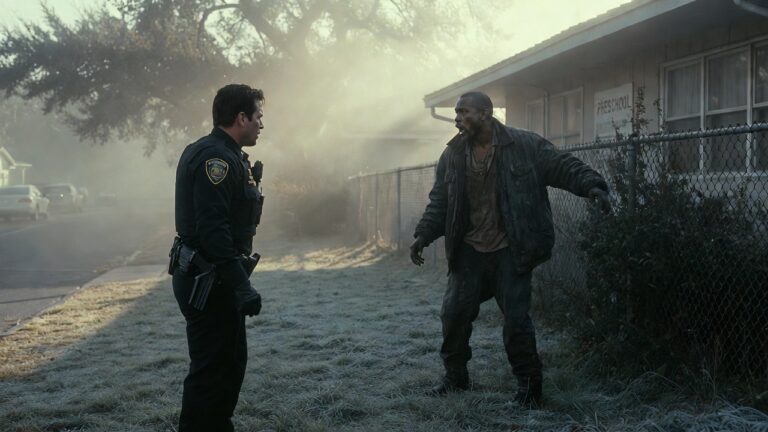
I responded to a suspicious man casing a preschool at 8:42 AM… but when I saw the “frantic shivering” beneath the nearby bushes, I quietly released my grip on my holster.
I’ve worn this silver badge for 14 years in a quiet suburban town, but absolutely nothing prepared me for the…
 Dog Story
39 min read
Dog Story
39 min read
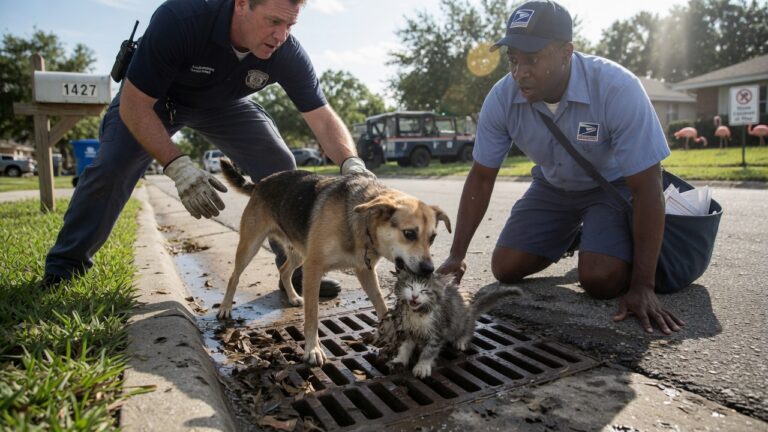
“I Responded To A Terrifying ‘Dog Attack’ Call On A Suburban Route… But When I Reached For The Vicious Animal’s Collar, I Saw What Was Actually In Its Jaws.”
I’ve been an Animal Control Officer for twelve years, and let me tell you, you think you’ve seen it all.…
 Dog Story
24 min read
Dog Story
24 min read
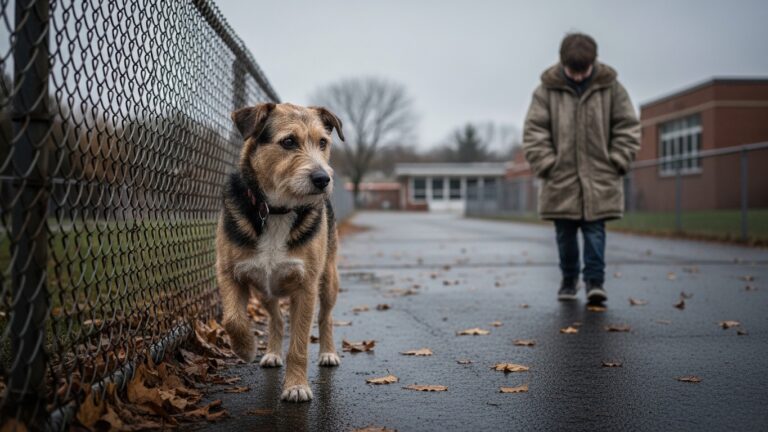
The Dog With The Crooked Leg Waited Outside The School Every Day, Hoping The Boy Who Never Smiled Would Look Back
The little wire-haired dog had learned a long time ago that the world was a fast and dangerous place, especially…
Leave a Reply