
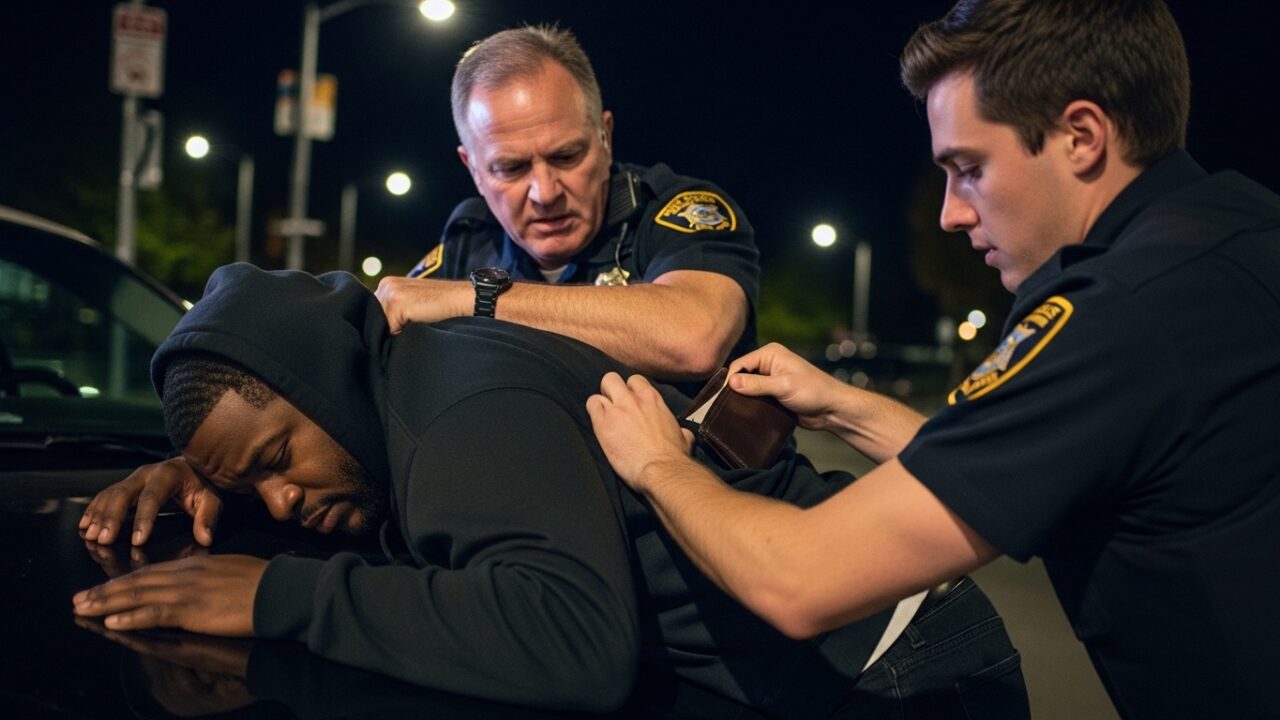
15 Minutes Pinned Against A Police Cruiser—These Two Corrupt Cops Had No Idea Who I Really Was

Chapter 1
The hood of the Ford Interceptor was radiating a blistering July heat, but it was the cold steel of the handcuffs biting into my wrists that grounded me in reality.
I am a 34-year-old Black man. It was 11:45 PM on a Tuesday, and I was walking to my parked sedan holding a cup of gas station coffee. In this particular neighborhood of the East End, my skin color and a hoodie were apparently all the probable cause anyone needed.
“Spread ’em wider.”
The voice belonged to Officer O’Bannon. I knew his voice well. I knew his badge number. I knew he had three excessive force complaints buried in his precinct’s HR files.
He kicked my right ankle hard, forcing my legs apart. My jaw bounced against the searing metal of the hood.
Beside him, his rookie partner, Officer Miller, shifted his weight nervously, the heavy clack of his boots echoing on the empty asphalt. Miller was just twenty-three, but he was already learning how to look the other way.
“I asked you a question,” O’Bannon snarled, his hot breath smelling of stale tobacco and peppermint right next to my ear. “What is a guy like you doing walking around these houses at this time of night? You casing the block?”
“I’m just walking to my car, Officer,” I said. I kept my voice perfectly level. Calm. Subservient.
I had to. If I flinched, if I raised my voice, I knew exactly how this script would end. I’d seen it in dozens of case files. I’d seen the bruised faces of the victims.
O’Bannon grabbed the chain of the handcuffs and yanked my arms up toward my shoulder blades. A sharp, electric pain shot through my rotator cuff. I winced, biting the inside of my cheek until I tasted copper.
“Don’t get smart with me, boy,” O’Bannon whispered. “You think because there ain’t no streetlights right here, I can’t teach you some manners?”
He was right about the streetlights. It was a blind spot. A dead zone. Exactly the kind of place a predator chooses to play with his food.
What O’Bannon didn’t know—what neither of these men could possibly fathom as they laughed and patted down my pockets—was that my left breast pocket held a solid brass badge.
I wasn’t a local. I wasn’t a suspect.
I am a Federal Civil Rights Attorney with the Department of Justice. And for the last nine months, my team had been secretly investigating these exact two officers for systemic racial profiling and brutality.
I could have ended it right then. I could have shouted my title, flashed my credentials, and watched the color drain from O’Bannon’s flushed, arrogant face.
But as my face pressed against that burning metal, feeling the sheer helplessness that hundreds of Black men in this city had felt under this exact officer’s boots, a cold fury washed over me.
I didn’t want them to stop because I was a federal prosecutor. I wanted to see exactly what they did to a regular Black man when they thought nobody was watching.
So, I kept my mouth shut. I let the tape recorder in my jacket pocket keep spinning.
And I waited for them to dig their graves a little deeper.
“Check his wallet, Miller,” O’Bannon barked, pressing his forearm heavily against the back of my neck. “Let’s see who we’re dealing with.”
Miller reached into my back pocket. My heart slammed against my ribs.
The trap was about to spring.
Chapter 2
The scrape of Miller’s knuckles against my jeans felt unnervingly loud in the heavy, humid air of the July night. There is a very specific, degrading intimacy to being searched by law enforcement. It’s a complete stripping away of your bodily autonomy, a visceral reminder that in this exact moment, on this dark stretch of asphalt, your rights are nothing more than theoretical concepts written in a textbook hundreds of miles away.
Miller’s hand was shaking. Not a lot, just a subtle tremor that vibrated through the fabric of my pocket. He was young, fresh out of the academy, his uniform still stiff, the creases sharp enough to cut paper. I knew from his file—a file currently sitting in a locked filing cabinet in my office at the Robert F. Kennedy Department of Justice Building—that Miller had only been riding with O’Bannon for three months. Three months was exactly how long it took for the precinct’s insidious culture to infect a rookie. You either spoke up and got pushed out, or you shut up and fell in line.
Miller was falling in line.
He pulled my leather wallet from my back pocket. It was my decoy wallet, the one I carried when doing field observations. It held a standard Maryland driver’s license, a couple of generic credit cards, and twenty bucks in cash. No DOJ creds. No gold shield. Those were tucked securely inside the custom-tailored inner breast pocket of my jacket, right next to the micro-recorder that was currently blinking a faint, invisible green light, capturing every single breath, every curse, every violation of federal law under 18 U.S.C. § 242—Deprivation of Rights under Color of Law.
“Got it, sir,” Miller said, his voice cracking slightly. He flipped the leather open. In the harsh, strobing glare of the cruiser’s red and blues, I could see his eyes darting across my driver’s license.
“Well? Read it,” O’Bannon barked. His forearm was still crushing the back of my neck into the blistering hood of the Ford Interceptor. The heat of the engine block was searing through the thin cotton of my hoodie, baking the skin of my cheek. My left shoulder was screaming in agony from the angle he had my cuffed arms pulled.
“Vance. Marcus Thomas,” Miller read aloud. “Address is… out in Bethesda.”
O’Bannon let out a low, guttural chuckle. It was a sound that made my blood run cold, not because I was afraid of him, but because I knew exactly how many men had heard that exact laugh right before their lives were irreparably broken.
“Bethesda,” O’Bannon mocked, leaning his heavy frame closer to my ear. He smelled like cheap black coffee, wintergreen chewing tobacco, and sour sweat. “You hear that, Miller? We got us a tourist. A regular high-society gentleman taking a midnight stroll through the East End. Tell me, Marcus from Bethesda… you lost? Because this ain’t exactly the country club.”
“I told you, Officer,” I said, keeping my voice incredibly measured, stripping it of any defiance, any bass. “My car broke down about a mile back. I was walking to the gas station on 4th to use the ATM and get a coffee. I’m just trying to get home.”
It was a plausible story. I had intentionally parked my sedan near a dimly lit intersection known for aggressive policing. I had walked this exact route for three nights in a row, wearing this exact hoodie, playing the odds. In this zip code, a Black man walking alone past 11:00 PM was a statistical magnet for a “Terry stop”—a brief detention based on reasonable suspicion. Only, there was nothing reasonable about it. It was pretextual. It was predatory.
And they had taken the bait.
“Broken down car. Right,” O’Bannon sneered. “Run him, Miller. Let’s see how many bench warrants our boy Marcus here has hiding in the system.”
“Copy that,” Miller said. He stepped back toward the open door of the cruiser, grabbing the radio mic attached to his lapel. “Dispatch, this is unit 4-Adam. Requesting a 27/29 on a male, last name Vance, V-A-N-C-E, first name Marcus, middle Thomas…”
As Miller relayed my information, O’Bannon didn’t ease up. In fact, he pressed his weight down harder. He shifted his stance, digging his knee into the back of my thigh, right against the sciatic nerve. It was a pain compliance technique, strictly forbidden unless a suspect was actively resisting. I was standing perfectly still.
“You know, Marcus,” O’Bannon murmured, his tone conversational, almost friendly in a sick, twisted way. “Guys like you come into my sector, looking around, wearing those dark clothes… you make the good people who live here nervous. You make me nervous. And when I get nervous, I get proactive.”
“I haven’t done anything wrong, sir,” I managed to say through gritted teeth. The metal of the handcuffs was biting so deeply into my wrists I could feel the pulse of my own blood throbbing against the steel rings.
“Wrong is subjective, boy,” O’Bannon whispered. “Out here, wrong is whatever I say it is.”
There it was. The arrogance of unchecked power. The absolute certainty of qualified immunity. Over the past nine months, my team had interviewed over forty victims in this precinct. Black men, Latino men, teenagers, fathers. Their stories were chillingly identical. The unlawful detentions. The fabricated charges of “resisting arrest” or “disorderly conduct.” The missing dashcam footage. The sudden, “accidental” malfunctions of body cameras.
O’Bannon was the ringleader. He was a fifteen-year veteran, a “cop’s cop” who brought in high arrest numbers, which meant the brass looked the other way when the use-of-force reports piled up. He operated like a feudal lord ruling over a fiefdom.
“Unit 4-Adam, Dispatch,” the radio crackled from the cruiser. “Subject Marcus Vance comes back clean. No wants, no warrants. License is valid.”
Silence hung heavily in the humid air. I could hear the cicadas buzzing in the overgrown weeds by the sidewalk.
“Clean?” O’Bannon muttered. He sounded genuinely offended. Disappointed.
He eased his forearm off my neck, but grabbed the scruff of my hoodie, violently yanking me upright. The world spun for a second as the blood rushed back to my head. I blinked, trying to clear the blurry spots from my vision, and found myself face-to-face with Officer O’Bannon.
He was a thick, barrel-chested man with a red, pockmarked face and pale blue eyes that held absolutely no warmth. He stared at me, searching my face for fear, for anger, for a reason—any reason—to justify what he wanted to do next.
“So, you’re clean,” O’Bannon said, taking a half-step back, his hand resting casually on the butt of his service weapon. “A law-abiding citizen. Just out for a walk.”
“Yes, sir. Can I go now?” I asked.
O’Bannon looked at Miller. Miller was standing by the open door, my wallet still in his hand. The younger officer looked uneasy. He knew the stop was over. He knew the legal justification for detaining me had just evaporated the second dispatch cleared my name.
“Boss,” Miller said softly, his voice barely carrying over the idle of the engine. “We should probably cut him loose. Shift is almost over. We got that paperwork on the break-in on 8th street.”
O’Bannon’s eyes didn’t leave mine. His jaw tightened. The idea of letting me walk away—of backing down from a dominance display he initiated—was physically repugnant to him.
“You smell that, Miller?” O’Bannon asked suddenly, sniffing the air theatrically.
Miller blinked, confused. “Smell what?”
“Marijuana,” O’Bannon said, a slow, malicious grin spreading across his face. “I smell the distinct odor of unburnt marijuana coming from the suspect’s person.”
My stomach dropped, entirely replacing the throbbing pain in my shoulder with a cold, hollow dread.
The “smell of marijuana.” It was the oldest, most impossible-to-disprove lie in the book of corrupt policing. It was the golden ticket to bypass the Fourth Amendment. It gave them instant probable cause to tear apart my car, my clothes, my life.
“I don’t smoke, Officer,” I said firmly. I had to get that on the tape. “I have no drugs on me. You have no right to—”
“Shut your mouth!” O’Bannon snapped, shoving me hard against the side of the cruiser. My hip bone slammed into the side mirror. “I say I smell weed, I smell weed. Miller, toss his pockets. The front ones. Pat down the legs.”
“O’Bannon, come on, I don’t smell anything…” Miller whispered, stepping forward, his reluctance obvious.
“I said search him, rookie!” O’Bannon roared.
Miller flinched, then approached me. He patted down the front pockets of my jeans. Empty. He ran his hands down my legs, checking my socks. Empty.
My heart was hammering a frantic rhythm against my ribs. The inner breast pocket of my jacket. If Miller patted my chest, he would feel the hard, rectangular bulk of my DOJ credentials and the heavy brass of the badge. If they found that now, out here on the dark street, the dynamic would instantly shift. O’Bannon would panic. He might try to destroy the tape. He might claim I assaulted him. Bad cops in a panic are infinitely more dangerous than arrogant cops in control.
I needed to get inside the precinct. I needed them on camera. I needed to let them complete the crime before I dropped the hammer.
“Nothing in the pants, boss,” Miller said, standing up. He reached a hand toward my chest.
“Don’t even bother,” O’Bannon scoffed, waving Miller off in a stroke of sheer, arrogant luck. “Guy probably dumped the baggies when he saw our lights. But he’s high. Look at his eyes, Miller. Dilated. Glassy. He’s intoxicated in public.”
He wasn’t even trying to make the lies make sense anymore. It was a pure, unfiltered power trip.
O’Bannon grabbed my arm and dragged me toward the rear door of the cruiser. “You’re taking a ride, Marcus. We’re gonna take you down to the station, let you sober up in the tank. Maybe charge you with disorderly conduct, maybe public intoxication. We’ll figure it out when we get there.”
He opened the door and shoved me inside. My head clipped the doorframe, a sharp spike of pain exploding behind my left eye. I fell sideways onto the hard, molded plastic of the back seat. My cuffed hands were pinned awkwardly beneath me, sending fresh waves of agony up my arms.
The door slammed shut, sealing me in a claustrophobic cage of plexiglass and stale air. It smelled like vomit, cheap disinfectant, and despair.
I struggled to sit upright, my breath coming in shallow gasps. Through the metal mesh separating the front and back seats, I watched O’Bannon and Miller climb into the front.
“You didn’t have to do that,” Miller muttered as he put the cruiser in gear.
“Listen to me, kid,” O’Bannon said, his voice loud, carrying clearly over the roar of the engine and straight into the microphone hidden in my jacket. “You want to survive out here? You gotta establish the food chain. You let one of these thugs mouth off to you, you let them think they have rights, they walk all over you. They don’t respect the badge. They only respect force. You gotta remind them who owns the streets.”
“He wasn’t mouthing off,” Miller argued weakly, steering the car away from the curb.
“His existence out here at midnight is mouthing off,” O’Bannon snapped back. “He’s out here looking for trouble. I just gave it to him before he could give it to some innocent taxpayer. You think his kind gives a damn about the law? They’re animals, Miller. You treat an animal with a firm hand, or it bites you.”
In the back seat, surrounded by the suffocating smell of bleach and old misery, I closed my eyes.
Animals. His kind. The tape recorder was capturing every single syllable. It was a prosecutor’s dream. O’Bannon was handing me the systemic racism, the malicious intent, and the overt civil rights violations on a silver platter. I didn’t even have to bait him; his own arrogance was doing all the heavy lifting.
For the next ten minutes, the cruiser tore through the city streets. I sat in silence, absorbing the physical pain of the handcuffs biting into my wrists and the emotional weight of what I was experiencing. This wasn’t just a case file anymore. I wasn’t reading a transcript in an air-conditioned office. I was living the terror that the people I swore to protect lived every single day.
The overwhelming sense of helplessness. The absolute dread of knowing your life is in the hands of men who view you as less than human. Even knowing I had the ultimate trump card in my pocket, sitting in the back of that cage, I felt a deep, ancestral anxiety clawing at my throat. It was the trauma of a thousand traffic stops, a thousand broken taillights, a thousand “misunderstandings” that ended in hashtags.
The cruiser took a sharp turn, descending a concrete ramp. The strobing red and blue lights bounced off the cinderblock walls of an underground garage. We had arrived at the 42nd Precinct.
The engine cut off. The sudden silence was deafening.
O’Bannon got out and walked to the rear door, throwing it open. The harsh fluorescent lights of the garage blinded me for a second.
“End of the line, Marcus,” O’Bannon said, a cruel smirk playing on his lips. He reached in, grabbing me by the front of my hoodie, and hauled me out of the car like a sack of garbage. My boots hit the concrete hard.
“Where are we taking him?” Miller asked, coming around the back of the car. He looked pale under the fluorescent lights. “Holding cell?”
“Nah,” O’Bannon said, his grip tightening on my arm as he pushed me toward the heavy steel doors leading into the precinct. “Holding is too crowded. Too many eyes. We’re going to take Mr. Bethesda here to Room 4.”
My blood ran cold.
Room 4.
I knew Room 4 from the DOJ case files. It was an old interrogation room at the end of a dead-end hallway on the second floor. It was notoriously used for “attitude adjustments.” The audio feed was perpetually broken. The security camera in the hallway outside had been angled downward for the last six months, supposedly due to a “maintenance error.”
It was the black hole of the 42nd Precinct. If you went into Room 4 with O’Bannon, you came out with bruised ribs, a swollen eye, and a sudden willingness to sign a confession.
“Room 4?” Miller balked, stopping in his tracks. “Boss, the Sergeant said we’re not supposed to use that room for simple detentions. It’s against protocol.”
“I am the protocol tonight, Miller,” O’Bannon sneered, shoving me through the steel doors. “Our boy here needs to understand the gravity of his situation. I think a private conversation is exactly what he needs.”
I stumbled forward into the harsh, sterile hallway of the precinct. Cops in uniform brushed past us, none of them batting an eye at the sight of a handcuffed Black man being marched violently by O’Bannon. It was just another Tuesday night for them. Business as usual.
O’Bannon pushed me toward the stairwell, bypassing the busy booking desk entirely. He was taking me off the books.
As we climbed the concrete stairs to the second floor, every step sending a jolt of pain through my cuffed shoulders, I felt a strange, icy calm wash over me.
O’Bannon thought he was leading a lamb to the slaughter. He thought he was walking me into a soundproof room where he could play god, far away from the prying eyes of the law.
He didn’t realize he was already in a federal cage, and I had just locked the door.
Chapter 3
There were exactly twenty-two steps from the ground floor to the second level of the 42nd Precinct. I counted every single one of them, not out of boredom, but because it was a grounding technique I had learned years ago to keep my heart rate steady in hostile environments. Every step was a sharp, vibrating jolt that traveled from the soles of my boots, up my spine, and exploded in the tight, agonizing knot between my shoulder blades where O’Bannon had my arms cranked upward.
“Keep moving,” O’Bannon grunted, his hand wrapped tightly around the fistful of fabric at the back of my hoodie. He practically carried me up the last three steps, my toes barely grazing the rubber-lined edges of the stairs.
Behind us, the heavy, rhythmic thud of Officer Miller’s boots was noticeably slower. He was dragging his feet. He didn’t want to be here. He knew what going to the second floor meant, and his conscience—whatever thin, fragile thread of it was left after three months in O’Bannon’s patrol car—was screaming at him to turn around. But fear of his training officer was stronger than his moral compass. It almost always is. That’s the insidious nature of the blue wall of silence; it isn’t built from malice overnight. It’s built brick by brick, from a thousand small moments of cowardly compliance.
We crested the stairwell and stepped into the second-floor hallway. The atmosphere shifted immediately. Downstairs, the precinct was a chaotic symphony of ringing phones, shouting booking sergeants, and the static buzz of police radios. Up here, it was a tomb. The air was stagnant, smelling of burnt coffee, ancient floor wax, and the metallic tang of ozone from the flickering fluorescent tube lights overhead.
This was the overflow floor. Old administrative offices, dead storage, and a few overflow interview rooms that hadn’t seen a fresh coat of paint since the Reagan administration.
O’Bannon marched me down the corridor. As we walked, I cataloged the environment. I wasn’t just a victim being dragged to a beating; I was a federal prosecutor gathering evidence. I noted the door marked “EVIDENCE STORAGE”—padlocked and seemingly secure. I noted the water fountain, stained brown with hard water deposits. And then, I noted the security camera mounted in the upper corner of the corridor, where the hallway dead-ended.
Just as the victim files had stated, the camera’s lens was pointed directly downward, staring uselessly at a scuffed patch of linoleum floor. It wasn’t a mechanical failure. The bracket had been physically bent. Someone had taken a broom handle and shoved it down to ensure this specific stretch of hallway existed entirely off the record.
“Boss,” Miller’s voice echoed faintly off the cinderblock walls. He had stopped walking. He was standing about twenty feet behind us, his hands resting nervously on his utility belt. “We really shouldn’t be up here. The Sergeant—”
O’Bannon stopped. He turned around slowly, keeping his grip on my neck, and glared at the young rookie.
“The Sergeant is downstairs worrying about his pension and his doughnut,” O’Bannon said, his voice dropping to a dangerous, serrated whisper. “I’m out here doing police work. You want to go hold the Sergeant’s hand, Miller? Go ahead. Go back down there and write parking tickets. But if you want to be a real cop, you get your ass over here and watch the door.”
Miller swallowed hard. His Adam’s apple bobbed. He looked at me, his eyes wide and panicked, silently apologizing for what he was about to let happen. Then, he looked down at the floor, nodded once, and jogged forward to join us.
He had made his choice.
O’Bannon turned his attention back to me, a smirk of absolute triumph spreading across his face. He had established dominance over his partner, and now he was ready to establish dominance over me. He shoved me forward until my face was inches from a heavy, solid steel door. The brass plaque on it was deeply scratched, but you could still read the engraved number.
Room 4.
“Open it,” O’Bannon ordered Miller.
Miller reached past me, his hand trembling slightly as he turned the heavy brass knob. The door clicked and swung inward with a heavy, protesting groan of un-oiled hinges.
O’Bannon didn’t gently guide me inside. He put his flat palm squarely in the center of my back and shoved with all his weight.
I stumbled forward into the darkness, unable to put my arms out to catch my balance. My knee slammed hard into something solid and metallic, sending a shockwave of pain up my femur. I went down hard, landing on my shoulder on a cold, sticky linoleum floor. Dust puffed up into my nose, mixing with the overwhelming scent of stale sweat and bleach.
The heavy steel door slammed shut behind me. The deadbolt clicked into place with a sound like a gunshot.
The overhead lights buzzed to life, bathing the room in a harsh, clinical white glare. I blinked, trying to clear the black spots from my vision, and took in my surroundings from the floor.
Room 4 was exactly as terrifying as the testimonies had described. It was a windowless box, maybe ten feet by ten feet. The walls were lined with cheap, acoustic soundproofing foam that was peeling away at the corners, stained yellow from years of cigarette smoke. In the center of the room was a heavy steel table, bolted directly to the concrete subfloor. Two metal folding chairs sat on either side. In the upper corner, a security camera hung limply by a cluster of severed black and red wires.
It was a black site. A torture chamber operating right in the middle of an American city, funded by taxpayer dollars.
O’Bannon walked over to me, towering above me like a colossus. He didn’t tell me to get up. He reached down, grabbed the chain connecting my handcuffs, and hauled me to my feet with a violent jerk that nearly dislocated my left shoulder. I couldn’t stop a sharp hiss of pain from escaping my teeth.
“Have a seat, Marcus,” O’Bannon sneered, throwing me roughly into one of the metal folding chairs.
I fell into the hard seat, my bound hands trapped awkwardly between the cold steel of the chair’s backrest and my own spine. I sat up straight, forcing my breathing to slow down. In through the nose. Out through the mouth.
I looked at the men who were about to assault me.
Miller took up a position leaning against the locked door, his arms crossed tightly over his chest, his gaze fixed firmly on his own boots. He was playing the role of the reluctant sentry, convincing himself that because he wasn’t throwing the punches, his hands were clean.
O’Bannon, on the other hand, was entirely in his element. He unclipped his radio from his belt and set it on the steel table. Then, he reached up and unclasped his body camera, sliding it off his uniform shirt. He set it face-down next to the radio.
“Equipment malfunction,” O’Bannon said aloud, looking directly at me. “Damn things are always breaking. Defective technology. You know how it is, right?”
“I know exactly how it is,” I said. My voice was calm, steady, and devoid of the terror he so desperately wanted to hear.
O’Bannon paused, his brow furrowing slightly. That wasn’t the response he was expecting. He was used to the men in this chair begging. He was used to them crying, pleading for their mothers, apologizing for things they hadn’t even done just to make the nightmare stop. My absolute composure was a glitch in his matrix.
He leaned across the table, placing his heavy knuckles on the steel surface. He was so close I could see the burst capillaries mapping the sides of his nose, the pores of his skin slick with nervous, predatory sweat.
“You think you’re tough, huh?” O’Bannon whispered. “You think because you got a nice clean background check and a fancy address out in Bethesda that you’re untouchable? That the rules don’t apply to you?”
“I think the law applies equally to everyone, Officer,” I replied, staring directly into his pale blue eyes.
“The law,” O’Bannon let out a short, barking laugh. He pushed himself off the table and began to pace the small room, his boots heavy on the linoleum. “The law is a piece of paper in a courthouse downtown. Out here, at 1:00 AM, in the dark? I am the law. I am the judge, the jury, and the executioner if I need to be. And guys like you? You walk around with this arrogant look on your face, looking at me like I’m the problem. You come into my city, wear your little hoodie, skulk around in the shadows, and you expect me to what? Offer you a ride home?”
“I expect you to uphold the oath you took,” I said, making sure my enunciation was perfectly clear for the micro-recorder tucked inside my breast pocket. The green light was still blinking. I was carrying the full weight of the federal government in a piece of tech the size of a matchbox.
“My oath is to protect the good people from the animals,” O’Bannon spat, the venom in his voice dripping with unmistakable, unvarnished racism. “And let me tell you something, boy. You look like an animal to me. You act like an animal. And in Room 4, we teach animals how to heel.”
There it was. He had just handed me the “animus” requirement on a silver platter. Under federal civil rights statutes, proving malicious intent—proving that the officer’s actions were driven by racial bias or a willful desire to deprive someone of their constitutional rights—is often the hardest part of the case. Cops are trained to use sterile, legalistic language to justify their brutality. “He reached for his waistband.” “He exhibited furtive movements.” “I feared for my life.”
But here, in the soundproof sanctuary of his own making, O’Bannon was abandoning the script. He was speaking his ugly, unvarnished truth.
I thought about Terrence Hawkins, a nineteen-year-old kid who sat in this exact chair four months ago. O’Bannon had pulled him over for a broken license plate light. Terrence was an honor roll student, driving home from a shift at a fast-food restaurant. According to the medical reports sitting on my desk in Washington D.C., Terrence left this room with three broken ribs, a fractured orbital bone, and a severe concussion. O’Bannon’s official report stated Terrence had “tripped and fallen down the stairs while resisting transport.”
The local District Attorney had declined to prosecute, citing a lack of evidence and the “inherent credibility” of a sworn officer over a young Black man.
That was the moment the Department of Justice got involved. That was the moment I volunteered to come down here.
“You’re awfully quiet,” O’Bannon observed, stopping his pacing. He walked back to the table and picked up his heavy, steel-barreled Maglite flashlight. He slapped the heavy end of it rhythmically against the palm of his hand. Smack. Smack. Smack. “I’m just listening, Officer,” I said. “I want to make sure I understand why I’m being detained.”
“You’re being detained because you’re a suspect in a string of burglaries,” O’Bannon lied effortlessly. “And right now, you’re being uncooperative. You’re showing signs of aggressive resistance.”
“My hands are cuffed behind my back,” I pointed out, my tone entirely flat. “I am sitting perfectly still.”
“You’re resisting with your eyes,” O’Bannon growled.
He didn’t give me a chance to process the sheer absurdity of the statement. He lunged across the table. His massive hand shot out, grabbing me by the throat.
His fingers dug deeply into my windpipe, slamming the back of my head against the metal folding chair. The world tilted violently. The harsh white lights overhead flared into blinding stars. I gagged, my airway instantly crushed beneath his grip. Panic, primal and immediate, flared in my chest as my lungs desperately tried to draw in air and found nothing.
“You look at me when I talk to you!” O’Bannon roared, spit flying from his lips and landing on my cheek. “You respect me! You respect this badge!”
I didn’t fight back. I didn’t kick. I didn’t try to pull away. I let him hold me there, choking me, documenting every second of the assault in my mind.
18 U.S.C. § 242. Deprivation of rights under color of law. Resulting in bodily injury. Felony. “Boss… Jesus, stop, you’re gonna crush his windpipe,” Miller’s voice cut through the roaring in my ears. He had stepped away from the door, his hands raised in a placating gesture. “He’s not fighting! Let him go!”
O’Bannon held the grip for three more agonizing seconds, just long enough to let me know he held my life in his hands. Then, with a disgusted scoff, he shoved me backward and released my throat.
I gasped violently, sucking in ragged, burning lungfuls of the stale air. I coughed, tasting blood in the back of my throat where my teeth had bitten my tongue.
O’Bannon stood tall, adjusting his utility belt, looking down at me with absolute contempt.
“That’s just a taste, Marcus,” he warned, his chest heaving slightly. “That’s just me being polite. Now, we are going to empty your pockets, and we are going to find the drugs I know you have on you. And if we don’t find them in your pockets, we’re going to take your clothes off and find them wherever else you hid them. Understand?”
A strip search. Unconstitutional, completely undocumented, and designed solely to humiliate and break me.
This had gone far enough. The trap was fully loaded. The evidence was secured. It was time to pull the trigger.
“I’m going to tell you this once, Officer O’Bannon,” I said. My voice was hoarse from the choking, but the commanding, courtroom baritone had completely replaced the subservient tone I had used on the street. It was sharp, authoritative, and rang with absolute certainty. “You need to take these handcuffs off me right now.”
O’Bannon froze. He looked at me, genuinely confused. The sudden shift in my demeanor, the absolute lack of fear in my eyes—it threw him off balance.
“What did you just say to me?” he asked, his voice dropping low.
“I said, take the cuffs off,” I repeated, sitting up as straight as the bindings would allow. I looked directly at Miller, who was staring at me with his mouth slightly open. “Officer Miller, if your training officer refuses to remove these restraints, I strongly advise you to step forward and do it yourself. This is your one and only chance to separate yourself from what is about to happen to him.”
O’Bannon let out a loud, incredulous laugh, but it sounded hollow. “Are you threatening me? You’re sitting in my room, in my cuffs, and you’re giving me orders?”
“It’s not an order, O’Bannon. It’s a lifeline. I suggest you take it.”
“You arrogant piece of—” O’Bannon snarled, his face flushing violently crimson. He completely lost whatever shred of temper he had left. He stomped around the table, marching directly toward me. “I’m going to rip your jacket off and beat the arrogance out of you myself!”
He reached out and grabbed the front lapels of my dark zip-up jacket. He intended to tear it violently off my shoulders.
His right hand clamped down hard on the fabric over my left breast.
He froze.
Beneath the soft cotton of the hoodie, beneath the thin nylon of the jacket, his thick fingers felt something hard. Something heavy. Something decidedly rectangular.
It wasn’t a bag of weed. It wasn’t a weapon. It had the distinct, unmistakable shape of a leather credential wallet.
I watched the exact moment his brain tried to process the tactile information. The sneer on his face didn’t disappear; it slowly morphed into a look of profound, creeping confusion. He looked down at his hand, still gripping my chest.
“What… what is this?” O’Bannon muttered, his voice suddenly stripped of its booming bravado.
He didn’t rip the jacket. He slowly, almost hesitantly, unzipped it halfway. He reached his hand inside the custom-tailored inner pocket.
Miller took a step forward from the door, sensing the sudden, bizarre shift in the room’s energy. “Boss? What’s he got?”
O’Bannon didn’t answer. His fingers closed around the leather wallet. He pulled it out into the harsh fluorescent light.
It was a beautiful piece of craftsmanship. High-grade black leather. But it was what was attached to the outside of the leather that sucked all the air out of Room 4.
Pinned to the front was a heavy, solid gold shield. The light caught the deep blue enamel of the center seal. Above the seal, embossed in bold, unmistakable lettering, were the words:
DEPARTMENT OF JUSTICE.
O’Bannon stared at it. He didn’t blink. He didn’t breathe. He just stared at the gold shield as if it were a venomous snake that had just materialized in his palm.
“Open it, O’Bannon,” I commanded softly. The time for playing the victim was over. “Read it aloud. Just like you did my driver’s license.”
His hands were shaking now. The same man who had confidently choked me seconds ago was now trembling so hard he almost dropped the wallet. He flipped it open. Inside was my federal identification card. A stern photo of me in a suit and tie.
O’Bannon’s pale lips moved silently as he read the words printed next to my face.
Then, he looked up at me. The color had completely drained from his pockmarked face. He looked physically sick. The absolute terror he had spent his entire career inflicting upon others was finally staring right back at him, entirely mirrored in his own eyes.
“You… you’re…” O’Bannon stammered, his voice a pathetic, high-pitched croak.
“Marcus Vance,” I said, my voice cold, hard, and final. “Lead Prosecutor for the Civil Rights Division, United States Department of Justice. And for the last nine months, O’Bannon, I have been officially investigating you.”
I leaned forward in the chair, the metal handcuffs clinking sharply against the silence of the room.
“And you just assaulted a federal officer.”
Chapter 4
The silence in Room 4 was no longer just the absence of sound; it was a physical, crushing weight. It was the sound of a fifteen-year career, a pension, and a lifetime of unchecked, arrogant tyranny evaporating into the sterile, bleach-scented air.
O’Bannon stood entirely paralyzed. His chest, which had been puffed out in aggressive dominance just seconds before, now seemed to collapse inward. His pale blue eyes were locked onto the gold shield in his hand. He wasn’t breathing. I could see a single bead of sweat form at his hairline, track a jagged path down his pockmarked temple, and hang off his jawline before dropping onto the linoleum floor.
He looked like a man who had just stepped off a cliff in the dark and was currently waiting for the ground to rush up and meet him.
“Did you hear me, O’Bannon?” I asked, my voice slicing through the heavy air like a scalpel. I didn’t raise my volume. I didn’t need to. The power dynamic in the room had just violently inverted, pulling a zero-gravity maneuver that left him entirely unmoored. “I said, you just assaulted a federal officer.”
“Boss…” Miller whispered from the doorway. His voice was trembling so violently it sounded like a dying radio frequency. “Boss, what does it say? What’s going on?”
O’Bannon didn’t answer his rookie. His jaw worked uselessly, opening and closing like a suffocating fish. He finally tore his eyes away from my credentials and looked at my face. He was searching my expression for a punchline. He was praying, with every fiber of his being, that this was some elaborate, impossible prank.
“You’re… you’re DOJ?” O’Bannon finally managed to stammer. The booming, serrated edge of his voice was gone, replaced by a thin, reedy squeak. He swallowed hard, his throat clicking audibly in the quiet room. “This is a fake. It has to be a fake.”
“Are you willing to bet your freedom on that?” I asked coolly. “Because right now, you are holding my federal identification. If you drop it, if you attempt to damage it, you add tampering with evidence and destruction of federal property to a list of charges that is already going to keep you in a maximum-security facility until your hair turns white.”
I shifted my weight in the metal folding chair. The handcuffs were still biting agonizingly into my wrists, the metal hot and slick with my own sweat.
“Officer Miller,” I said, projecting my voice past the trembling giant in front of me. “I am going to give you a direct order from the United States Department of Justice. You are to step forward, retrieve your keys, and remove these restraints immediately. If you fail to comply, you will be named as a co-conspirator in the kidnapping, unlawful detention, and assault of a federal prosecutor. This is the defining moment of your life, son. Make the right choice.”
Miller didn’t hesitate. The absolute terror of federal prison completely overrode his ingrained obedience to the blue wall. He practically shoved himself off the heavy steel door, his boots stumbling clumsily over the linoleum. He didn’t look at O’Bannon. He kept his eyes glued to the floor as he scrambled to unclip his keychain from his heavy leather duty belt.
“Miller, wait…” O’Bannon croaked, half-raising a hand as if to stop him, but the gesture was weak. Defeated.
“Shut up, boss. Just shut up,” Miller hissed, his voice cracking. It was the first time he had spoken back to his training officer, and the sheer panic in his tone was palpable.
Miller stepped behind my chair. I felt his shaking hands grab the steel chain of the cuffs. The small key slotted into the mechanism. A sharp click echoed in the room, and the agonizing pressure on my right wrist suddenly vanished. Another click, and my left arm was free.
I brought my arms forward slowly. My shoulders screamed in protest, the rotator cuffs burning from being hyperextended for the last twenty minutes. Deep, angry red grooves were etched into the skin of my wrists, the surrounding flesh already beginning to bruise a dark, mottled purple. I rubbed my wrists, feeling the painful, stinging rush of blood returning to my hands.
I stood up.
I am six foot two. O’Bannon was perhaps an inch taller and outweighed me by fifty pounds, but as I stood up to my full height, straightening my jacket, he seemed to physically shrink. He took a stumbling half-step backward, his boots scraping loudly against the floor.
I reached out and calmly plucked my leather credential wallet from his limp, sweaty fingers. I flipped it shut with a definitive snap and slid it back into my inner breast pocket.
“Let me explain exactly what is happening right now, O’Bannon,” I said, stepping around the heavy steel table so that there was no barrier between us. “Because I want you to fully comprehend the magnitude of the mistake you made tonight.”
I reached up and tapped the top button of my dark jacket. It looked like standard black plastic.
“This button is a high-definition, wide-angle lens,” I explained, watching his eyes widen in fresh, profound horror. “It is currently transmitting a live video feed to a secure cloud server managed by the FBI. And the micro-recorder tucked inside my lining? It isn’t just recording to internal memory. It is actively broadcasting via an encrypted cellular signal. Every threat you made on the street. The fake marijuana probable cause. The drive here. And, most importantly, the moment you put your hands on my throat while my hands were cuffed behind my back.”
“I… I didn’t know,” O’Bannon pleaded, his hands rising defensively. The arrogance was completely eradicated, replaced by the pathetic, sniveling cowardice of a bully who has finally been cornered by someone bigger. “Counselor, please. It was dark. You fit the description of a suspect we were looking for. I was just doing my job. It got a little out of hand, but we can fix this. We can just walk away.”
It was disgusting. The speed at which he tried to pivot, the desperate attempt to use the sterile, legal jargon he had hidden behind for fifteen years.
“Fit the description?” I repeated, my voice dropping to a dangerous, vibrating baritone. “What description, O’Bannon? A Black man breathing air on a Tuesday night? Is that the description? Because there was no burglary on the East End tonight. I checked dispatch logs before I walked out of my house. There were no warrants. There was no weed.”
I took another step forward. O’Bannon backed up until his spine hit the soundproofed wall.
“You didn’t target me because I looked like a criminal,” I said, pointing a finger directly at his chest. “You targeted me because you thought I was vulnerable. You thought I was a nobody. You brought me to Room 4 because you thought the system would protect you, just like it protected you when you shattered Terrence Hawkins’ orbital bone four months ago.”
Hearing that name was the final blow. O’Bannon’s knees visibly buckled. He slid an inch down the wall, his face a mask of absolute, paralyzing dread.
“Terrence…” O’Bannon whispered.
“Yes. Terrence,” I said coldly. “He’s nineteen. He plays the trumpet. And he still has double vision because you decided he didn’t show you enough respect during a traffic stop for a burned-out license plate light. His mother wept in my office, O’Bannon. She wept because the local DA told her that your word was law. That a veteran officer’s testimony was unimpeachable.”
I leaned in closer, my voice barely above a whisper, making sure he caught every single syllable.
“I am the impeachment.”
Suddenly, the heavy steel door of Room 4 vibrated violently. A second later, a loud, booming voice echoed from the hallway outside, easily penetrating the cheap acoustic foam on the walls.
“FBI! OPEN THE DOOR!”
Before Miller could even turn around, the handle was wrenched down from the outside and the door violently kicked open. It slammed against the interior wall with a deafening crash, shaking the foundation of the room.
The cavalry had arrived.
Four heavily armed agents from the FBI’s Civil Rights Squad poured into the tiny room. They were wearing tactical vests with “FBI” emblazoned across the front in stark yellow lettering, sidearms drawn and held at the low ready.
Behind them strode Special Agent David Ross, the lead investigator who had been sitting in the command van three blocks away, listening to my airway being crushed. Ross was a hardened twenty-year veteran of the Bureau, a man with zero tolerance for dirty cops. His face was thunderous.
“Drop your weapons! Hands on your heads! Do it now!” the lead tactical agent roared, sweeping the room.
Miller instantly dropped to his knees, interlacing his fingers behind his head and burying his face against the wall. “I didn’t do anything! I told him to stop! I told him to stop!” the rookie sobbed uncontrollably, abandoning all dignity.
O’Bannon, however, was frozen. He couldn’t compute the reality of federal agents swarming his private black site. He stood against the wall, his hands limp at his sides.
“I said hands on your head, O’Bannon!” Agent Ross barked, stepping into the room. When O’Bannon didn’t move fast enough, two agents closed the distance. They grabbed him, spun him around roughly, and slammed him face-first into the same soundproofed wall he had just been leaning against.
“What the hell is going on here?!” a new voice yelled from the hallway.
I looked past Ross and saw the precinct’s shift commander, a heavy-set Captain, pushing his way through the crowd of stunned local police officers who had gathered in the corridor. The Captain looked furious, confused, and completely out of his depth.
“Who authorized this breach?” the Captain demanded, stepping up to the doorway of Room 4. “This is a local jurisdiction! You can’t just storm into my house—”
“Captain,” Agent Ross interrupted, turning to face the man with a glare that could melt steel. Ross pulled his own badge from his belt and held it up. “Special Agent Ross, FBI. We are currently executing a federal arrest warrant for Officer Thomas O’Bannon and Officer Kevin Miller for violations of 18 U.S.C. Section 242, Deprivation of Rights under Color of Law. We are also seizing this room and its contents as a federal crime scene.”
The Captain’s face went completely slack. He looked at O’Bannon, who was currently being aggressively patted down and handcuffed by federal agents. Then, he looked at me.
“Who is he?” the Captain asked, pointing a shaking finger at me. I was still wearing the dusty hoodie and jeans, my wrists bruised, my neck red from O’Bannon’s grip.
“That,” Agent Ross said, a grim satisfaction in his voice, “is Marcus Vance. The lead federal prosecutor for the Department of Justice who just authorized the sting operation on your men. Your officers kidnapped him off the street, fabricated evidence, transported him illegally, and assaulted him in this room.”
The Captain looked like he was going to vomit. The blood drained from his face, leaving him looking like a wax figure. He knew exactly what this meant. This wasn’t just a bad bust. This was a federal takeover. The DOJ doesn’t just prosecute the individuals; they bring down the wrath of the federal government on the entire department. A consent decree was incoming. The precinct was about to be turned inside out.
“Captain,” I spoke up, walking slowly toward the door. The local cops parted like the Red Sea, staring at me in absolute, horrified shock. “You might want to secure your armory and freeze all internal servers. My team will be serving a subpoena for ten years’ worth of use-of-force reports in about fifteen minutes. Have a good night.”
I walked past him and headed down the hallway. I didn’t look back at Room 4. I didn’t need to. I could hear the unmistakable, satisfying sound of the heavy steel ratchets tightening around O’Bannon’s wrists. He was finally wearing his own jewelry.
The aftermath was exactly as brutal and swift as I had designed it to be.
When you strike the king, you must kill the king, and in the realm of corrupt law enforcement, you have to hit them with overwhelming, undeniable force. The audio and video recordings from my wire were devastating. There was no “he said, she said.” There was no ambiguous body camera footage to decipher. It was a crystal clear, high-definition recording of a seasoned police officer fabricating evidence, using racial slurs, and attempting to strangle a handcuffed man.
We didn’t even have to go to trial to break the blue wall of silence.
Officer Miller broke within forty-five minutes of being placed in a federal interrogation room at the FBI field office. He was a twenty-three-year-old kid looking at twenty years in federal lockup. He cried. He begged. And then, he sang.
In exchange for a reduced sentence, Miller gave us everything. He gave us the names of the other officers in the precinct who routinely used Room 4. He explained the code words they used over the radio to signal they were going “off book.” He corroborated Terrence Hawkins’ story, admitting he had stood outside the door while O’Bannon delivered the beating. He handed over the keys to the kingdom.
With Miller’s testimony and the irrefutable evidence of the assault on my person, O’Bannon’s defense attorney, a slick, high-priced shark hired by the police union, folded like a cheap suit. He tried to argue entrapment initially, claiming the DOJ had set a trap.
I laughed him out of the room during the proffer session.
“Entrapment implies we induced your client to commit a crime he wouldn’t otherwise commit,” I told the defense attorney across a long mahogany table. “We didn’t induce anything. I walked to my car holding a cup of coffee. Your client chose to profile me. Your client chose to lie about smelling marijuana. Your client chose to bypass booking, take me to an unmonitored room, and choke me. We didn’t plant the monster inside O’Bannon. We just gave him the stage to perform on, and we filmed the show.”
There was no trial. O’Bannon knew a federal jury in this city, listening to that tape, would bury him under the jail.
Six months later, I stood in the back of the United States District Court. The courtroom was packed. The gallery was filled with the families of O’Bannon’s victims.
Terrence Hawkins was there, sitting next to his mother. He looked older, tired, but there was a quiet strength in his posture. He wasn’t the broken kid from the files anymore. He was watching the system finally, miraculously, work.
Thomas O’Bannon stood before the federal judge in an orange, shapeless jumpsuit. He had lost weight. The arrogant flush of his face was gone, replaced by a pasty, institutional pallor. He looked small. He looked remarkably ordinary. He was no longer a god of the streets; he was just a violent criminal waiting for his number.
The judge did not mince words. She spoke of the sacred trust placed in law enforcement and the catastrophic damage done when that trust is weaponized by racism and cruelty. She handed down a sentence of two hundred and forty months in federal prison. Twenty years. No possibility of early parole.
As the federal marshals moved in to cuff O’Bannon to lead him away, our eyes met across the courtroom for a brief second.
There was no defiance left in him. Only a hollow, terrified realization of the life that awaited him behind bars, stripped of his badge, his gun, and his power. He looked away first, staring at the floor as they led him out of the room.
I walked out of the courthouse and into the crisp autumn air of Washington D.C. The media was gathered at the bottom of the stone steps, a sea of microphones and cameras. My boss, the Assistant Attorney General, was giving a press conference, speaking about “a new era of accountability” and “cleaning up our streets.”
I didn’t stop to talk to the press. I bypassed the cameras, pulling the collar of my trench coat up against the chill, and walked down the street toward my car.
As I walked, I felt a deep, complex exhaustion settling into my bones. It was a victory, yes. A massive, unprecedented win for the Civil Rights Division. O’Bannon was gone. The 42nd Precinct was currently operating under a federal monitor, its command staff completely gutted. Terrence Hawkins and dozens of others finally got a shred of the justice they deserved.
But as I caught my reflection in the dark glass of a storefront window, I didn’t feel like celebrating.
I looked at the reflection. I saw a thirty-four-year-old Black man.
I thought about those fifteen minutes pinned against the scorching hood of that Ford Interceptor. I thought about the sheer, paralyzing terror of being entirely at the mercy of men who hated me simply because of how I looked.
The gold shield in my pocket had saved my life that night. It was the ultimate trump card, a magic talisman that shielded me from the deadly reality of American policing. When I pulled out that badge, I stopped being just a Black man in a hoodie. I became the United States Government.
But what about the men who don’t have a gold shield in their pocket?
What about the kids walking home from their shift at the fast-food restaurant? What about the fathers driving home from the late shift? What about the thousands of Black and Brown men who get pulled over on dark roads every single night, who have to meticulously police their own tone, their movements, and their breathing, praying they survive the encounter?
They don’t have the Department of Justice waiting in a command van. They don’t have an encrypted wire recording their final words. They only have the terrifying, unspoken hope that the officer walking up to their window views them as a human being.
I took the DOJ badge out of my pocket. I held the heavy brass in my hand, feeling the cold weight of it. It was a symbol of justice, of power, of the law. But it was also a stark, painful reminder of a broken system.
I had won the battle. I had taken a monster off the board. But the game was still fundamentally rigged.
Justice shouldn’t require a federal trap. Survival shouldn’t depend on the job title printed on your ID. A man shouldn’t have to prove he is a federal prosecutor just to be treated like a citizen.
I slipped the badge back into my pocket, the brass settling heavily against my chest, right over my heart.
I walked to my car, unlocked the door, and got in. I sat in the driver’s seat for a long time, staring out at the capital city. The streets were busy, people rushing past, entirely unaware of the invisible wars being fought in the dark corners of their own neighborhoods.
I started the engine, the low hum vibrating through the steering wheel.
Tomorrow, I would go back to the office. I would open a new case file. I would look at a new face, read a new tragic summary, and prepare to go to war again. Because until a hoodie is just a piece of clothing, and black skin isn’t treated as probable cause, the work is never finished.
O’Bannon thought he was teaching me a lesson in Room 4. He thought he was showing me how the real world worked.
He was right about one thing. I learned exactly how the world works.
And I’m going to spend the rest of my life tearing it down.
[END OF FULL STORY]

About the Author
dream01
A writer passionate about human stories and real-life experiences that inspire and move readers.
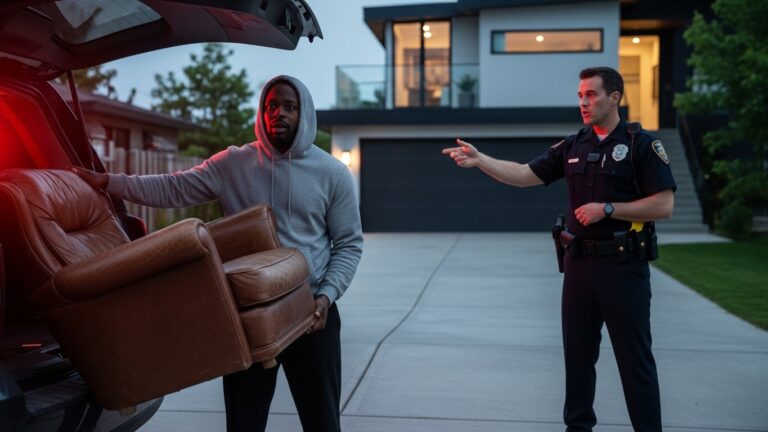 Dog Story
47 min read
Dog Story
47 min read
“You Don’t Belong Here,” The Officer Sneered At The Black Homeowner. Then I Pulled Out The Deed And His Face Went Pale.
The moment the heavy, authoritative fist pounded against my custom mahogany front door, I knew exactly what was happening. I…
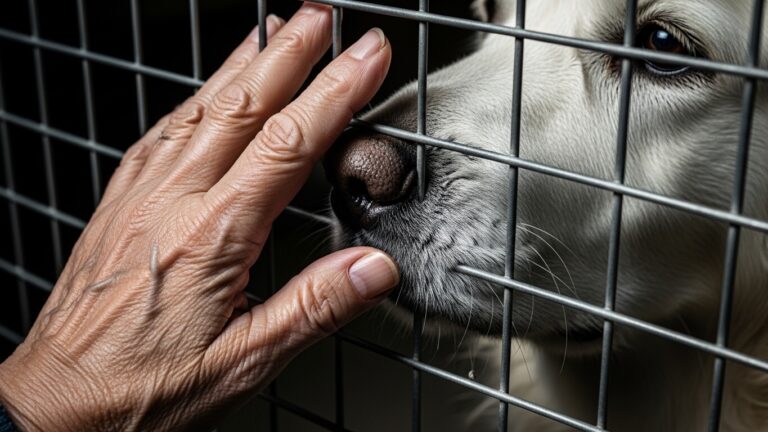 Dog Story
12 min read
Dog Story
12 min read
“My Husband’s Chair Sat Empty For 3 Years… But What I Brought Home From The Shelter That Tuesday Saved My Life.”
I was 74, living alone in a house that had grown far too quiet, waiting for the days to simply…
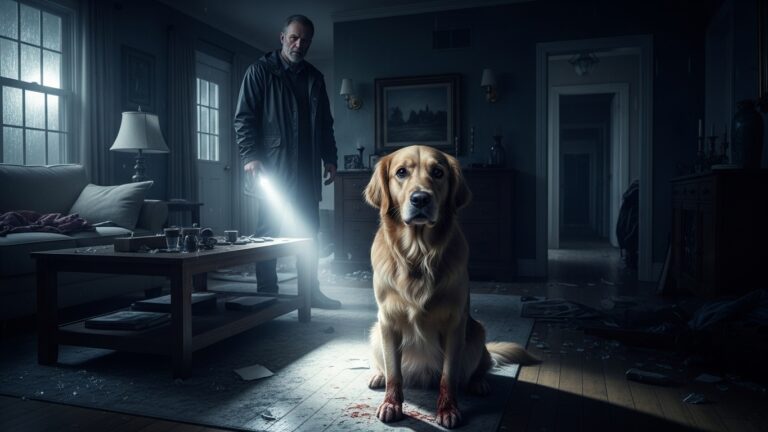 Dog Story
9 min read
Dog Story
9 min read
I Walked Into What Should Have Been A Routine Wellness Check In A Quiet Suburb… But The Heartbreaking Way A Trembling Golden Retriever Blocked The Basement Door Broke Me As A Man.
I’ve been a police officer in upstate New York for nineteen years, but absolutely nothing prepared me for the chilling…
Leave a Reply